Sanjeev Gupta’s Australian industrial empire has entered a new phase of scrutiny as collapsed businesses, court proceedings and regulatory investigations expose how heavily parts of the group depended on complex financing and large transfers between related companies.
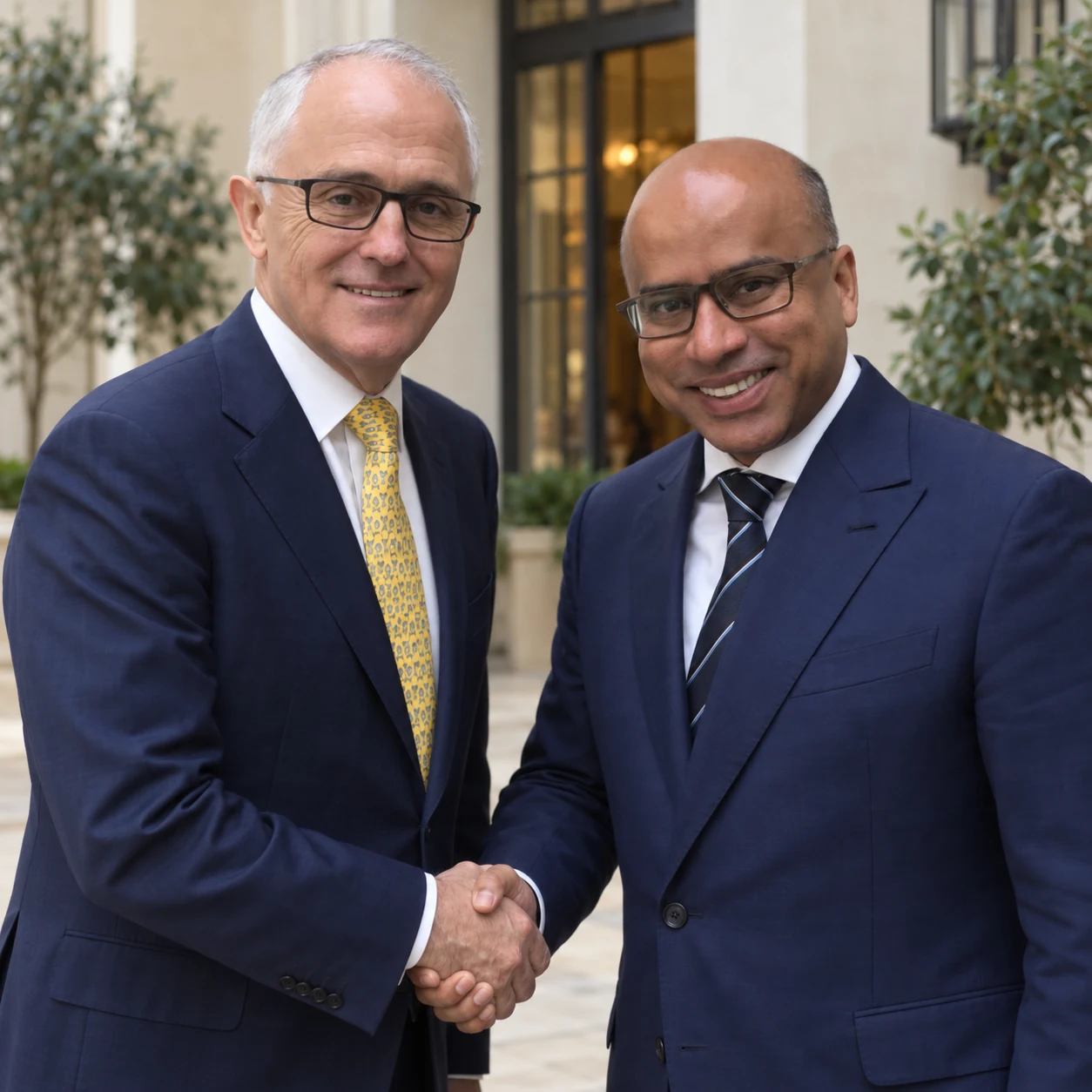
Gupta arrived in Australia in 2017 with a reputation as a steel rescuer and bought the Whyalla steelworks in South Australia for about $700 million. His GFG Alliance later controlled a network of Australian assets spanning steel, coal, recycling and metals processing.
That expansion was financed in large part through Greensill Capital, the supply-chain finance company founded by Australian businessman Lex Greensill. When Greensill collapsed in 2021, the relationship between the two groups became one of the central vulnerabilities in Gupta’s global business model.
Five years later, the consequences are still being worked through in courts, insolvency processes and regulatory inquiries. Three major Australian operations linked to GFG have collapsed or been removed from Gupta’s control: the Whyalla steelworks, the Tahmoor coal mine in New South Wales and the Liberty Bell Bay manganese smelter in Tasmania.
Whyalla was placed into administration in 2025 after the South Australian Government intervened amid mounting debts, production problems and concern about the condition of the steelworks. Administrators said the operation was losing about $1.5 million a day when they took control and described serious maintenance and safety problems.
The future of the plant remains one of the largest industrial policy questions in the country. Governments have committed substantial public support to keep steelmaking alive in Whyalla, while potential buyers consider how the ageing operation could be modernised.
In September 2026, the Whyalla blast furnace was set to close, putting about 600 jobs at risk. The closure does not necessarily end steelmaking at the site because rolling operations may continue using imported semi-finished steel while a future owner assesses whether to build an electric arc furnace.
Tahmoor Coal followed a different path but exposed similar financial stress. The mine, south-west of Sydney, stopped operating after running short of cash. Its parent entities entered administration and the mine itself was later ordered into liquidation by the New South Wales Supreme Court.
Liquidation records showed about $432 million in claims against Tahmoor, including roughly $250 million in related-party debt. Justice Ashley Black said liquidation would guarantee funding for an investigation into past transactions, an important step because the financial relationships between Gupta-linked entities had become a central issue for creditors.
Up to 238 Tahmoor jobs were made redundant after the winding-up order. The mine has attracted interest from potential buyers, but the long period without production has added uncertainty for workers, contractors and the surrounding community.
Liberty Bell Bay in northern Tasmania became the third major Australian GFG operation to fail. The manganese smelter was placed into administration in March 2026 and later moved into liquidation after attempts to secure a buyer collapsed.
Administrator EY Parthenon reported that Liberty Bell Bay may have been insolvent from as early as May 2025. The report said the company had suffered sustained operating losses and that large amounts of money had moved to related GFG entities through inter-company loans.
The administrators identified a net inter-company loan balance of about $191 million. Their report said those cash outflows left the smelter with very limited resources to absorb supply-chain disruption and changes in commodity prices.
Those findings do not by themselves establish criminal wrongdoing by Gupta or any other director. Insolvency reports can identify potential claims, transactions and questions for further investigation, while regulators and courts determine whether legal duties were breached.
The Australian Securities and Investments Commission has confirmed it is investigating individuals connected with Gupta’s portfolio of companies. ASIC has not publicly announced criminal charges against Gupta arising from that investigation.
GFG Alliance has rejected the suggestion that its Australian record can be reduced to money being stripped from viable businesses. The group has said Whyalla, Tahmoor and Liberty Bell Bay were distressed assets when acquired and that substantial capital and management effort were invested in keeping them operating.
GFG has also argued that the South Australian Government’s intervention at Whyalla created serious knock-on effects elsewhere in the Australian group. According to the company, the loss of Whyalla from Gupta’s control disrupted financing and business relationships across connected operations.
Administrators and former workers have presented a different picture. At Tahmoor and Bell Bay, insolvency material has placed related-party transactions under close examination, raising questions about how cash moved through the wider group and whether individual businesses retained enough working capital to survive downturns.
That issue goes to the heart of the GFG structure. Gupta’s empire was built through hundreds of privately held companies in multiple jurisdictions rather than a single listed parent with consolidated public accounts. The structure gave the group flexibility, but it also made it difficult for outsiders to understand where debt sat, how assets supported one another and where cash was being transferred.
Greensill Capital helped sustain that model by providing large volumes of finance linked to invoices and expected future business. When Greensill failed, GFG lost a key funding channel and was forced into a prolonged effort to refinance, sell assets and negotiate with creditors.
Creditors connected with Greensill have continued pursuing claims over GFG assets. A New South Wales Supreme Court proceeding involving Greensill administrators and interests linked to InfraBuild, Gupta’s Australian steel distribution and recycling business, has become one of the latest fronts in the dispute.
Gupta had been expected to give evidence in that matter, but the court accepted medical material indicating that long-distance travel and extended examination posed health risks. The hearing was postponed until later in the year. The court’s acceptance of that material relates to scheduling and should not be interpreted as a finding on the commercial allegations being contested.
InfraBuild is important because it remains one of Gupta’s major Australian businesses and has not followed Whyalla, Tahmoor and Bell Bay into the same form of collapse. That makes disputes over ownership, security interests and creditor rights especially significant.
The Australian story also sits within a wider international investigation of GFG. Britain’s Serious Fraud Office has been investigating suspected fraud, fraudulent trading and money laundering connected with GFG Alliance and its financing arrangements with Greensill Capital since 2021. The investigation is ongoing, and no criminal charges against Gupta have been announced in that inquiry.
Regulators in other countries have also examined Gupta-linked businesses, but the existence of an investigation is not proof that an offence occurred. GFG has repeatedly denied wrongdoing and has defended its efforts to preserve industrial businesses and jobs.
What is already clear is the scale of the economic fallout in Australia. Hundreds of workers have lost jobs at Tahmoor and Bell Bay, Whyalla faces another major workforce reduction, creditors are trying to recover large debts and governments have committed public money to stabilise strategically important industrial sites.
Whyalla is especially significant because it is Australia’s only integrated steelworks producing structural steel from locally mined iron ore. Governments regard the plant as strategically important for construction, infrastructure and sovereign industrial capability.
That strategic value helps explain why the collapse of Gupta’s control did not simply lead to the plant being shut and sold for parts. Governments instead moved to preserve the operation while seeking a new owner capable of funding modernisation.
The same logic is less straightforward at Tahmoor and Bell Bay, where buyers must weigh the underlying industrial value against debts, restart costs, environmental liabilities and the damage caused by extended shutdowns.
For investigators, the next stage is increasingly about records rather than promises. Administrators and liquidators have access to company accounts, bank transactions, inter-company loans and director decisions. Regulators can use that material to determine whether money was moved lawfully, whether companies traded while insolvent and whether directors met their duties.
For Gupta and GFG, those processes offer an opportunity to contest allegations and explain transactions that critics say weakened individual businesses. For workers and creditors, they may be the only way to understand how companies that once employed thousands reached the point of administration or liquidation.
The collapse of Greensill was the trigger that exposed the fragility of the financing model, but the Australian unwind has taken years because the businesses were connected through ownership, loans, guarantees and shared cash flows.
That is why the story has shifted from whether Gupta could refinance his empire to a more forensic question: what happened to the money inside the group, which entities benefited from transfers, and whether those decisions complied with Australian corporate and insolvency law.
Those questions remain under investigation. Until regulators or courts make final findings, allegations about misconduct must remain allegations. What is no longer in dispute is that the industrial rescue story that began with Gupta’s arrival in Whyalla has ended in a series of administrations, liquidations, job losses and legal battles that will continue long after control of the original assets has changed hands.
The outcome will matter beyond GFG. Australian governments, lenders and regulators are now likely to study the episode as a case about how privately controlled industrial groups are financed, how public support is assessed and how quickly warning signs should trigger intervention when strategically important employers depend on opaque related-party funding.