Australia’s Joint Standing Committee on Electoral Matters will hold another public hearing in October involving figures linked to the Plymouth Brethren Christian Church after new media allegations about political activity during the 2025 federal election.
The committee has resolved to invite Bruce Hales and Gareth Hales to appear and says it will issue a summons compelling their attendance if they refuse. It will also invite Lester Sharples, who has been named in recent media reporting, and the authors of parliamentary submissions 313, 332 and 333.
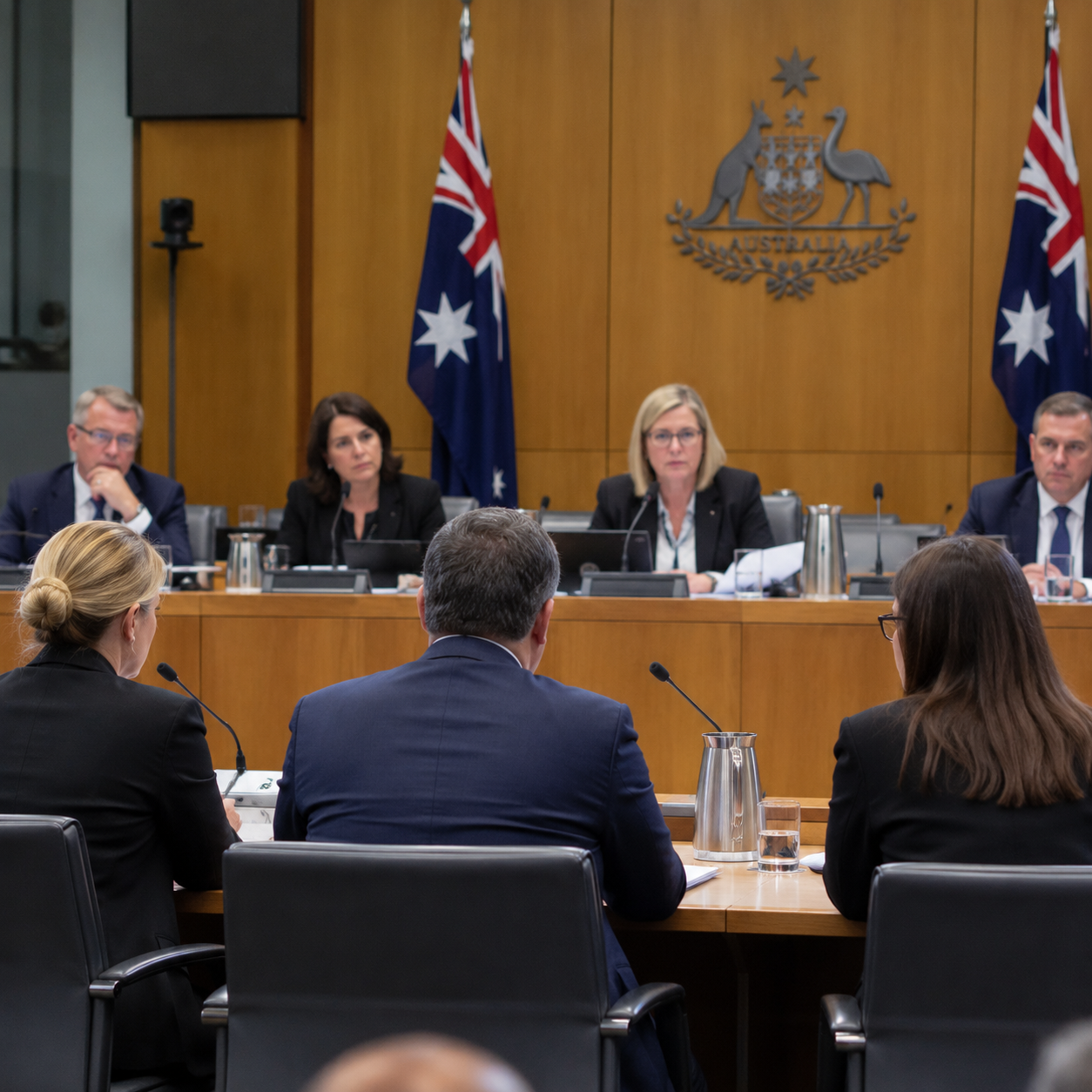
The hearing forms part of the committee’s continuing inquiry into the conduct of the 2025 federal election. It does not amount to a finding that the church, the men invited to appear or individual church members committed an offence or engaged in the conduct alleged in media reports.
The immediate trigger is reporting that individuals associated with the Plymouth Brethren paid or coordinated activists to follow Prime Minister Anthony Albanese and disrupt campaign events involving Labor, Greens and independent candidates. ABC News summarised allegations first published by Nine newspapers that far-right activists were used to track or harass candidates during the campaign.
The Plymouth Brethren Christian Church rejects the claim that the church itself funded or coordinated political activity. In public statements, it says it did not participate in the 2025 federal election, made no payments or donations for campaign activity and had no interaction with political parties or third-party groups.
The church acknowledges that individual members participated in the democratic process but says they did so in their personal capacity. It argues that the conduct of individual members should not automatically be attributed to the religious organisation.
That distinction is likely to be central to the October hearing. Parliamentary investigators can examine whether activity was organised, who paid for it, what relationships existed between participants and whether any electoral disclosure or authorisation rules were engaged. They still need evidence before reaching conclusions about institutional responsibility.
Committee chair Jerome Laxale has described the recent allegations in strongly critical terms and has said the committee needs senior figures to attend so it can accurately report on the election. Those comments represent the chair’s assessment of the allegations and the need for inquiry; they are not themselves a factual finding against the church.
The committee’s process has already had a lengthy history. In June, it said the Plymouth Brethren Christian Church and campaign group Advance had declined invitations to hearings in November 2025 and in March and May 2026. The committee warned at the time that it could use summons powers if witnesses continued to decline.
Representatives of the church and Advance subsequently appeared at a public hearing on 21 August. A Plymouth Brethren spokesperson denied allegations that the church paid far-right influencers to disrupt the election and said there had been no institutional coordination of members’ political activity.
The new October hearing is therefore not simply a repeat of the August session. It follows further reporting and seeks evidence from specifically named people, including Bruce and Gareth Hales, whom the committee’s latest statement describes as senior members of the organisation in Australia.
A parliamentary summons is a serious procedural tool. Committees generally begin by inviting witnesses voluntarily. A decision to compel attendance can follow if a committee considers the evidence necessary and a witness will not appear. The existence of a summons power does not imply guilt; it is a mechanism for obtaining evidence for a parliamentary inquiry.
The committee is examining the election more broadly than this single controversy. After federal elections, the Joint Standing Committee on Electoral Matters routinely reviews aspects of the electoral process and can recommend legislative or administrative changes.
Issues under consideration can include polling, campaign conduct, political finance, authorisations, third-party activity and the operation of electoral law. The committee’s final report is expected to draw on submissions, hearings and other evidence rather than media reporting alone.
The allegations involving Plymouth Brethren members have attracted attention because they raise questions about the line between individual political participation and coordinated third-party campaigning.
Australians are generally free to volunteer, advocate and participate in elections regardless of their religion. Membership of a church does not remove those democratic rights. Electoral obligations can arise, however, where spending, communications or coordinated campaign activity falls within regulated categories.
The key factual question is therefore not whether church members were politically active. The church itself says some members were. The contested issue is whether any activity was organised or funded in a way that should be attributed to the institution or otherwise disclosed under electoral rules.
Recent media reports have alleged a level of coordination that the church disputes. In a statement responding to the September reporting, the Plymouth Brethren Christian Church said it never funded or coordinated political activity and said one member quoted in the reporting described participation as being organised among a group of associates rather than by the church.
The church has also objected to language linking its members with far-right or neo-Nazi actors and says it rejects antisemitism. Those denials need to be included alongside the allegations because the committee has not yet made final findings about the new claims.
There is a separate question about individual conduct. Even if an institution did not direct activity, particular individuals could still have organised or funded campaigning in their own right. Conversely, association between participants does not by itself prove that a church hierarchy directed them.
Documents, financial records, communications and sworn or formal evidence from witnesses can help the committee distinguish between those possibilities.
The corrected parliamentary release is also important. An initial version referred to submission 312, but the committee’s corrected notice says the authors of submissions 313, 332 and 333 will be invited. That correction should be used in any account of the October hearing.
The political reactions surrounding the inquiry are likely to continue, but they should remain separate from the committee’s eventual findings. Government and opposition figures may draw different conclusions from the reporting, while the committee’s formal role is to gather evidence and make recommendations about the electoral system.
For the Plymouth Brethren Christian Church, the hearing provides another opportunity to put its denials and explanation of members’ activity on the parliamentary record. For the committee, it provides a way to question people it considers directly relevant to the new allegations.
The next substantive step is the October public hearing, with the detailed program to be published closer to the date. If Bruce or Gareth Hales decline the invitation, the committee says it has resolved to compel their attendance by summons.
Until evidence is tested and the inquiry reports, the appropriate description remains limited: serious allegations about 2025 campaign activity have prompted further parliamentary scrutiny, the church denies institutional involvement, and no final finding of wrongdoing has been made against the people now being invited to appear.