International students are expected to face a major restriction on bringing family members to Australia under a migration overhaul Home Affairs Minister Tony Burke is due to unveil at the National Press Club on Thursday.
ABC News reports the government plans to tighten several parts of the temporary migration system as it works toward reducing net overseas migration from about 300,000 to 225,000 by 2028. The expected family-visa measure has not yet been formally announced in full and should not be treated as enacted law before Mr Burke sets out the policy detail.
The distinction is important because the government’s revised plan has been through weeks of internal work and the final settings, implementation dates and legal mechanism are still to be explained. The ABC understands the reworked package was endorsed by cabinet’s Expenditure Review Committee this week ahead of the speech.
The central pressure point is Australia’s large temporary visa population. Mr Burke is expected to outline measures aimed at reducing temporary arrivals, making it harder for people to remain in Australia after their original visa pathway has run its course, and changing incentives that the government believes are contributing to prolonged stays on bridging visas.
International education is a particularly sensitive part of that debate. Universities and other education providers rely heavily on overseas students, while governments have also been under pressure over housing, infrastructure and rapid population growth. The expected policy attempts to reduce migration without directly cutting the number of international student visas in the same way some earlier proposals contemplated.
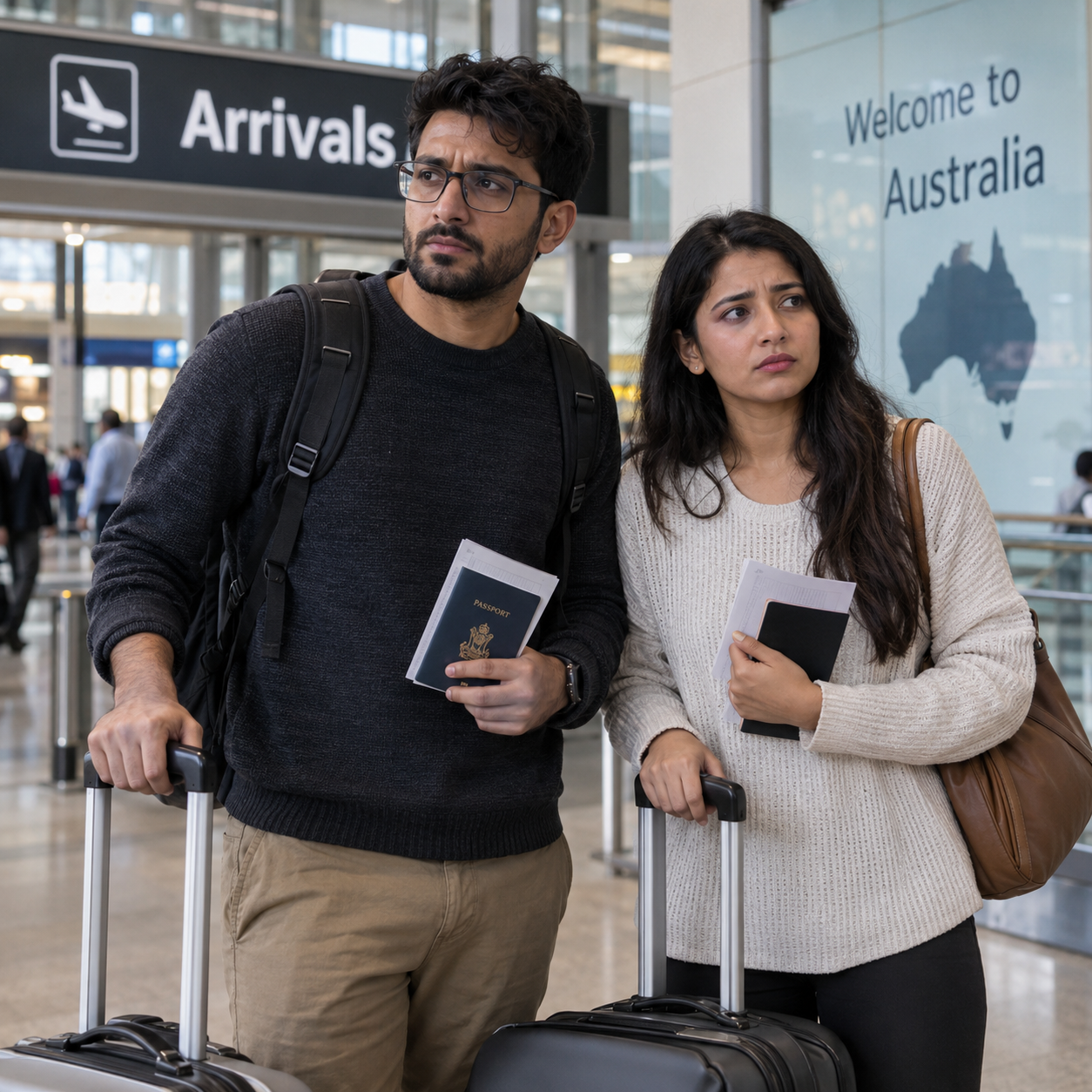
Instead, the ABC has been told students would effectively lose the ability to bring dependent family members under the new approach. In the last financial year, 337,427 student visas were granted, including 45,991 secondary applicants classified as dependants or family members.
Those numbers show why a change to secondary applicants could have a measurable effect even if the government leaves the primary student intake largely untouched. It would also change the practical calculation for prospective students who are married, have children or otherwise expect to live with close family while studying in Australia.
The policy details will determine how significant the change is. Questions remain over whether there would be exemptions, whether the restriction would apply to all student categories, what would happen to applications already lodged, and whether partners or children currently in Australia would be affected.
It is also not yet clear whether similar restrictions will extend to family members of skilled temporary migrants. ABC News reports that possibility remains unresolved publicly.
The government is simultaneously looking at people who move from one temporary visa to another in order to remain in Australia for longer periods. Mr Burke has described a need for more tools to manage who arrives, who stays and who leaves, while saying legislation would be his preferred path for some changes if parliament supports it.
Where legislation is not available, migration ministers can still influence the system through existing powers, including visa settings, processing priorities and ministerial directions. That means parts of the overhaul may be capable of taking effect administratively, while others could require parliamentary approval.
Another focus is the use of protection claims by people who entered Australia on another temporary visa. The government is concerned about a large volume of claims that are ultimately rejected but can take years to move through merits review and the courts.
ABC News reports an average of about 1,580 onshore protection claims are being lodged each month, mostly by people who originally entered on student or visitor visas, and that roughly 90 per cent are rejected. Applicants can remain in Australia on bridging visas while appeal processes continue.
The existence of a rejected claim does not by itself establish abuse of the system. People have legal rights to seek protection and to challenge adverse decisions. The government’s policy argument is that lengthy review pathways can also be used by some applicants to extend a stay after the original visa has ended, and it wants to reduce that incentive.
The overhaul comes as net overseas migration has already fallen from the post-pandemic peak. Home Affairs said in June that annual net overseas migration to December 2025 was about 301,000, around 45 per cent below the 2023 peak, with student-related migration also declining.
That fall matters because migration policy is often discussed as if the number only moves in one direction. Net overseas migration measures the difference between people arriving for a long-term stay and people leaving. It can fall because fewer people arrive, more people depart, or both.
The government’s target of 225,000 by 2028 would require a further reduction. Restricting secondary student visas is one way to reduce the inflow without imposing the same direct limit on the students themselves.
Education groups are likely to watch the detail closely. International education is a major Australian export and overseas students support universities, vocational education providers, rental markets and local businesses. At the same time, rapid population growth has become politically contentious amid shortages of housing and pressure on services.
There is no single migration lever that affects only one part of the economy. A lower temporary intake may ease some population pressure, but changes can also reduce tuition revenue, labour supply and household spending. Family restrictions can also make Australia less attractive relative to countries that allow students to live with partners and children.
For students already considering Australia, the immediate message is not that family visas have already been cancelled. The expected measure remains part of a policy announcement due on Thursday. Until the government releases the final design, prospective applicants should not assume that media reports provide the complete eligibility rules.
The National Press Club speech should answer the most important outstanding questions: which visas are affected, when the rules begin, whether transitional arrangements apply, what needs legislation, and how the government calculates the migration reduction it expects the measures to deliver.
Mr Burke is also expected to explain how the package fits with existing skilled migration priorities and with recent changes that have slowed or reprioritised some offshore visa processing.
That broader context matters. Migration policy is not simply about a headline annual cap. It involves the composition of arrivals, the length of stay, work rights, family reunion, humanitarian obligations and the ability of employers and education providers to plan.
Thursday’s announcement is therefore the point at which the expected student-family restriction can be assessed as a government policy rather than a reported preview. Until then, the confirmed position is that a substantial migration overhaul is imminent and that international-student dependants are expected to be one of its main targets.