A $5 million federal election commitment for an Adelaide soccer precinct is under fresh scrutiny after documents obtained under Freedom of Information showed the project was being discussed at a multimillion-dollar scale before it had been formally scoped, designed or fully costed.
The funding was promised by Labor ahead of the 2025 federal election for the redevelopment of Jubilee Reserve in Adelaide’s western suburbs, intended to provide a permanent home for the Adelaide Jaguars women’s soccer club. The documents, reported by ABC News, show Health Minister Mark Butler’s office encouraged the City of Charles Sturt to put forward a broader proposal for federal support, with correspondence referring to an overall project cost of about $6 million before detailed planning had been completed.
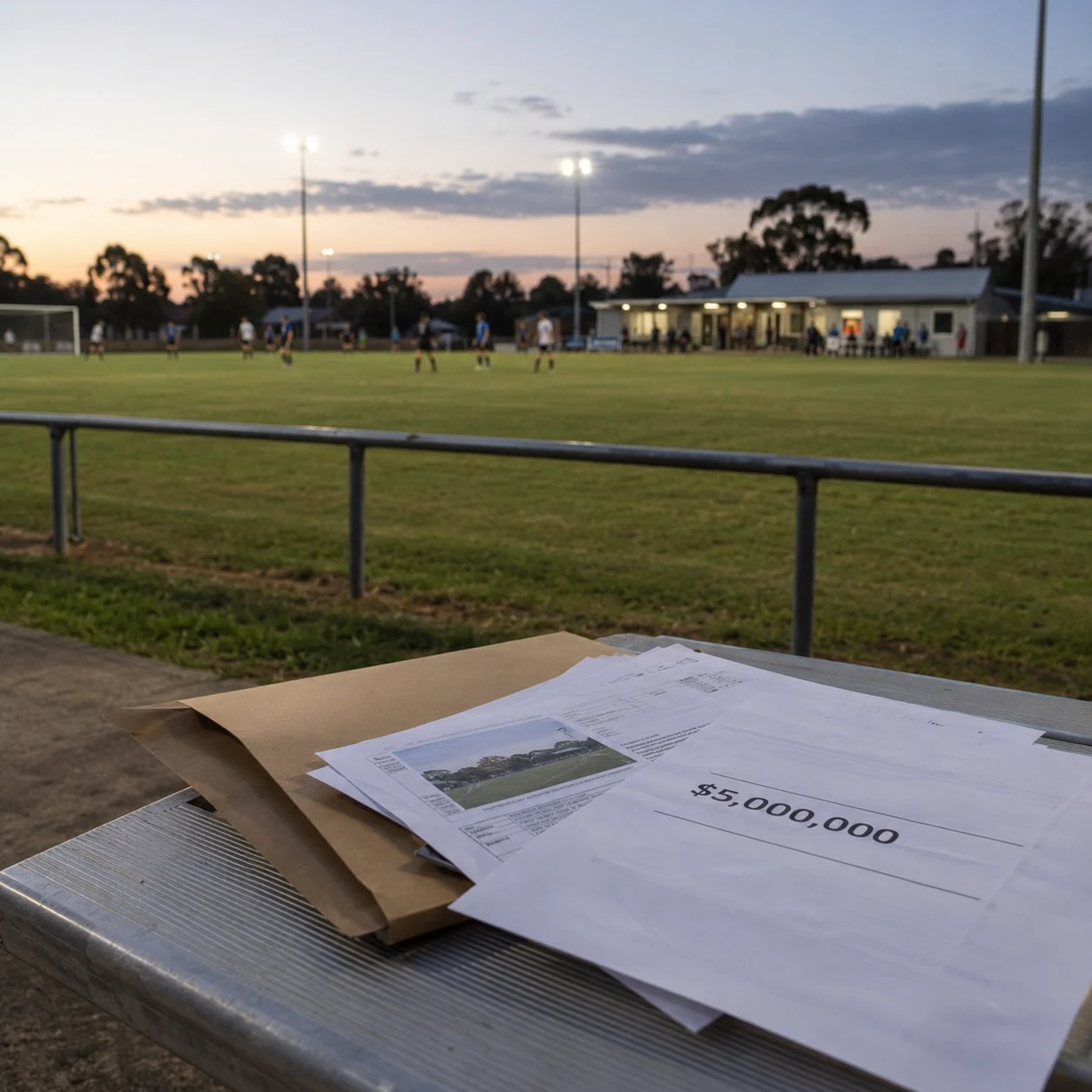
The documents have prompted questions from the federal opposition about how much due diligence occurred before Labor announced its $5 million contribution. Butler says the grant followed Commonwealth rules, while the government’s Major and Local Community Infrastructure Program is an invitation-only scheme in which projects are identified by government and developed under the Commonwealth Grants Rules and Principles.
The controversy is therefore not a finding that the funding was unlawful. It is a dispute about how an election commitment was developed, how much project detail existed when the amount was chosen and what level of planning Australians should expect before a government commits millions of dollars in public money.
The City of Charles Sturt had previously sought a much smaller amount for work at Jubilee Reserve. ABC reported that the council initially wanted about $1.2 million for lighting upgrades and a master plan. Butler’s office then encouraged the council to propose a larger redevelopment, with an indicative total cost of about $6 million.
Labor ultimately committed $5 million, with the council potentially contributing another $1.5 million. The package grew beyond the original lighting request to a broader sports precinct concept.
At the time of the election promise, however, formal master planning, detailed design and community consultation had not been completed. Those processes were scheduled to occur later.
That sequence is at the centre of the criticism. Opposition figures argue that announcing a large grant before the project had been fully designed and costed raises questions about whether the price tag was sufficiently tested. The concern is that a figure announced during an election campaign can become the starting point for a project rather than the result of a completed planning and costing process.
Butler has rejected the suggestion that the commitment was improperly handled. He said the project went through the process required under the Commonwealth program and that the funding was intended to address a real shortage of sporting capacity in the area.
The Adelaide Jaguars have also pointed to strong demand for facilities. The club said it had to turn away up to 100 players in 2024 because it did not have enough capacity. A permanent home and expanded facilities could therefore deliver a clear community benefit, particularly for women and girls playing football.
That public benefit does not remove the question of process, but it does explain why the proposal gained political attention.
Community sporting infrastructure is a common feature of federal election campaigns because the benefits are visible and local. New change rooms, lights, playing surfaces and club facilities can be popular projects with broad community support. They can also become politically contentious when funding is concentrated in electorates the governing party holds or hopes to win.
The broader Major and Local Community Infrastructure Program has already attracted scrutiny because projects are selected through an invitation process rather than through an open competitive round in which every eligible organisation can submit a bid.
The federal infrastructure department says the one-off program is designed to deliver identified community infrastructure projects and is administered under the Commonwealth Grants Rules and Principles 2024. Budget documents put the program at roughly $560 million across more than 220 projects.
An invitation-only structure is not inherently unlawful. Governments can establish targeted grant programs and identify projects directly, provided they comply with the legal and administrative framework that applies.
But that structure places extra importance on documentation and transparency because the usual competitive comparison between applicants is absent.
For taxpayers, the central question is not simply whether Jubilee Reserve needs investment. It is how governments decide the amount to commit before detailed design work has been completed and what safeguards are used to ensure the final project represents value for money.
A preliminary estimate can be reasonable at an early stage, particularly where a project must be developed before construction prices can be finalised. Large infrastructure projects routinely move through concept, design, cost planning and procurement phases.
The risk is that an early political commitment can limit later choices. Once a government publicly promises a specific amount, there can be pressure to shape the final project around that promise even if later planning identifies a different scope or cost.
That is why the distinction between an election commitment and a final construction contract matters.
The $5 million promise did not mean the council had a completed design ready to build the next morning. It provided a federal funding commitment around which the council could develop the project. The later master-planning process was still expected to determine what facilities should ultimately be delivered.
The Coalition’s criticism is that this order should have been reversed: design and cost first, commitment second.
Labor’s response is that the program was designed to fund identified priorities and the project then proceeded through the required Commonwealth process.
Both positions can be tested against the documents and the rules without assuming misconduct.
The next useful information will be the completed master plan, final project scope, updated cost estimate and any grant agreement conditions attached to the federal funding. Those documents will show whether the final redevelopment remains close to the assumptions used when the $5 million commitment was announced.
If the eventual cost is materially higher, governments and the council will have to decide whether to reduce the scope or find additional funding. If it is lower, questions may arise about whether the full commitment is required.
For the Adelaide Jaguars and local players, the practical issue is whether the promised investment produces the extra capacity the club says it needs.
For the wider public, the issue is accountability: when a government selects projects directly and commits large sums during an election campaign, voters are entitled to see how the figure was developed, what evidence supported it and whether the eventual project delivers value for money.
The FOI documents have not established that the Jubilee Reserve grant broke Commonwealth rules. They have, however, exposed the early stage at which the $5 million figure entered the political process — before the full design, scope and costing work that will ultimately determine what taxpayers receive for the money.