Lawyer and human rights advocate Nyadol Nyuon has pushed Australia’s migration debate into more difficult territory, arguing during an ABC national forum that the country should not be understood as having a single “white culture” into which newcomers must assimilate.
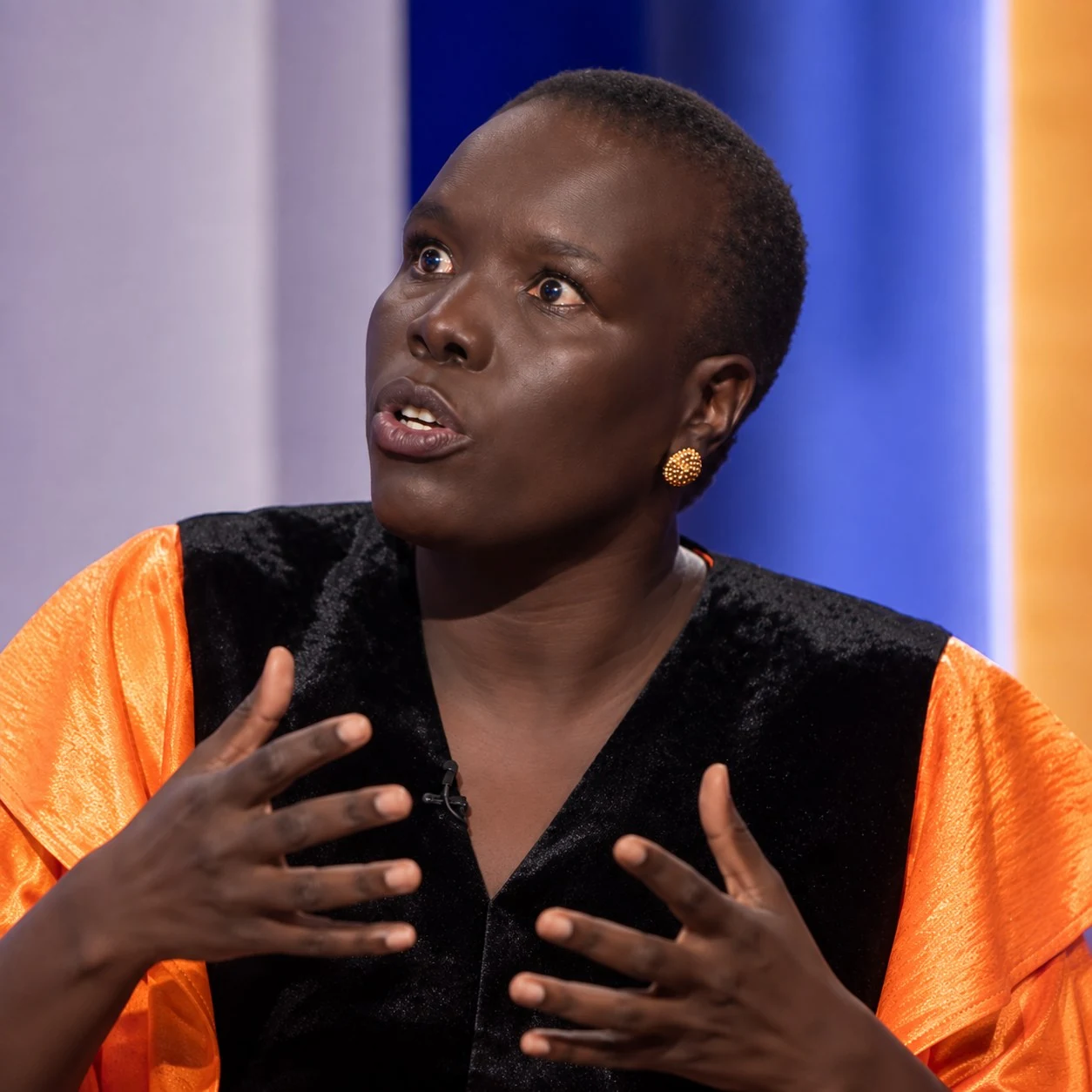
Nyuon’s intervention came as Australia’s argument over migration has broadened from numbers, housing and infrastructure into a wider dispute about national identity. During the ABC discussion she objected to broad labels such as “Anglo-Celtic” when they are used as shorthand for a supposedly uniform national culture, and argued that people from different European backgrounds do not automatically share one cultural identity simply because they are white.
She also rejected the idea that belonging in Australia should require people to erase their own background. Nyuon said she had no intention of “assimilating” if the word meant abandoning her identity in order to fit a narrow cultural template. Her remarks immediately attracted criticism because the language of assimilation has long carried different meanings in Australian politics. To some people it means accepting the law, learning English, participating in civic life and sharing basic democratic norms. To others it suggests something much stronger: shedding language, customs or identity in favour of the habits of an established majority.
The distinction matters because Australia’s migration debate is no longer only about how many people should be allowed to enter. One Nation has proposed deep cuts to temporary migration, including international students and family members of temporary skilled migrants, while the Coalition has argued for tougher tests around Australian values. At the same time, Labor ministers and multicultural organisations have warned that public concern about housing and population growth can too easily slide into assumptions about race, religion or ethnicity.
ABC reporting from the forum showed Nyuon making precisely that argument. She said debates about migration were often being used as a proxy for conversations about race and insisted that people should not have to look a particular way in order to demonstrate love for Australia. Former deputy prime minister John Anderson, who also took part in the discussion, spoke about the importance of shared values and social cohesion. The exchange illustrated a divide that cannot be resolved simply by choosing between “multiculturalism” and “assimilation” as slogans.
Australia already expects migrants to meet a range of civic and practical conditions. Visa programs distinguish between skilled, family, humanitarian and temporary entrants. English-language ability is relevant in many visa categories. Citizenship involves a test covering democratic institutions, rights and responsibilities. The law applies equally regardless of cultural background. The real disagreement is over whether those common obligations are enough, or whether a stable country also needs a stronger shared culture that newcomers are expected to adopt.
That question is especially sensitive because of Australia’s history. The Commonwealth began with migration rules designed to preserve a predominantly British and European population. The system commonly known as the White Australia policy was progressively dismantled after the Second World War and effectively ended in the early 1970s. In the decades that followed, governments increasingly embraced a multicultural model in which people could retain cultural traditions while participating in a common civic system.
Modern Australia therefore contains several layers of identity at once. Its constitutional and parliamentary institutions carry a strong British inheritance. Aboriginal and Torres Strait Islander cultures predate those institutions by tens of thousands of years. Post-war migration transformed suburbs, workplaces and families through arrivals from southern and eastern Europe. Later migration from Asia, the Middle East, Africa and elsewhere added further communities. None of that means cultural differences are irrelevant. It does mean that claims about one fixed Australian culture need to be defined carefully rather than assumed.
Nyuon’s personal history gives her remarks additional weight and controversy. Born in a refugee camp in Ethiopia after her family fled conflict in Sudan, she came to Australia as a young person and later became a lawyer and prominent advocate on human rights and multicultural issues. She has held senior roles in public life and, more recently, has spoken openly about feeling alienated from the country she once regarded as home.
That background does not make her interpretation of Australian identity automatically correct, but it helps explain why she rejects the idea that belonging must depend on cultural sameness. For Nyuon, a person can be deeply attached to Australia while maintaining a distinct cultural background. For critics of that view, attachment alone may not answer concerns about whether large-scale migration can weaken the informal customs and social expectations that help hold a country together.
Those concerns have become more prominent as migration levels have remained high and housing shortages have intensified. Australians are seeing faster population growth interact with limited housing supply, crowded services and infrastructure pressure. That makes arguments about migration volume legitimate and unavoidable. It also means advocates on every side have an incentive to separate measurable questions about housing, wages, transport and labour demand from broader claims about race.
One Nation’s latest policy illustrates how rapidly the debate is changing. The party wants to reduce temporary migration by more than 750,000 over three years, push net overseas migration into negative territory for a period and then pursue a ceiling of 130,000. It proposes large cuts to international student visas, major reductions to temporary skilled visas and restrictions on family members of temporary migrants. Critics from business, universities and agriculture have warned the plan could create labour shortages and damage major export industries, while supporters argue the economic disruption is a price worth considering if population growth is already exceeding the country’s capacity to absorb it.
Alongside those numerical proposals, questions about who should be admitted are becoming more explicit. One Nation has proposed restrictions linked to security assessments of some countries. Commentators on the right have argued for giving preference to migrants from societies they consider culturally compatible with Australia. Others reject that approach as a return to nationality-based selection and argue that individual skills, conduct and civic commitment are more relevant than origin.
Nyuon’s comments sit directly inside that argument. Her rejection of a single “white culture” challenges the assumption that cultural compatibility can be measured simply through race or broad geographic categories. At the same time, her refusal of assimilation, depending on how the term is understood, will concern Australians who believe migration works only when newcomers actively join a common national culture rather than living in parallel communities.
The most useful distinction may therefore be between cultural uniformity and civic integration. A society does not need every citizen to eat the same food, follow the same religion, speak the same language at home or share the same ancestry. It does, however, need confidence in common laws, democratic institutions and basic social expectations. The difficult work is defining those expectations clearly enough that they can be applied consistently without turning ethnicity into a test of loyalty.
Australia has managed large waves of migration before, but each period has produced arguments about whether the country is changing too quickly. Some fears proved exaggerated as migrant communities became deeply woven into national life. Other concerns, particularly around poor planning, infrastructure and concentrated disadvantage, have been more durable. That history suggests neither automatic optimism nor automatic suspicion is a sufficient migration policy.
Nyuon’s remarks have attracted attention because they force the identity question into the open. Her position is that Australians do not need to fit a single racial or cultural mould to belong. Her critics are likely to answer that every nation still requires a recognisable cultural core. Both positions contain questions that cannot be avoided by simply arguing about annual visa numbers.
As migration becomes one of the central political issues of the next federal contest, the debate will increasingly depend on whether politicians can distinguish population policy from racial generalisation and whether advocates of multiculturalism can explain what common obligations should bind a diverse country together. That is the unresolved issue underneath the argument over Nyuon’s words, and it is likely to remain long after this week’s television debate has faded.