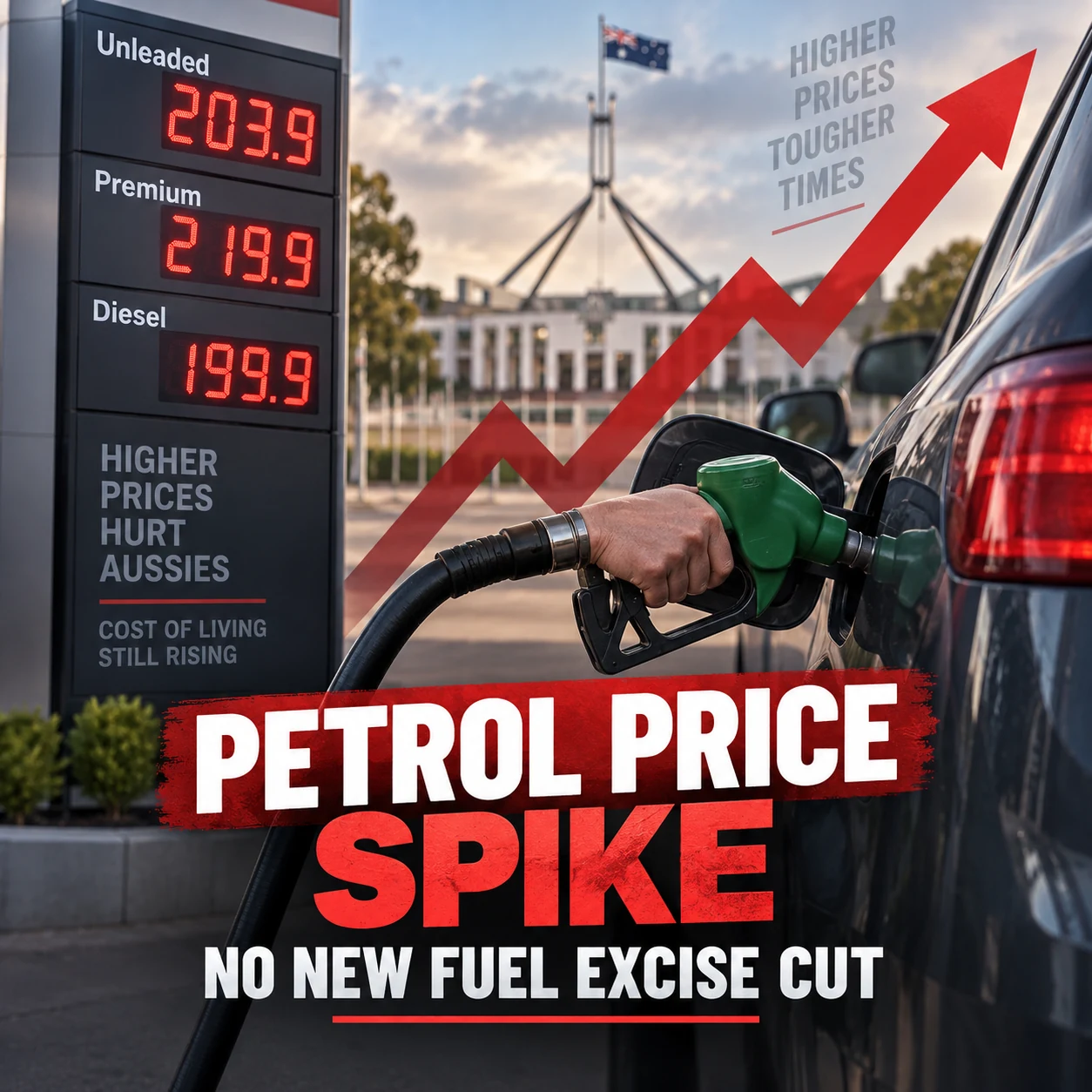
Australian motorists are facing another sharp rise at the bowser, with petrol prices reaching a four-month high as global oil markets tighten and the federal government says it has no current plans to reinstate another cut to fuel excise.
ABC News reported on Tuesday that fuel prices had returned to their highest level in four months. The latest rise follows renewed pressure on international oil and refined fuel markets, with conflict in the Middle East continuing to affect supply expectations and shipping routes.
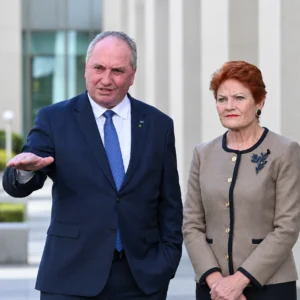
Deputy Prime Minister Richard Marles said the federal government had no plans to reinstate a cut to the fuel excise, despite the renewed increase in pump prices.
The decision means households will need to absorb the latest rise through normal retail pricing rather than expect another temporary tax measure to reduce the cost per litre.
Wholesale data shows the pressure building. Australian Institute of Petroleum figures show terminal gate petrol prices rising across major cities through the second week of September. In Sydney, the listed unleaded terminal gate price rose from 204.8 cents a litre on September 8 to 214.6 cents on September 14. Melbourne moved from 202.6 cents to 212.4 cents over the same period, while Brisbane rose from 205.1 cents to 214.7 cents.
Those wholesale prices do not translate instantly or uniformly to retail bowsers, but they are an important signal because higher wholesale costs typically work their way through to motorists over time.
The latest surge comes after a volatile year for fuel. An ACCC monitoring report published earlier this month said average retail petrol prices across Australia’s five largest cities were 204.6 cents a litre on September 2. That was still below the very high levels seen at the end of March, but it was already 33.7 cents a litre above pre-conflict levels recorded around February 20.
The same ACCC report noted that international refined petrol and diesel prices had risen again after an earlier fall. It also encouraged drivers to use fuel-price apps and websites to compare stations before filling up.
The reason international events matter so much is that Australia imports much of its refined fuel and is exposed to global benchmark prices. When crude oil rises, refining margins increase or key shipping routes are disrupted, Australian wholesale prices can move quickly even if local demand has not changed.
ABC’s latest analysis points to the escalation in the Middle East as the main driver of the current increase. Earlier conflict involving the United States, Israel and Iran disrupted the Strait of Hormuz, one of the world’s most important oil and shipping routes. Continued instability has kept energy markets on edge.
For households, higher fuel costs are especially painful because they arrive on top of other cost-of-living pressures. Motorists feel the increase directly at service stations, while businesses can face higher freight and transport costs that eventually flow through to prices for goods and services.
The government’s decision not to use another excise cut reflects the trade-off involved in tax relief. Cutting excise can reduce the pump price if the saving is passed through, but it also reduces government revenue and can be expensive if maintained for a long period.
Temporary fuel tax relief has been used before during periods of extreme price pressure. The current federal position is that another round is not planned, with ministers instead pointing to broader cost-of-living measures and the need to maintain fuel supply.
For drivers, that makes shopping around more important. Retail fuel cycles can produce large differences between nearby stations, particularly in capital cities. A driver filling a 60-litre tank can save a meaningful amount if they avoid the top of a price cycle and compare local prices before stopping.
Timing also matters. Wholesale costs can continue rising even after some retail stations have already moved higher, which means a city that looks expensive today can become more expensive again if replacement fuel arrives at a higher cost.
There is no guarantee that prices will continue climbing at the same pace. Oil markets can reverse quickly if conflict eases, supply improves or the Australian dollar strengthens. But the near-term risk remains tilted toward expensive fuel while international energy markets stay under pressure.
The next few weeks will be watched closely because fuel prices feed directly into household budgets and indirectly into inflation. If bowser prices remain elevated, the political pressure for relief is likely to grow even if the government continues to reject another excise cut.
The timing of the latest increase matters because the previous temporary excise relief has already been wound back. ACCC monitoring says the restoration of excise from 3 August, including the associated GST effect, could add up to about 18.8 cents a litre to petrol and diesel prices. That tax effect is separate from movements in international oil and refined-fuel markets, which means motorists can be hit by both at the same time.
On 2 September, the ACCC recorded average retail regular unleaded petrol across Sydney, Melbourne, Brisbane, Adelaide and Perth at 204.6 cents a litre. That was 9.3 cents higher than on 2 August and 33.7 cents higher than on 20 February, before the latest Middle East conflict escalated. It was still well below the extreme levels recorded around the end of March, showing how quickly fuel markets can move in both directions.
Since that ACCC snapshot, wholesale prices have climbed again. Australian Institute of Petroleum terminal gate data shows Sydney unleaded rising from 204.8 cents a litre on 8 September to 214.6 cents on 14 September. Melbourne moved from 202.6 to 212.4 cents, Brisbane from 205.1 to 214.7 cents and Adelaide from 202.8 to 211.9 cents over the same period.
Diesel has been even more expensive at the wholesale level. By 14 September, average terminal gate diesel was listed at 251.5 cents a litre in Sydney, 251.1 cents in Melbourne, 252.6 cents in Brisbane and 249.5 cents in Adelaide. Those figures matter for freight operators, tradespeople and regional businesses because diesel costs can flow through supply chains even when households do not buy diesel directly.
Terminal gate prices are not the same as the number displayed on a service-station board. Retailers add transport, operating costs and margins, and capital-city price cycles can create large differences between suburbs and even between stations on the same road. But wholesale movements are one of the clearest early indicators of the pressure likely to reach retail prices.
Richard Marles’ wording is also more cautious than a permanent rejection of excise relief. On Tuesday he said the government had no plans to reinstate a cut and was watching developments in the Middle East, while emphasising fuel supply as the immediate priority. A day earlier, Energy Minister Chris Bowen said the previous excise reduction had always been intended as a temporary measure and the government would not respond to every daily movement in world oil prices.
That leaves the government room to change course if conditions become substantially worse, but there is no current commitment to do so. For motorists deciding what to expect at the bowser this week, the relevant fact is that another tax cut is not part of the government’s present plan.
There is a fiscal reason ministers are reluctant to reach immediately for excise relief. Fuel excise raises billions of dollars for the Commonwealth, and even a temporary cut can carry a large budget cost. The previous reduction was designed as emergency cost-of-living relief during an unusually severe price shock, not as a permanent change to fuel taxation.
Economists also disagree about the broader effect of another cut. Lower tax at the bowser can provide immediate relief to drivers if it is passed through, but it can also increase government borrowing or require spending to be reduced elsewhere. Some economists have also warned that broad fuel subsidies can add demand at a time when inflation remains sensitive, although lower pump prices can directly reduce measured transport costs.
For families, those macroeconomic arguments can feel distant when a tank costs substantially more than it did a few weeks earlier. A household that uses two cars, drives long distances for work or lives in an area with limited public transport has less ability to avoid higher petrol prices than someone who can switch to trains, buses or cycling.
Regional Australia can face an additional disadvantage because there may be fewer competing retailers and longer transport distances between fuel terminals and service stations. That means national averages can understate the pressure in particular towns, especially when wholesale prices are rising quickly.
The ACCC’s practical advice remains to shop around. State fuel-price apps and commercial comparison services can show differences between nearby stations, and those differences can be substantial during the peaks and troughs of a retail cycle. For a 60-litre fill, even a 10-cent-per-litre difference amounts to $6.
Drivers should also be wary of assuming every city moves in the same pattern. Perth’s weekly cycle, for example, behaves differently from Sydney, Melbourne or Brisbane, and regional markets can have their own pricing dynamics. The most useful comparison is often local rather than national.
The international outlook remains the biggest uncertainty. Australia is highly exposed to global fuel markets, and disruption around major oil-producing regions or shipping routes can push refined-product prices higher quickly. A stronger Australian dollar can offset some of that pressure, while a ceasefire, additional supply or weaker global demand can pull prices back down.
That volatility is why the government is focusing publicly on supply as well as price. A high price is painful; a physical shortage would be more disruptive. Ministers have repeatedly said maintaining reliable fuel imports is a core priority while conflict affects international energy markets.
For now, the practical message for motorists is clear: petrol is back near its highest level in months, wholesale costs have been moving higher, the previous temporary excise relief has ended, and the federal government says it has no current plans for another cut. The next direction at the bowser will depend heavily on global oil markets, the Australian dollar and how quickly higher wholesale costs feed through local retail cycles.