South Australia has recorded its first confirmed H5 bird flu detection in an Australian sea lion after an animal found at Seal Bay on Kangaroo Island tested positive, adding a new wildlife concern to the state’s expanding response to the virus.
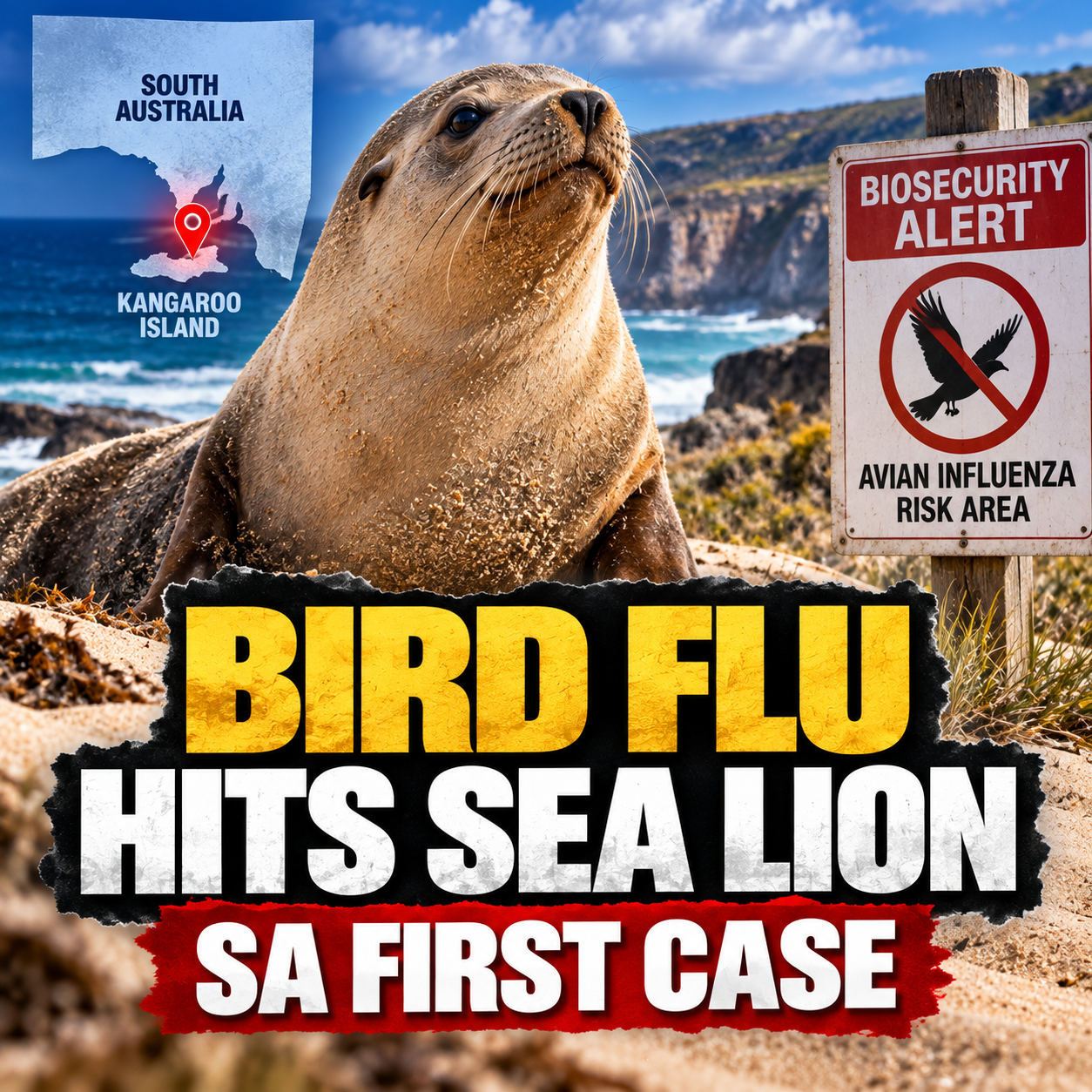
The Department of Primary Industries and Regions South Australia confirmed the detection after testing of the sea lion. ABC News reported that the animal was found at Seal Bay, one of the most important breeding sites for the species and a major wildlife tourism destination.
The case is significant because Australian sea lions are already a small and vulnerable population. Fewer than 10,000 are estimated to remain, with about 85 per cent of the population in South Australia and the remaining 15 per cent in Western Australia.
That concentration means an emerging disease affecting South Australian colonies can have national consequences for the species. Wildlife authorities have been preparing for the possibility that H5 bird flu could move from seabirds into marine mammals, particularly at locations where birds and sea lions share beaches and coastal habitats.
The virus has already been detected widely in South Australian wild seabirds. During July and August, state authorities confirmed growing numbers of H5 detections in greater crested terns, gulls and other species across the Limestone Coast, Kangaroo Island, metropolitan Adelaide and other regions.
Seal Bay has been one of the locations under close surveillance. Earlier in the outbreak, sick and dead seabirds were detected in the area and beach access was temporarily restricted as authorities tried to reduce the risk of people disturbing wildlife or carrying contaminated material into sensitive parts of the colony.
The sea lion case follows another important development in South Australia. Last month, H5 bird flu was detected in a long-nosed fur seal in the state’s south-east, which ABC News reported was Australia’s first confirmed positive case in a mammal.
The Australian sea lion detection therefore does not represent the first mammal case in the country, but it is the first confirmed H5 detection in this endangered species in South Australia. That distinction matters because Australian sea lions have a much smaller population and a limited breeding range.
Wildlife managers have spent years trying to stabilise Australian sea lion numbers against threats including entanglement, historical hunting, interactions with fisheries, habitat pressures and slow reproductive rates. Unlike some seal species that can recover relatively quickly, Australian sea lions have a long breeding cycle, which can make population losses harder to replace.
H5 bird flu adds a threat that is much harder to control directly in free-ranging wildlife. The virus can spread through contact with infected birds, carcasses, faeces and contaminated environments. Coastal colonies where seabirds gather in large numbers can therefore become areas of concern for other animals using the same habitat.
South Australia’s Department for Environment and Water says it has been working with PIRSA, SA Health, the Australian government and other agencies on a coordinated response. Measures include wildlife surveillance, feral animal control and preparations specifically aimed at protecting sea lions.
The department has listed sea lion inoculation and the installation of pup shelters among its response measures. It is also controlling feral cats around Seal Bay because cats may move through areas contaminated by infected birds and potentially spread material between locations.
Those actions reflect the difficulty of managing disease in a natural colony. Authorities cannot isolate wild sea lions in the same way a farmer could quarantine livestock, and large-scale handling of endangered marine mammals can itself create stress and risk. The response therefore relies heavily on surveillance, reducing avoidable exposure and rapidly testing animals found sick or dead.
Officials have repeatedly advised the public not to touch sick or dead birds or other wildlife. People who find affected animals are encouraged to record what they see and report it through the Emergency Animal Disease Hotline rather than attempting to move or rescue the animal themselves.
That advice is designed to protect both wildlife and people. Authorities say the risk to human health remains low, but direct contact with infected animals should still be avoided. Biosecurity agencies are particularly concerned about people carrying contaminated material on footwear, equipment or vehicles between wildlife sites.
The virus currently affecting Australian wildlife is part of the wider global spread of highly pathogenic avian influenza H5. Overseas, related H5 viruses have caused major mortality events in wild birds and have also infected mammals including seals and sea lions.
Australia remained free of the globally circulating H5 strain for longer than many other regions, but authorities had been preparing for its arrival through migratory birds. Surveillance was increased around high-risk coastal and wetland areas before the South Australian detections began.
PIRSA announced in June that ground surveys and drone monitoring were being conducted at sea lion breeding sites along the state’s west and far west coasts. The government also allocated additional funding for environmental preparedness, including work at Seal Bay Conservation Park and other areas considered vulnerable to an incursion.
The scale of South Australia’s seabird detections during winter showed why that preparation mattered. By August, confirmed cases had been found across multiple coastal regions, including numerous birds at Seal Bay and elsewhere on Kangaroo Island.
The new sea lion detection changes the focus of the response because it confirms that the virus has crossed into a species authorities were specifically trying to protect. One positive animal does not by itself establish how widely the virus is circulating among sea lions, but it raises the importance of testing additional sick or dead mammals found around colonies.
Wildlife experts will also be watching for signs of unusual mortality, neurological symptoms or changes in pup survival. The greatest concern would be evidence of sustained transmission or multiple cases within breeding colonies, particularly during periods when animals gather closely together.
There is no confirmed evidence in the information released so far that the virus is spreading efficiently from sea lion to sea lion in South Australia. The positive result shows infection occurred; determining the route of transmission and the broader risk to the population will require continued surveillance.
Seal Bay is especially important because it is both a conservation site and one of the best-known places for Australians and international visitors to see the species in the wild. Management decisions may therefore need to balance wildlife protection with visitor access if more cases are detected.
Authorities have already demonstrated that access can be adjusted quickly when required. During earlier suspected bird flu detections at Seal Bay, guided visitor activity continued from boardwalk areas while some beach access was paused to protect the colony.
For South Australians, the practical message remains consistent: avoid direct contact with sick or dead wildlife, keep pets away from carcasses, follow local closure or access instructions and report unusual wildlife deaths promptly.
For conservation managers, the stakes are higher. With fewer than 10,000 Australian sea lions estimated to remain and most of them living in South Australia, even a limited disease outbreak in the wrong colony could add pressure to a species that already has little margin for large losses.
The first confirmed H5 detection in an Australian sea lion is therefore not a reason to assume a population-wide outbreak, but it is an important warning. The next phase of testing will be crucial in establishing whether this is an isolated infection or the beginning of a broader challenge for one of Australia’s rarest marine mammals.