An Uber driver has been found guilty of abducting and sexually assaulting a 16-year-old boy after a jury rejected his claim that the teenager had made the first advance during a late-night ride home in New Zealand.
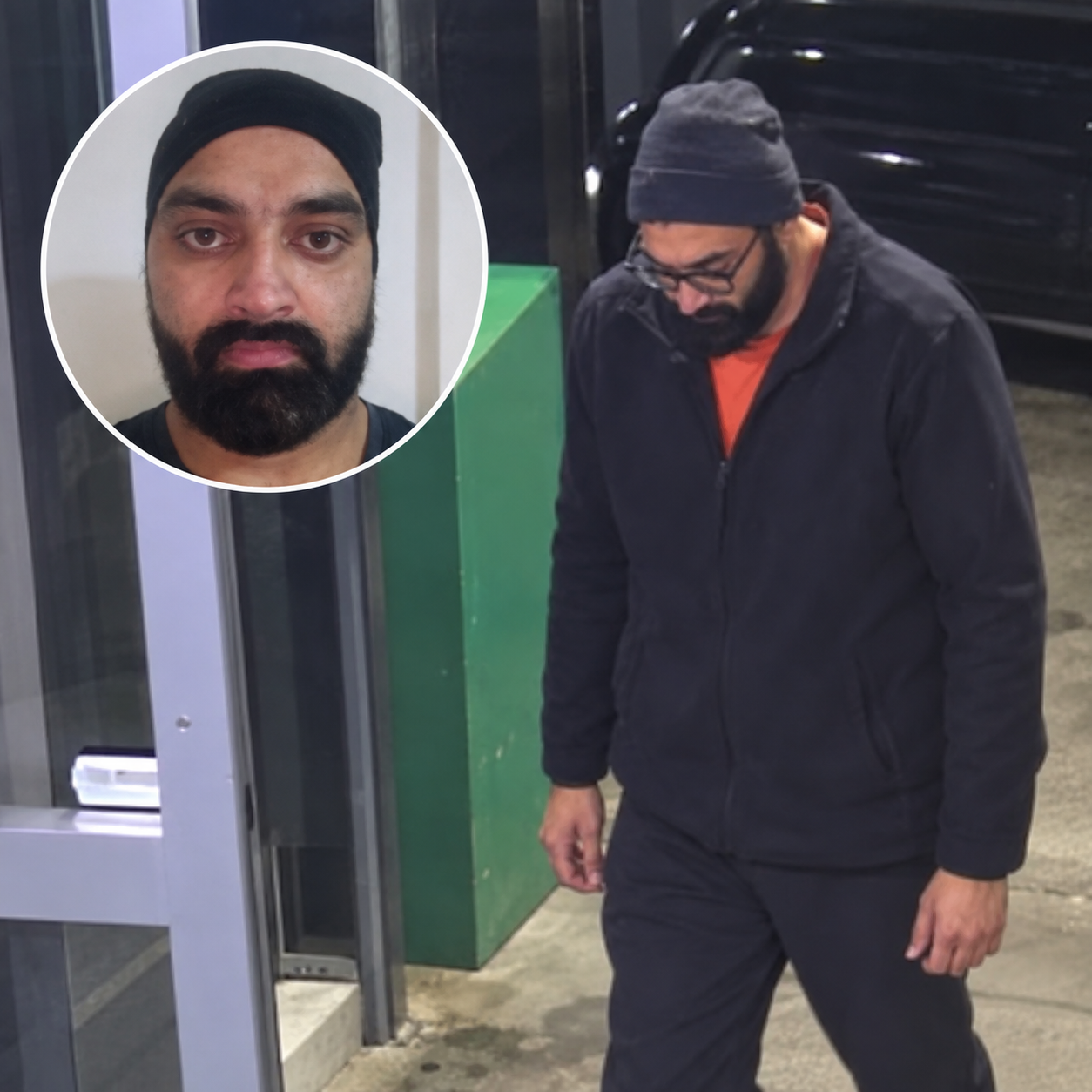
Azad Singh Mann, 32, was convicted in the Napier District Court on all four charges he faced after a jury trial.
Those charges were two counts of indecent assault, one count of abduction for the purpose of sexual connection and one count of sexual violation by unlawful sexual connection.
The unanimous verdicts were delivered last Thursday after jurors deliberated from the previous afternoon.
Mann was remanded in custody and is due to be sentenced in November.
The convictions follow an ordeal that began as an ordinary late-night Uber trip for two 16-year-old friends returning from a party in September last year.
The teenager who was later assaulted and his female best friend booked the ride at about midnight and initially sat together in the back of Mann’s silver Toyota Prius.
According to evidence presented at trial, the conversation soon became personal.
The girl told the court Mann asked the teenagers whether they were single and questioned them about their sexuality.
When the boy said he was gay, she said Mann told them he was bisexual and had a boyfriend in India.
Mann then suggested they have what the witness described as a “gay party”.
The girl said the exchange made the pair uncomfortable.
Mann also asked them to add him on Snapchat.
The boy eventually did so reluctantly.
The girl was the first passenger to be dropped home.
Her friend asked Mann to continue to his address, and Mann requested that he move into the front passenger seat to help give directions.
The teenager did so.
His evidence was that the nature of the trip changed once he was alone in the vehicle.
He told the jury Mann said he was attractive, took hold of his hand and locked the car doors.
Mann then drove to a dark, secluded car park rather than taking the teenager directly home.
The boy testified that Mann forcibly kissed him and sexually assaulted him there.
He was eventually driven home.
Meanwhile, the friend who had been dropped off was becoming increasingly concerned.
She told the court she regretted allowing the boy to remain in the vehicle and tried to call and message him after the car left.
When they finally spoke on a video call after he reached home, she said her friend appeared frightened and shaken.
He told her he had been sexually assaulted.
The teenager then told his mother.
Together they went to Napier Police Station and reported what had happened.
Mann was arrested and interviewed by police 12 days later.
His account changed during that interview, according to the evidence presented in court.
He initially said he could not remember the particular ride because he completed as many as 40 or 50 trips in a night.
Later, however, he recalled details including the teenager moving into the front seat.
He said the boy asked whether he went to the gym and that he replied he was a professional powerlifter.
He denied kissing or sexually assaulting the teenager.
“I am straight. I am not interested in men. I am a married man,” he told police, according to the trial evidence.
By the time Mann gave evidence in his own defence, he presented a different explanation for the physical interaction.
He claimed the teenager had tried to kiss him.
Mann told the court he had not disclosed that allegation during his police interview because his English was poor and he feared what he said would be misunderstood.
He also denied initiating the Snapchat exchange and denied asking the passengers about their sexuality.
His explanation for the detour to the secluded car park was that the teenager had asked him to go there to look for something he had lost.
The defence case therefore asked the jury to reject the teenager’s account and accept that the alleged sexual approach had come from the passenger.
Defence lawyer Philip Ross characterised the trial as fundamentally one person’s word against another’s.
At one point, the teenager was challenged with the suggestion that he had fabricated the allegations because Mann had rejected his advances.
The teenager denied that proposition.
Crown prosecutor Amber Hutton argued the prosecution account better fitted what happened immediately afterwards.
She asked jurors to consider why a 16-year-old would falsely tell his closest friend, then his mother and then police that he had been sexually assaulted before subjecting himself to a criminal trial.
The Crown’s case was that Mann deliberately took the teenager to the secluded car park intending to sexually assault him.
The jury accepted the prosecution case.
Its unanimous guilty verdicts mean the factual dispute at the centre of the trial has now been resolved at first instance: Mann is a convicted offender, not merely a person facing allegations.
The court must now determine the appropriate sentence.
The most serious conviction, sexual violation by unlawful sexual connection, carries a maximum penalty of 20 years’ imprisonment under New Zealand’s Crimes Act.
Abduction for the purpose of sexual connection carries a maximum of 14 years.
Each indecent assault conviction carries a maximum penalty of seven years.
Those are statutory maximums rather than predictions of what Mann will receive.
At sentencing, the judge will assess the seriousness of the offending, aggravating and mitigating factors, Mann’s personal circumstances, any pre-sentence reports and the overall principle that multiple charges must result in a proportionate total sentence.
The victim was 16 at the time of the offending.
His name cannot be published.
New Zealand law provides automatic protection for the identities of complainants in sexual cases, reflecting the sensitivity of the offending and the potential harm caused by public identification.
The case also raises a wider question about the particular vulnerability of passengers using rideshare services late at night.
A rideshare driver occupies an unusual position of trust.
Passengers enter a stranger’s vehicle expecting the driver to take them to a nominated destination safely.
They may be young, intoxicated, alone, unfamiliar with the area or dependent on the driver for transport at a time when other services are unavailable.
That makes any abuse of that position especially serious.
The issue is already receiving increased attention in New Zealand.
Data reported by 1News this month showed 465 complaints were made against taxi and rideshare drivers between January 2024 and March 14 this year.
There were 161 complaints in 2024 and 249 in 2025, with another 53 recorded during the first three-and-a-half months of 2026.
The complaints covered a wide range of behaviour and should not all be treated as criminal allegations.
But the most serious included reports of sexual assault and other inappropriate conduct.
Industry representatives have argued that the numbers may understate the true scale because sexual misconduct can be particularly difficult for victims to report.
The figures have prompted calls for tougher regulation, including greater use of in-vehicle cameras.
New Zealand’s existing system already imposes formal requirements on rideshare drivers.
Anyone carrying passengers for hire or reward generally requires a passenger, or “P”, endorsement issued through the New Zealand Transport Agency.
Applicants are subject to a “fit and proper person” assessment.
That process examines criminal history, transport offences, serious behavioural concerns and previous complaints relating to passenger services.
NZTA says convictions for serious offences including sexual crimes, violence, kidnapping and abduction can prevent a person from receiving an endorsement.
Drivers who have lived overseas for more than 12 months after the age of 14 can also be required to provide criminal-history documentation from those countries.
NZTA says it continues monitoring endorsement holders after approval using updated information.
Uber imposes additional platform requirements in New Zealand.
Its drivers must hold the relevant passenger endorsement and vehicle approvals and complete safety education that includes sexual harassment, discrimination and appropriate interactions with riders.
Uber told 1News in a separate report last week that passenger safety was its highest priority and that serious allegations, including sexual assault, could result in an accused driver being immediately suspended from the platform while an incident was investigated.
There is no publicly established evidence that Mann had a previous criminal record that should have disqualified him from driving, or that regulators or Uber ignored a known prior warning before this offence.
His conviction therefore does not, by itself, demonstrate that the background-check system failed.
It does demonstrate the limits of screening.
A vetting system can identify existing convictions and known behaviour.
It cannot guarantee that a person with no known disqualifying history will never commit an offence in future.
That is why safety debates increasingly focus not only on who is permitted to drive but on safeguards during each journey.
Those can include GPS trip records, the ability to share a live route with family or friends, rapid complaint systems, emergency functions and potentially mandatory cameras.
In Mann’s case, however, the evidence that ultimately persuaded the jury came through the ordinary criminal-justice process.
The teenager gave his account under questioning.
His best friend described what happened before the alleged assault and the condition in which she saw him afterwards.
Mann gave his own competing explanation.
The jury was asked to determine which account it believed beyond reasonable doubt.
It found him guilty on every charge.
Mann’s background has featured prominently in some reporting, including that he had moved to New Zealand relatively recently and required a Punjabi interpreter during the trial.
Those details may form part of his personal history.
They are not elements of the offences for which he was convicted.
Nothing about being Indian, Punjabi-speaking or a migrant explains sexual violence, and the jury was not asked to decide the case on that basis.
The legally relevant facts were his conduct towards a teenage passenger, the evidence about the journey and the prosecution’s proof of the four charges.
The teenager’s sexual orientation is similarly not an explanation for the crime.
His evidence was that disclosure of being gay became part of a conversation Mann then sexualised.
The jury’s verdict rejected Mann’s claim that the boy was the aggressor.
For the victim and his family, sentencing in November will mark the next stage of a process that began with what should have been an uneventful ride home.
For the rideshare industry, the case is another reminder that passenger safety depends on more than convenience, ratings and an app.
And for Mann, the question is no longer whether the jury believes the teenager.
It does.
The remaining question is how severely the court will punish a driver convicted of turning the trust placed in him by a 16-year-old passenger into an opportunity for abduction and sexual assault.