Former Liberal leader Sussan Ley has been appointed to the board of government-owned Snowy Hydro in a striking cross-party move, just months after losing the opposition leadership and ending a parliamentary career spanning almost 25 years.
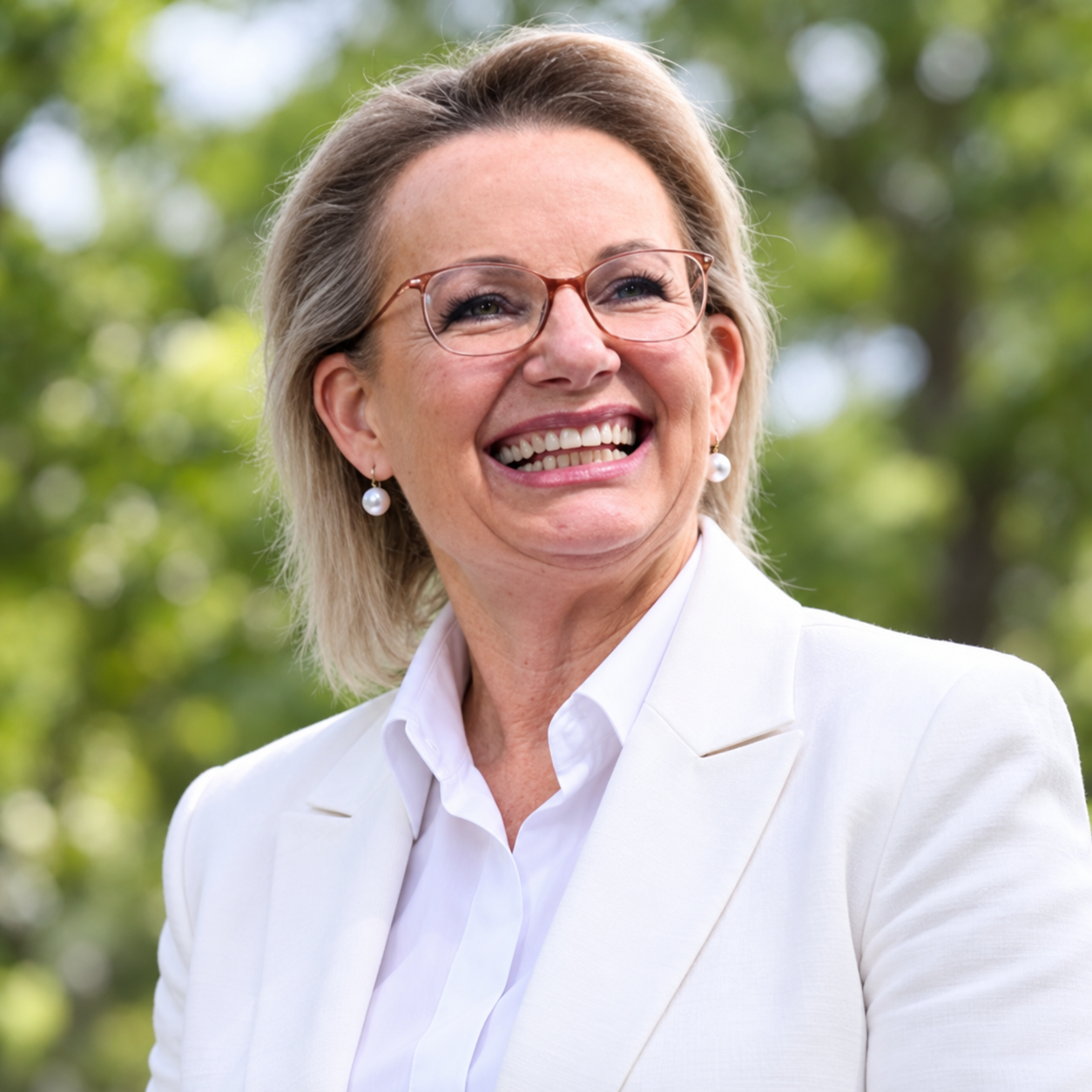
The Albanese government announced the appointment on Monday as Snowy Hydro confronts renewed cost and schedule pressure on the giant Snowy 2.0 pumped-hydro project.
Ley will join the board alongside energy-sector executive Merryn York.
Climate Change and Energy Minister Chris Bowen said Ley brought extensive experience in government and regional Australia as well as a strong understanding of Snowy 2.0.
“Their combined knowledge and skill will help Snowy Hydro deliver reliable power, stronger regional economies and more Australian jobs,” Bowen said.
Finance Minister Katy Gallagher, who shares responsibility for Snowy Hydro as one of the Commonwealth company’s two shareholder ministers, said the pair brought complementary expertise at a critical time for the business.
The appointments replace outgoing directors Sandra Dodds and Scott Mitchell.
For Ley, the role represents an unexpectedly rapid return to a nationally significant public institution.
She lost the Liberal leadership to Angus Taylor in a party-room ballot on February 13 after nine months as the first woman to lead the federal Liberal Party.
Taylor defeated her 34 votes to 17.
Ley then announced she would leave politics rather than remain on the backbench and formally resigned as the member for Farrer on February 27.
Her departure ended a parliamentary career that began in 2001 and included service as health minister, aged care minister, environment minister, deputy Liberal leader and opposition leader.
In her resignation statement, Ley said she did not know exactly what would come next and wanted her record of service to speak for itself.
Seven months later, she has been handed a role in overseeing one of Australia’s largest and most controversial government-owned infrastructure businesses.
Snowy Hydro is wholly owned by the Commonwealth and operates the historic Snowy Mountains Hydro-electric Scheme as well as generation and retail energy businesses.
Its board is not merely ceremonial.
Under Commonwealth governance arrangements, the Snowy Hydro board is the company’s accountable authority and carries responsibility for strategy, risk, financial oversight and management accountability.
That makes the appointment particularly significant because Snowy 2.0 is entering one of the most difficult phases of its development.
The pumped-hydro expansion is designed to connect the Tantangara and Talbingo reservoirs through about 27 kilometres of tunnels and an enormous underground power station.
When electricity is plentiful and cheap, water can be pumped uphill to Tantangara.
When demand rises, it can be released through turbines to generate electricity.
The project is intended to provide about 2,200 megawatts of dispatchable generating capacity and very large-scale energy storage, helping stabilise a grid containing growing amounts of variable wind and solar generation.
Its engineering ambition has never been in doubt.
Its cost and delivery history have been far more difficult.
Former prime minister Malcolm Turnbull initially promoted Snowy 2.0 in 2017 as a project that could cost about $2 billion.
That early figure is frequently used to illustrate the scale of the subsequent blowout, but it preceded the formal investment decision and detailed project development.
By the time Snowy Hydro made its final investment decision in 2018, the estimated capital cost was $5.9 billion, or $6.1 billion including exploratory works.
That is the more meaningful formal baseline against which the project’s later cost increases can be measured.
In 2023, after delays, geological problems, contract difficulties and rising construction costs, Snowy Hydro reset the project.
The approved cost rose to $12 billion.
The commercial-operation target was pushed from May 2026 to the end of 2028.
Even that reset has not held.
An Australian National Audit Office report released in June found Snowy 2.0 was behind schedule and likely to cost more than the current $12 billion budget.
As of March 31 this year, the project was reported to be 73 per cent complete and had already incurred expenditure of $11.1 billion.
The ANAO concluded Snowy Hydro had been only “partly effective” in managing the project to support value for money and delivery.
Its findings went directly to the kind of issues Ley will now confront as a director.
The auditor identified weaknesses in project governance, risk management, performance measurement and cost forecasting.
It said a reliable cost-forecasting system was still not fully developed and noted that Snowy Hydro continued to rate project-cost, geological and construction-productivity risks as extreme.
The report also made an important observation about the board itself.
It found the board had received and interrogated information about the project, but said its direction to management had been limited.
That gives the latest appointments a significance beyond political symbolism.
The Commonwealth is adding two directors while its flagship energy infrastructure company is under pressure to demonstrate stronger scrutiny of contractors, schedules and taxpayer exposure.
Snowy Hydro has accepted four of the ANAO’s five recommendations and partly accepted the fifth.
The company says it has already improved aspects of governance and maintains Snowy 2.0 remains essential to Australia’s future energy system.
Construction is continuing across multiple workfronts, with more than 5,000 workers involved at peak activity.
But cost pressure remains unresolved publicly.
Snowy Hydro announced another full cost reassessment after acknowledging in 2025 that the $12 billion target would be exceeded.
The ANAO said further Commonwealth financial support was likely to be required.
Contractor scheduling supplied to Snowy Hydro has also pointed to further slippage.
A program update in 2025 suggested first power could move to July 2028, with full commercial operation in May 2029.
Snowy Hydro objected to aspects of that contractor schedule and has continued working towards its formal targets, but the audit found the project lacked an agreed updated baseline schedule as of April this year.
The company has previously acknowledged a possible range extending to the end of 2029 for full commercial operation.
That leaves Ley joining the board at a point where directors will be expected to scrutinise not just whether the project can be completed, but at what cost and on what credible timetable.
Her appointment is unusual politically, but it is not as disconnected from Snowy Hydro as it may first appear.
Ley served as federal environment minister in the Morrison government from 2019 to 2022.
During that period, the Commonwealth environmental approval process for Snowy 2.0’s main works was completed.
The project received approval under the federal Environment Protection and Biodiversity Conservation Act in June 2020 while Ley held the environment portfolio.
She therefore dealt with the project not simply as an opposition politician but as a minister with direct regulatory responsibility for its environmental assessment.
Her former electorate of Farrer also covered a vast area of south-western NSW, including Albury and communities along the Murray and Murrumbidgee rivers.
Although the main Snowy 2.0 construction sites lie further east in the Snowy Mountains, the broader scheme has deep economic and workforce links across southern NSW.
The government explicitly cited Ley’s regional experience as one reason for selecting her.
York brings a different skill set.
She has decades of direct electricity-system experience and has held senior roles at Powerlink Queensland and the Australian Energy Market Operator.
Her background includes transmission planning, system design and major infrastructure investment — expertise particularly relevant to the way Snowy 2.0 must ultimately integrate with the National Electricity Market.
The pairing therefore appears deliberate: one former senior politician and regional MP with direct ministerial familiarity with the project, alongside an electricity-sector specialist.
The political optics will still attract attention.
Governments are routinely accused of finding board positions for former political allies.
This appointment does not fit that conventional pattern because Ley spent her parliamentary career opposing Labor and led the federal opposition against Albanese until February.
Indeed, as Liberal leader she regularly attacked Bowen and the government’s energy policies.
That makes it more difficult to describe the appointment simply as a partisan reward.
It also creates an unusual governance dynamic.
Ley is joining a company whose shareholder ministers include politicians she confronted across the dispatch box only months ago.
Her statutory duty as a director, however, will be to Snowy Hydro rather than to either political party.
That distinction matters for a government business enterprise expected to operate commercially while also delivering major national policy objectives.
Snowy Hydro’s current statement of expectations requires it to provide reliable, secure and affordable energy, facilitate decarbonisation of the National Electricity Market, maintain the original Snowy Scheme and deliver commercial financial returns.
Balancing those goals has become harder as Snowy 2.0 costs rise.
The project is publicly owned, but it is financed through a combination of Snowy Hydro’s balance sheet, debt and Commonwealth support.
The federal government supplied $1.38 billion in equity when the project proceeded and later announced a further $7.1 billion of funding support over four years.
As a result, overruns are not merely a construction-company problem.
The ANAO warned that cost risk is increasingly being carried by the Australian government.
That is why headline claims about the project’s price require precision.
Some political commentary has put the broader financial exposure associated with Snowy Hydro and Snowy 2.0 at figures around $40 billion or more by adding different categories of expenditure, financing and government investment.
That should not be confused with the official standalone construction cost of Snowy 2.0.
The last approved project cost is $12 billion, and Snowy Hydro has acknowledged that figure will be exceeded.
No final revised total has yet been publicly established in the material released by Snowy Hydro, the government or the ANAO.
That eventual number will be one of the biggest issues facing the new board.
So will transparency.
The ANAO stressed that Snowy Hydro’s shareholder expectations require high standards of governance and accountability, while its audit identified gaps in public reporting and project controls.
Ley spent much of her final year in politics arguing that governments should face stronger scrutiny over major policy decisions.
As a Snowy Hydro director, she will now sit on the other side of that equation.
She will be one of the people expected to ask hard questions of management before information reaches ministers, Parliament and the public.
For Bowen, appointing a former Liberal leader also gives the government some political insulation around a project that began under a Coalition prime minister but has undergone its largest cost reset under Labor.
Responsibility for Snowy 2.0’s history is shared across governments.
Turnbull championed it.
The Morrison government moved it through investment and environmental approval stages.
The Albanese government inherited the construction problems, approved the 2023 reset and has provided billions of dollars in further financial support.
Ley’s presence on the board reinforces that bipartisan history.
It does not make the project’s difficulties bipartisan by definition, nor does it remove the government’s responsibility as owner.
But it makes future arguments over Snowy 2.0 harder to reduce to a simple Labor-versus-Liberal fight.
For Ley personally, the role is another unexpected turn after a bruising end to her political career.
She said after losing the leadership that she had gone through a “political self-reckoning” and needed to rediscover her own voice outside the structures of party politics.
She now returns to public responsibility in a role where political slogans will matter far less than tunnelling rates, contractor performance, engineering risk and billions of dollars in capital expenditure.
Snowy 2.0 has already survived political changes, geological surprises and repeated resets.
The task facing its newest directors is simpler to describe than to achieve: establish a credible final cost, hold management and contractors accountable, and get one of Australia’s most ambitious energy projects operating without another cycle of unrealistic promises.
For Sussan Ley, that may prove every bit as challenging as the opposition leadership she left behind.