Barnaby Joyce has come under intense pressure over One Nation’s plan to give renters and mortgage holders greater access to their superannuation after conceding the party has not fully modelled the policy’s impact on retirement savings or inflation.
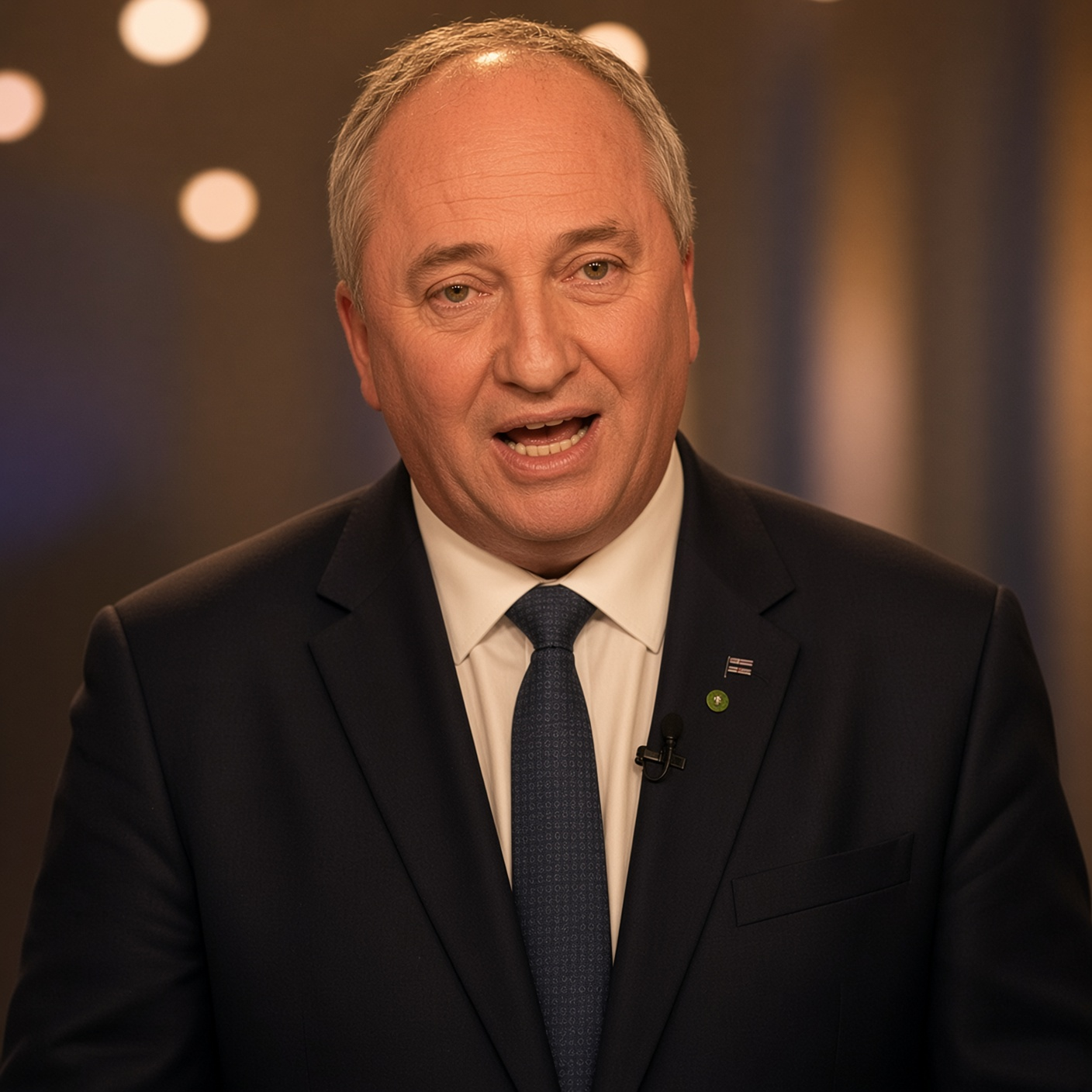
The former deputy prime minister and One Nation Treasury spokesman faced a combative interview with ABC 7.30 host Sarah Ferguson after the party unveiled a proposal allowing eligible Australians to redirect part of their future compulsory super contributions into their pay packets for up to three years.
The exchange became particularly heated when Joyce was pressed on how much workers could lose by retirement after sacrificing years of compound investment returns.
Asked whether One Nation had prepared figures showing the long-term effect on retirement balances, Joyce initially compared the question to asking how long a piece of string was.
When Ferguson responded that he was the party’s Treasury spokesman and could reasonably be expected to understand the financial consequences of the policy, Joyce replied that he was the Treasury spokesman, “not Jesus Christ”.
The interview has since become a focal point in the political fight over One Nation’s proposal, particularly because Joyce continued to challenge demands for detailed modelling during further interviews the following morning.
The controversy is larger than one television exchange.
One Nation is proposing a significant change to a compulsory retirement system affecting millions of Australians, and its opponents argue the party should be able to quantify what workers gain today, what they lose later and what the policy could do to inflation, interest rates and future Age Pension costs.
What One Nation is proposing
Australia’s compulsory Superannuation Guarantee currently requires employers to contribute 12 per cent of eligible earnings towards workers’ retirement savings.
Under One Nation’s proposal, Australians paying rent or servicing a mortgage could voluntarily redirect the equivalent of three percentage points of those contributions into take-home income for a maximum of three years.
The remaining nine percentage points would stay in super.
Existing account balances would not be withdrawn under the core proposal. Instead, it would divert part of future contributions that would otherwise be invested for retirement.
Employers would continue making the full compulsory contribution, with super funds responsible for returning the eligible portion to participating members.
One Nation also wants the diverted money to retain superannuation’s concessional tax treatment rather than being taxed at ordinary marginal income-tax rates.
Pauline Hanson says the policy is designed to give Australians immediate financial breathing room during a period of high rents, mortgage repayments and household costs.
The party’s example of a worker earning about $90,500 produces roughly $2,300 in additional after-tax income a year, or about $44 a week.
Hanson argues that money can make an important difference to a household struggling to pay electricity bills, buy food or remain in its home.
The policy would be voluntary, and Joyce says Australians should be trusted to decide whether having the money today is more valuable than leaving it invested until retirement.
Joyce challenged over retirement losses
The most difficult part of the 7.30 interview came when Ferguson tested that trade-off.
She put several hypothetical figures to Joyce, including a calculation that a 30-year-old earning $108,000 could eventually forgo $91,000 by using the scheme, with lower figures for workers entering the program at ages 40 and 50.
Joyce rejected the figures as ridiculous and questioned the investment-return assumptions behind them.
He argued that producing a precise answer required actuarial calculations involving future investment performance and other variables.
That criticism has some validity in a narrow technical sense.
The eventual cost of taking money out of super depends heavily on age, salary, investment returns, fees and how long the money would otherwise have remained invested.
A dollar removed from super at 30 has decades longer to compound than a dollar removed at 60.
But the broader problem for One Nation is that Joyce was unable to present the party’s own modelling against which alternative estimates could be compared.
During subsequent questioning on Tuesday, he acknowledged the policy had not been subjected to the type of comprehensive modelling critics were demanding.
Joyce partly blamed the party’s limited parliamentary staffing resources, arguing One Nation does not have the same policy-development capacity as the major parties.
He also challenged the assumption that detailed economic modelling should be necessary before allowing Australians greater control over money accumulated on their behalf.
That philosophical argument may resonate with voters who see compulsory super as their money rather than government money.
It does not answer the economic questions.
Industry modelling points to a substantial long-term cost
Super Members Council has produced its own estimate of the effect on retirement savings.
Its modelling suggests a median full-time worker redirecting three percentage points of contributions for the full three years could retire with about $25,000 less.
For a couple participating in the scheme, the organisation estimates the combined reduction could exceed $50,000.
Those figures are considerably lower than the largest hypothetical figure put to Joyce during the 7.30 interview, illustrating how different assumptions can produce very different retirement outcomes.
Super Members Council represents the not-for-profit super sector and has a clear interest in maintaining retirement savings inside the system, so its modelling should not be treated as politically neutral.
But the fundamental mathematical issue it highlights is not controversial: withdrawing or diverting contributions at a younger age sacrifices both the original amount and the future investment earnings that money could have generated.
That compounding effect becomes much larger over several decades.
For One Nation, the counterargument is that future retirement wealth is not the only financial objective that matters.
A household facing eviction, mortgage stress or serious cost-of-living pressure may reasonably value $40 or $50 a week today more highly than a larger super balance decades later.
The policy debate is therefore ultimately about who should decide that trade-off.
Inflation may be an even bigger problem
The strongest economic criticism of the proposal concerns inflation.
One Nation has argued the plan would be inflation-neutral because the money already belongs to workers and is already circulating through investments made by super funds.
Joyce repeated that argument during his interviews.
Independent economist Saul Eslake strongly disagrees.
Super contributions are typically invested in assets such as shares, bonds, infrastructure, property and overseas investments. That is very different from putting another $40 or $50 into a household’s weekly spending budget.
If millions of eligible workers converted part of their super contributions into disposable income and then spent the money, total household demand would rise.
In an economy already confronting inflation pressure, that could make the Reserve Bank’s job harder.
Association of Superannuation Funds of Australia chief executive Mary Delahunty has described One Nation’s proposal as “economically disastrous”, arguing it risks pushing both inflation and the cost of living higher while simultaneously reducing retirement balances.
Economist Chris Richardson has been similarly critical, arguing Australia’s housing crisis is fundamentally a shortage of housing rather than a shortage of money available to chase housing.
Giving households more spending power without increasing supply could therefore place additional upward pressure on prices.
Joyce says Australians can make their own judgement
Joyce’s defence rests heavily on individual choice.
He argues people are capable of comparing the return they receive from super against the immediate benefit of reducing rent, mortgage stress or other household costs.
During his subsequent ABC interviews, he said Australians were not stupid and would leave their money invested if that was clearly the financially superior option for them.
That argument raises another question, however.
The Australians most likely to need immediate access to extra income are also likely to be the people least able to absorb a reduction in retirement savings.
Lower-income households generally have smaller super balances to begin with and may be more dependent on the Age Pension later in life.
If they disproportionately use the scheme, part of the long-term cost could eventually shift from individual super balances to government pension expenditure.
Treasurer Jim Chalmers has repeatedly challenged One Nation to explain that Budget impact.
He has labelled the proposal an “absolute shambles” and argues Joyce has not answered how much it could increase future Age Pension costs.
Prime Minister Anthony Albanese has also attacked the plan, arguing One Nation is undermining the principle that compulsory super should be universally preserved for retirement.
Australia has seen early super access before
The inflation debate is not entirely theoretical.
During the COVID-19 pandemic, the Morrison government allowed eligible Australians suffering financial stress to access up to $20,000 from their superannuation.
About 2.6 million Australians withdrew approximately $38 billion under the scheme.
Research later examined how quickly that money was spent.
ABC reporting on the research found almost half of the withdrawn money was spent within eight weeks, while spending rose sharply immediately after payments arrived in personal accounts.
Supporters of early access can point out that the pandemic scheme occurred under extraordinary circumstances and involved withdrawals from existing balances rather than a limited diversion of future contributions.
But the experience provides evidence against assuming that money made available from super will simply sit untouched in bank accounts.
For households requesting access precisely because they are under financial pressure, spending the money is generally the purpose.
That is why economists are focused on aggregate demand.
A political vulnerability as One Nation rises
The timing is particularly important for One Nation.
The party has surged in recent national polling and is increasingly being scrutinised as a potential major force rather than a minor protest party.
That brings a different standard of policy examination.
A party polling close to or ahead of Labor and the Coalition can expect its Treasury spokesman to face detailed questions about modelling, costs and unintended consequences.
Joyce’s combative performances may appeal to supporters who believe political and media institutions demand unrealistic levels of detail from insurgent parties.
But opponents will use the same interviews to argue One Nation’s political rise is moving faster than its capacity to develop governing policy.
That is why the significance of the exchange is not whether Joyce “melted down” on television.
That description is subjective.
The verifiable issue is that the Treasury spokesman for a party proposing a major change to Australia’s retirement system was unable to provide his own modelling when challenged on retirement losses and inflation.
One Nation has a clear argument for its proposal: Australians under pressure should have more control over their own money.
Its critics have an equally clear question.
If millions of workers take up that choice, what will it cost them — and the wider economy — later?
Until One Nation produces detailed figures of its own, that question will continue to follow Joyce.






