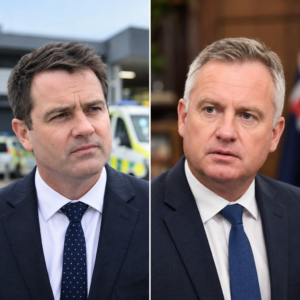
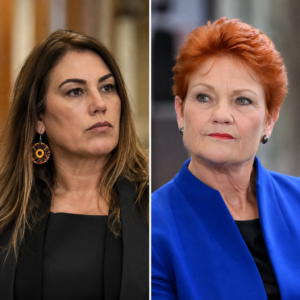
Pauline Hanson’s One Nation has intensified its campaign for stronger national security laws by offering to work with the Coalition on legislation aimed at preventing Islamic State-linked Australians from returning to the country, while senior Liberal figures have rejected suggestions of any political partnership with the minor party.
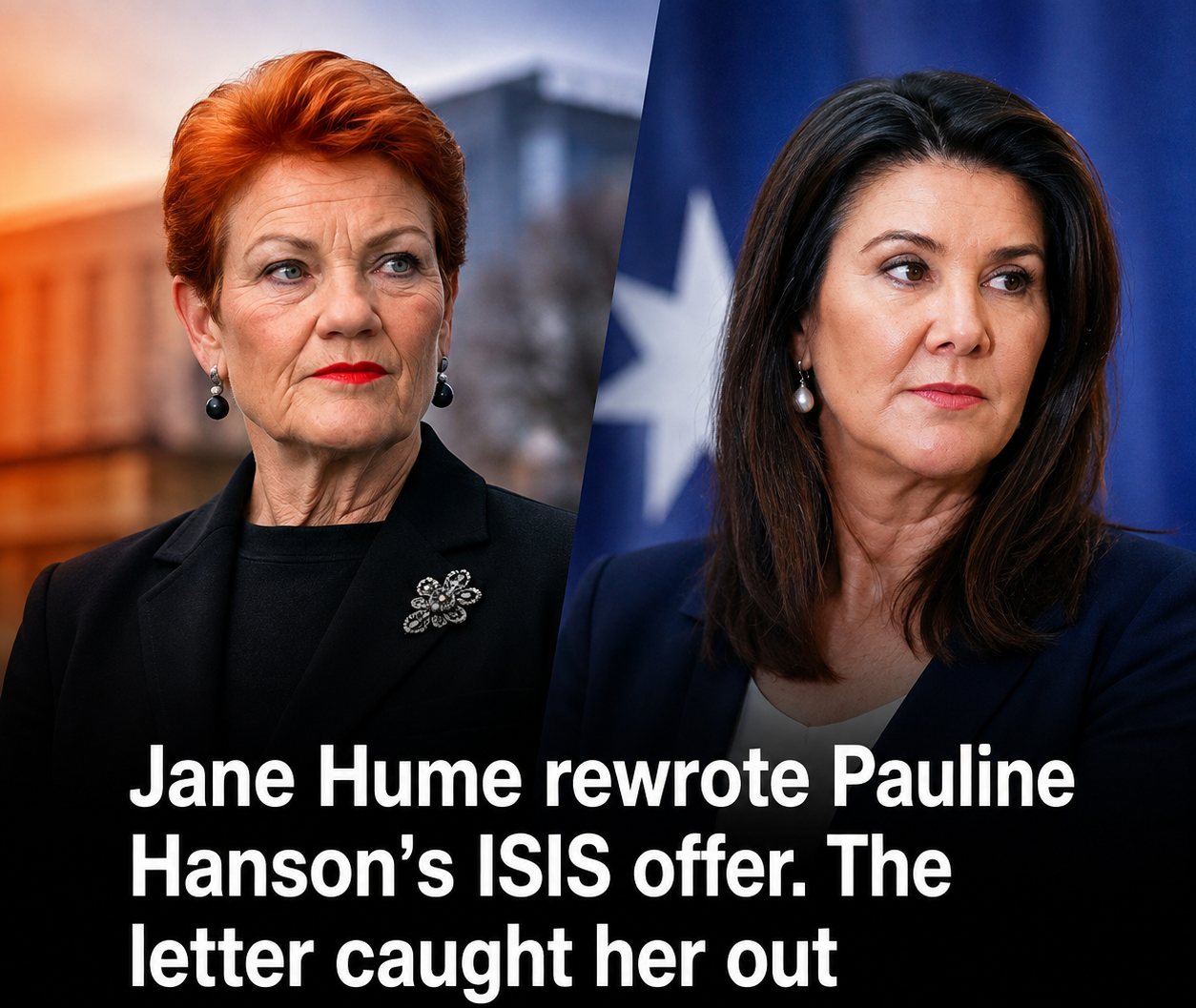
The latest political dispute follows One Nation’s release of proposed legislation designed to tighten Australia’s legal framework governing foreign terrorist fighters and individuals associated with Islamic State.
Hanson says she personally wrote to Opposition Leader Angus Taylor offering to help develop stronger legislation, emphasising that national security should take precedence over political rivalry.
“I don’t care whose name is on the paper,” Hanson said, arguing that preventing dangerous extremists from returning to Australia should be a bipartisan objective rather than a partisan contest.
According to Hanson, her offer was intended to allow the Coalition to incorporate any elements of One Nation’s proposal that could attract broader parliamentary support.
She has argued that Australia’s existing legal framework remains inadequate following several High Court decisions that struck down earlier citizenship-stripping provisions introduced under previous Coalition governments.
The Coalition, however, has distanced itself from the proposal.
Appearing on Sunrise, Liberal deputy leader Jane Hume rejected suggestions that the Coalition needed One Nation’s support to pursue stronger anti-terrorism laws.
Hume said the Liberal Party had no intention of forming a coalition with One Nation and remarked that “Pauline should know that after 30 years in politics.” She reiterated that the Liberal Party’s long-standing governing partnership remains with the National Party.
Her comments followed renewed speculation about possible cooperation between conservative parties after One Nation experienced stronger polling in recent months.
Hume maintained that any future national security legislation would be developed by the Coalition independently rather than through formal collaboration with One Nation.
The disagreement comes against the backdrop of growing public debate over Australians linked to Islamic State who may seek to return from overseas.
Earlier this year, several women and children connected to former ISIS-controlled areas in Syria were repatriated to Australia under government-managed arrangements, with some adults subsequently facing criminal charges after arrival.
Attention has also focused on a group of Australian men currently detained in Iraq, including former Islamic State fighter Dr Tareq Kamleh, whose future legal status remains uncertain.
Those developments have intensified calls from some politicians for stronger legislative safeguards before any additional foreign terrorist fighters are permitted to return.
One Nation’s proposed Protecting Australians from Foreign Terrorist Fighters Bill 2026 would create a series of new powers designed to restrict the return of Australians alleged to have fought for terrorist organisations overseas.
Among the measures outlined by the party are foreign terrorist fighter exclusion orders, expanded ministerial powers relating to passports and travel documents, stricter bail provisions for terrorism matters and new criminal offences targeting people who knowingly facilitate the return of foreign terrorist fighters without legal authorisation.
Hanson argues that Australians who voluntarily joined Islamic State or other designated terrorist organisations should not be permitted to re-enter Australia simply because they hold Australian citizenship.
She contends that existing legislation has proved insufficient after several key counter-terrorism measures were found to be constitutionally invalid by the High Court, requiring Parliament to consider alternative approaches that comply with constitutional protections.
The Coalition has likewise advocated tougher national security measures, although it has indicated it intends to pursue its own legislative package.
Opposition Leader Angus Taylor has made immigration and border security central themes of his leadership and has argued that Australians expect stronger protections against terrorism and violent extremism.
The Albanese Government, meanwhile, has maintained that any Australians returning from conflict zones are subject to extensive security assessments, criminal investigations where appropriate and ongoing monitoring by law enforcement and intelligence agencies.
Government ministers have also argued that Australia’s counter-terrorism laws must continue to operate within constitutional limits and remain consistent with judicial oversight.
Legal experts have previously noted that Australia cannot simply prevent citizens from returning indefinitely if doing so would conflict with constitutional protections or international legal obligations.
For that reason, successive governments have sought to balance national security concerns with legal constraints, often resulting in legislation that has later been tested before the courts.
The political disagreement therefore extends beyond the specific wording of One Nation’s proposal.
It also reflects broader differences over how Australia should respond to returning foreign terrorist fighters while ensuring legislation survives constitutional scrutiny.
Hanson argues stronger preventative powers are essential and says bipartisan cooperation would increase the likelihood of durable reform.
By contrast, Coalition leaders have emphasised that while they support tougher security measures, they do not intend to pursue those reforms through any formal arrangement with One Nation.
The issue is expected to return to Parliament during the next sitting period.
One Nation has indicated it will continue seeking support from crossbench senators and other parties for its legislation, while the Coalition prepares its own proposals and the Government continues defending its current national security framework.
Whether any of those competing approaches ultimately secures sufficient parliamentary support remains uncertain.
What is clear is that the question of how Australia should deal with citizens linked to overseas terrorist organisations has once again become a significant issue in the national political debate, with differing views emerging not only between government and opposition but also among parties on the conservative side of politics.