Veteran commentator Andrew Bolt has launched a fresh attack on the ABC, arguing the national broadcaster’s handling of a controversial satirical segment targeting mining executive Gina Rinehart demonstrates an institutional culture that he believes can no longer be fixed through incremental reform.
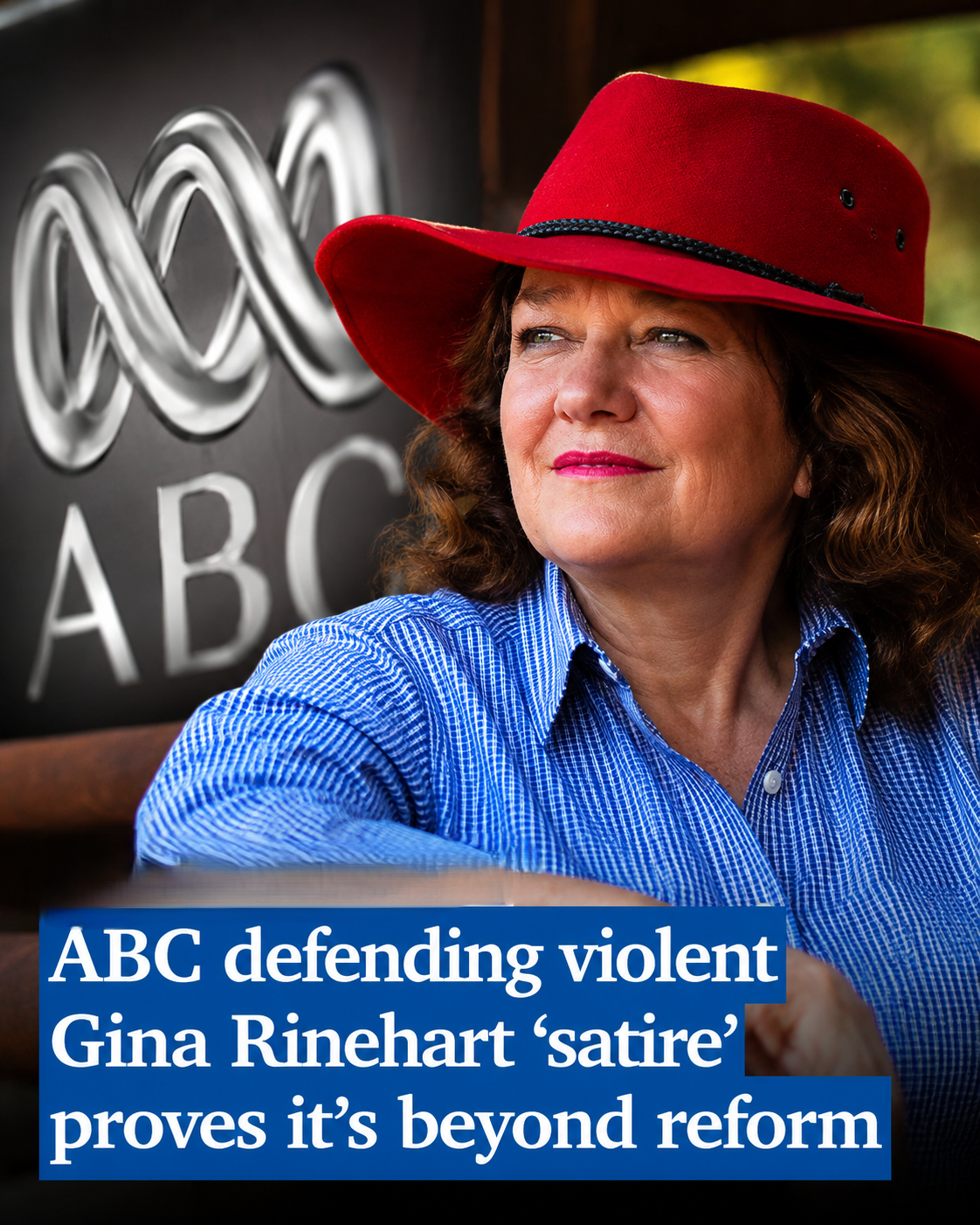
Writing in an opinion column, Bolt said an organisation whose leaders considered it “satirical” or “justifiable” to broadcast graphic fictional violence against a woman should not continue receiving taxpayer funding.
His criticism follows weeks of controversy surrounding an episode of the ABC program Race Around the World, which included a short film by contestant Kate McGuinness featuring graphic and violent language directed at Australia’s richest woman, Gina Rinehart.
The segment prompted widespread condemnation from politicians, business leaders and commentators across the political spectrum after it aired in July.
Hancock Prospecting, the company chaired by Rinehart, accused the ABC of broadcasting material that went well beyond legitimate satire and demanded the broadcaster remove the segment, issue a public apology and investigate how it had been approved for broadcast.
Initially, the ABC defended the program while referring complaints to its internal Ombudsman.
The Ombudsman ultimately concluded that the segment did not breach the broadcaster’s editorial policies, finding that a reasonable audience would likely interpret the material as exaggerated political satire rather than a literal encouragement of violence.
However, the Ombudsman also acknowledged the strong public reaction generated by the program.
That finding became a central focus of Bolt’s criticism.
He argued the real issue was not simply the content itself but the willingness of senior editorial decision-makers to approve, defend and initially continue distributing the segment despite the public backlash.
According to Bolt, the controversy reflects what he describes as a broader cultural problem inside the national broadcaster rather than an isolated editorial error.
The dispute took a significant turn when ABC Managing Director Hugh Marks later issued a formal apology to Rinehart.
Although maintaining that the Ombudsman’s findings would stand, Marks acknowledged that the segment failed to meet community expectations and announced that the offending material had been removed from the program.
The ABC also committed to reviewing its editorial policies relating to depictions of violence, particularly within entertainment and satirical programming.
McGuinness separately apologised for the distress caused by the film.
She said her intention had been to produce absurd political satire rather than encourage or normalise violence, stressing that she never intended viewers to interpret the fictional scenario literally.
Even after the apology, Bolt argued the broadcaster’s response remained inadequate.
In his opinion piece, he suggested the fact the program had progressed through the ABC’s editorial approval processes without objection demonstrated systemic failures that could not be solved through minor policy adjustments alone.
The controversy has generated criticism well beyond conservative media.
Several federal ministers publicly described the segment as unacceptable, despite emphasising that the ABC operates independently of government.
Health Minister Mark Butler labelled the content “revolting”, while Communications Minister Anika Wells also condemned the broadcast even as she reiterated the importance of editorial independence.
The issue has also attracted legal attention.
Hancock Prospecting placed ABC executives on notice over potential legal claims, alleging the broadcaster’s actions breached both civil and criminal law.
The company demanded not only an apology but also a detailed investigation into the editorial processes that allowed the segment to reach air.
The ABC has maintained that while the Ombudsman found no breach of editorial standards, the broadcaster nevertheless recognised that the content fell short of community expectations.
That distinction—between compliance with editorial rules and broader public expectations—has become one of the central themes in the ongoing debate.
Supporters of the broadcaster argue that satire has traditionally enjoyed broad protection as a form of political expression and that controversial artistic works should not automatically be interpreted as literal advocacy.
Critics counter that publicly funded media organisations have a heightened responsibility to ensure violent language directed at identifiable individuals is handled with appropriate editorial judgement regardless of artistic intent.
Bolt’s article firmly aligns with the latter position.
He contends that taxpayers should not be expected to fund an organisation that, in his view, was prepared to defend violent rhetoric under the banner of satire.
His argument extends beyond the individual program to challenge the ABC’s broader editorial culture and governance.
The controversy has also prompted discussion about the balance between creative freedom, satire and public accountability within publicly funded broadcasters.
Media law specialists note that editorial standards and legal liability are separate questions: content may comply with internal guidelines while still generating legitimate public criticism or reputational consequences.
The ABC’s decision to apologise despite the Ombudsman’s findings reflects that distinction.
Rather than overturning the editorial ruling, management accepted that the broadcast did not meet the standards many Australians reasonably expected from the national broadcaster.
Whether the ABC’s promised policy review will satisfy critics remains uncertain.
For Bolt, the apology itself does not resolve what he sees as a much deeper institutional problem.
For the ABC, the review represents an opportunity to reassess how violent imagery and language are handled in satirical programming while maintaining editorial independence.
As the debate continues, the controversy has become one of the most prominent discussions in recent years about the limits of satire, the responsibilities of publicly funded media and the standards Australians expect from their national broadcaster.






