Victoria’s political fallout from the Independent Broad-based Anti-corruption Commission’s (IBAC) long-awaited Operation Richmond report has intensified, with Opposition Leader Jess Wilson demanding Premier Ben Carroll dismiss a senior public servant implicated in the investigation by 5pm.
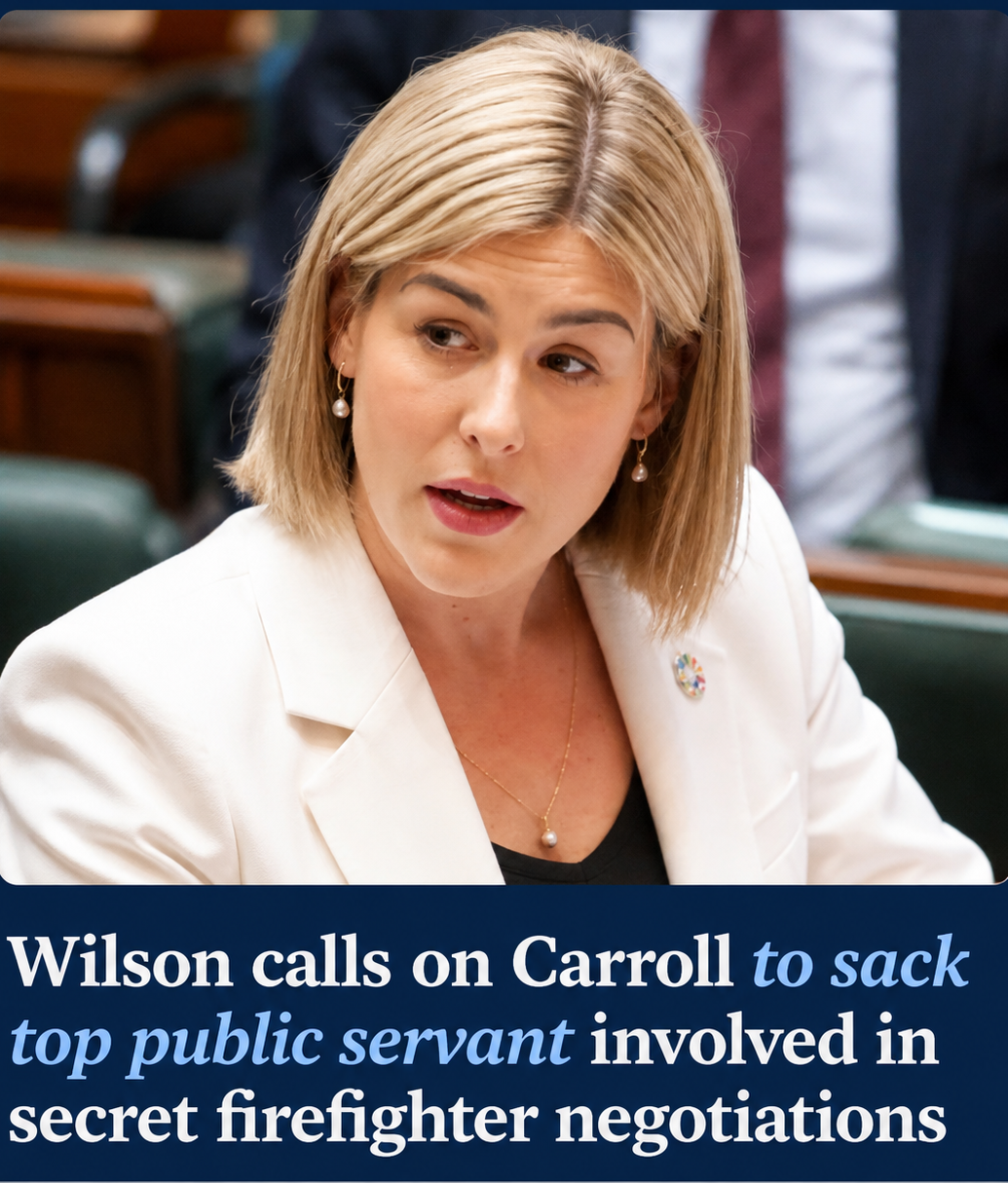
Wilson’s ultimatum came less than a day after IBAC released its findings into secret negotiations between the former Andrews government and the United Firefighters Union (UFU), concluding that several senior officials engaged in conduct described as “serious and concerning“, although the watchdog stopped short of making findings of corrupt conduct under Victoria’s legislation.
The Opposition is now focusing attention on Tony Bates, a senior public servant who featured prominently in the report.
IBAC found Bates played a significant role in confidential negotiations involving the UFU during enterprise bargaining discussions, with investigators concluding that established government processes were bypassed and key decision-makers were excluded from important negotiations.
Wilson argued the findings left Premier Carroll with little room for compromise.
She said Victorians deserved confidence that senior public servants would be held accountable when integrity watchdogs identified serious governance failures.
According to the Opposition Leader, allowing the official to remain in a senior leadership position would undermine public confidence in the government’s commitment to integrity reforms.
The demand represents one of the strongest political responses since the publication of Operation Richmond and places additional pressure on Carroll, who assumed the premiership following Labor’s leadership transition.
While Carroll has pledged to carefully consider all of IBAC’s recommendations, he has so far resisted committing to the specific personnel action sought by the Coalition.
The Premier instead emphasised that his government would study the report in full before determining what administrative or legislative responses would follow.
Operation Richmond examined the Victorian Government’s dealings with the United Firefighters Union during negotiations surrounding the controversial 2016 enterprise agreement and the subsequent establishment of Fire Rescue Victoria.
The investigation found that confidential negotiations took place outside normal government processes, with Emergency Services Minister Jane Garrett excluded from key discussions despite being the minister responsible for the portfolio.
IBAC concluded that those arrangements significantly weakened transparency and accountability within government decision-making.
The watchdog was also highly critical of the level of influence exercised by long-time UFU secretary Peter Marshall.
Its report concluded that the union leader enjoyed “extraordinary influence” over senior government figures during negotiations, with multiple meetings and communications occurring outside established administrative channels.
Investigators found that these practices created substantial integrity risks even though they did not satisfy Victoria’s statutory definition of corruption.
Former premier Daniel Andrews responded to the report by stressing that IBAC made no findings of corrupt conduct against him.
In a public statement released after the report’s publication, Andrews said there were “no findings in relation to corrupt conduct made about me“, while acknowledging the investigation’s completion after years of legal proceedings.
That distinction has become central to the political debate.
Labor figures have repeatedly noted that IBAC did not conclude Andrews or other senior officials engaged in legally corrupt conduct, while the Coalition argues the report nevertheless exposes profound failures in governance and accountability.
IBAC’s findings highlighted several examples where government policies, ministerial conventions and public sector standards were disregarded during negotiations.
The commission criticised the use of secret meetings, informal communication channels and the deliberate exclusion of relevant ministers and agencies from major policy discussions.
Although investigators concluded those actions created significant corruption risks, Victoria’s legislative framework requires a higher legal threshold before conduct can formally be classified as corrupt.
The Opposition argues that legal technicalities should not prevent administrative consequences where serious governance failures have been identified.
Wilson said the report demands immediate action rather than prolonged review, maintaining that accountability must apply equally to elected officials and senior bureaucrats.
Her call reflects broader Coalition criticism that Labor has failed to sufficiently distance itself from the practices examined during Operation Richmond.
For Carroll, however, the issue presents a delicate political balancing act.
Having only recently assumed the premiership, he has sought to present his government as focused on restoring public confidence while avoiding decisions that could appear politically motivated before the report’s recommendations have been fully assessed.
He has committed to implementing appropriate integrity reforms but has not indicated whether individual disciplinary action will form part of the government’s response.
The report has also reignited debate over whether Victoria’s anti-corruption laws should be strengthened.
Several legal experts and integrity advocates have argued that Operation Richmond illustrates limitations in the current legislative framework, where conduct can be described as highly improper yet still fall outside the statutory definition of corruption.
Those concerns have prompted renewed calls for broader powers for IBAC and expanded definitions of misconduct.
Political attention is now shifting from the findings themselves to how the government chooses to respond.
Questions remain over whether Carroll will order disciplinary action against any current public officials, introduce legislative reforms recommended by IBAC or adopt broader changes to ministerial accountability processes.
Those decisions are likely to shape public perceptions of the new Premier’s leadership during his first major integrity test in office.
Meanwhile, the Coalition continues to argue that meaningful accountability requires consequences for individuals identified in the report, not simply commitments to future reform.
Whether Carroll accepts that argument—or opts instead for a more measured institutional response—will remain one of the key political questions as Victoria continues to deal with the aftermath of one of the state’s most significant integrity investigations.