Pauline Hanson’s One Nation is facing the prospect of losing its legal status in Queensland after failing to provide three years of audited financial statements required under state law, placing the party under renewed scrutiny as its political support continues to grow nationally.
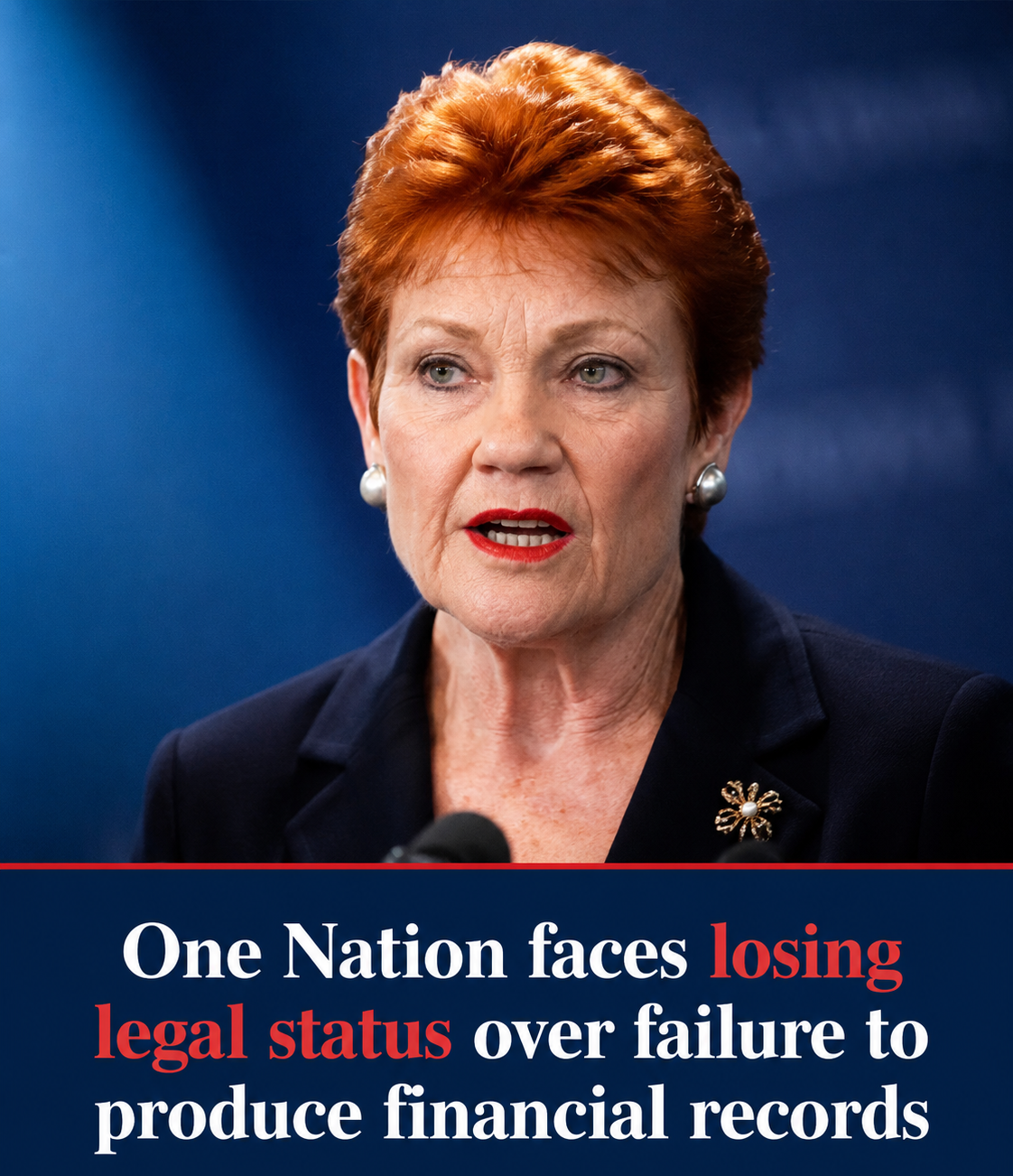
The issue centres on One Nation Queensland Division Inc, the party’s home-state organisation, which has been directed by Queensland’s Office of Fair Trading (OFT) to lodge audited financial statements covering the 2022-23, 2023-24 and 2024-25 financial years.
According to the regulator, the party submitted its annual returns for each of those years but failed to include the audited financial statements required under the Associations Incorporation Act 1981.
The OFT has now given the organisation until 18 August 2026 to provide the outstanding documents.
If the party fails to comply by the deadline, enforcement action may follow. Possible measures include infringement notices, a show-cause process and, ultimately, cancellation of the Queensland division’s incorporated status.
As Queensland is One Nation’s organisational base, losing incorporated status would represent a significant administrative setback, although it would not automatically prevent the party from contesting elections under Australia’s electoral laws.
The legal issue concerns compliance with Queensland’s incorporated associations legislation rather than the party’s registration with the Australian Electoral Commission.
Under Queensland law, incorporated associations are required to prepare audited financial statements when they meet the relevant reporting thresholds and lodge those documents alongside their annual returns.
The Office of Fair Trading confirmed that while One Nation had eventually submitted the overdue annual returns, the required audited financial statements remained outstanding.
The financial compliance issue follows months of scrutiny surrounding One Nation’s internal administration.
Earlier reporting raised questions about delays in lodging annual returns, governance practices and financial reporting procedures within the party’s Queensland organisation.
Those issues attracted increased public attention as One Nation’s electoral support strengthened across several opinion polls during the past year.
Pauline Hanson is listed as president of the Queensland division, while New South Wales Senator Sean Bell serves as secretary.
As office holders of the incorporated association, they may face consequences under the legislation if the organisation fails to satisfy its legal reporting obligations.
Despite suggestions that the party had defied the regulator’s request, One Nation has since indicated it intends to comply.
A party spokesperson told ABC News that One Nation was working with the Office of Fair Trading and planned to lodge the outstanding audited financial statements before the deadline.
“One Nation is complying with the Office of Fair Trading’s requirements,” the spokesperson said, adding that the requested audited statements would be provided by 18 August.
That position differs from earlier reports suggesting the party had resisted the regulator’s demands.
While the missing documents remain outstanding, the party now says it is actively preparing the required financial statements rather than refusing to submit them.
The Office of Fair Trading has not indicated whether any enforcement action will be necessary if the documents are lodged before the compliance deadline.
Regulators generally have discretion to determine whether further action is appropriate after reviewing outstanding documentation and assessing whether statutory obligations have ultimately been met.
The controversy comes at a politically sensitive time for One Nation.
The party has experienced a resurgence in public support during the past year, benefiting from voter concerns about housing affordability, immigration, crime, cost-of-living pressures and dissatisfaction with Australia’s major political parties.
Recent polling has placed One Nation at historically strong levels of primary support, increasing scrutiny of both its policies and internal operations.
At the same time, the party has expanded its organisational footprint ahead of the Victorian state election, announcing Warren Pickering as its Victorian leader and unveiling the first group of candidates while promising additional policy announcements in coming months.
That broader expansion has made the Queensland financial reporting issue particularly significant, as critics argue a party seeking greater electoral influence should demonstrate strong governance and financial compliance.
Political opponents have used the controversy to question One Nation’s administrative standards.
Supporters, however, have argued that the dispute relates to compliance documentation rather than allegations of financial misconduct or misuse of public money.
Importantly, neither the Office of Fair Trading nor any public authority has alleged that party funds were improperly spent.
The current issue concerns the failure to provide audited financial statements within the timeframe required by Queensland legislation.
Whether the matter escalates now depends largely on what happens before the 18 August deadline.
If the outstanding audited accounts are lodged and accepted by the regulator, the Queensland division may avoid more serious enforcement action.
If they are not, the Office of Fair Trading has indicated it may begin formal proceedings that could ultimately threaten the incorporated status of One Nation’s Queensland organisation.
For Pauline Hanson and her party, the episode illustrates how growing electoral success often brings increased scrutiny of governance, compliance and financial accountability.
As One Nation continues seeking to convert rising public support into electoral gains, the outcome of the Queensland compliance process is likely to remain under close observation by both political opponents and regulators in the weeks ahead.






