Plans to erect a taxpayer-funded bronze statue of former Victorian premier Daniel Andrews are continuing despite mounting political criticism and growing public opposition, with the proposed monument becoming one of the first major political flashpoints confronting new Premier Ben Carroll.
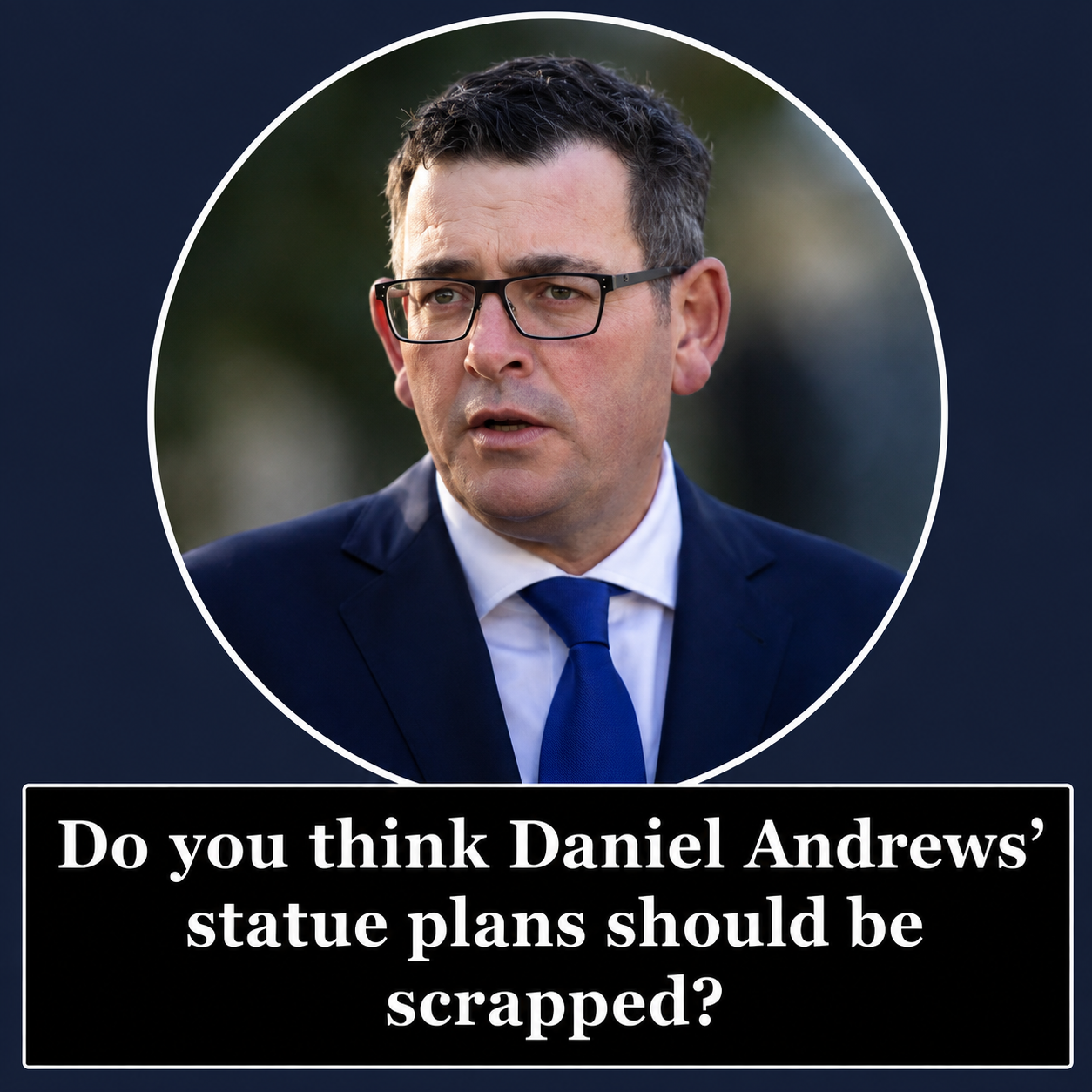
The Victorian Government is proceeding with a commission worth $134,304 to create a bronze statue honouring Andrews, who served as premier from December 2014 until September 2023, making him Victoria’s longest-serving Labor premier.
The project follows a long-standing Victorian policy introduced during the Kennett government under which premiers who serve more than 3,000 days in office are recognised with a permanent bronze statue along Treasury Place in Melbourne.
Previous recipients include former premiers John Cain Jr, Rupert Hamer, Henry Bolte and Albert Dunstan, whose statues stand outside Victoria’s Treasury buildings as part of the state’s political history.
Although the policy predates Daniel Andrews by decades, the proposal to add his likeness has become highly controversial because of his polarising political legacy and the state’s current economic challenges.
Opposition Leader Jess Wilson has condemned the expenditure, arguing Victorians would expect taxpayer money to be directed towards more pressing priorities while households continue to grapple with rising living costs.
“They’re going to spend more than $130,000 on a statue of a former premier in a cost-of-living crisis,” Wilson said.
“They know it doesn’t pass the pub test, they know that Victorians don’t want to see their taxpayer money spent on this.”
Wilson has pledged that a Liberal government would cancel the project if elected, describing the proposal as symbolic of misplaced priorities during a period of financial pressure on families and businesses.
The issue has also placed Premier Ben Carroll in an awkward political position only weeks after taking office.
Asked whether the statue should proceed, Carroll declined to express support or opposition, instead distancing himself from the project.
“I have nothing to say on that, and it is not a priority of mine,” he said.
While the Premier stopped short of announcing any change to the government’s plans, his comments suggested the monument is not among the immediate priorities of his administration as it focuses on broader economic and public service challenges.
The statue was commissioned during the previous Labor administration through Victoria’s standard procurement process.
According to the government, the commission followed the same procedures used to produce statues honouring earlier long-serving premiers, reflecting an existing bipartisan policy rather than a new initiative created specifically for Andrews.
Nevertheless, critics argue the current economic climate has fundamentally changed the public’s expectations regarding government spending.
Victoria continues to face significant cost-of-living pressures, including elevated housing costs, inflationary pressures and ongoing concerns about state debt following years of major infrastructure investment and pandemic-related spending.
Against that backdrop, opponents say even relatively modest symbolic projects can attract disproportionate scrutiny.
Supporters of the existing policy counter that recognising long-serving premiers forms part of preserving Victoria’s political history rather than endorsing every decision made during their time in office.
They note that previous premiers from both major political parties have been commemorated under the same arrangement, making Andrews’ eligibility a consequence of established policy rather than partisan preference.
Even so, public opinion appears firmly against proceeding.
A recent Freshwater Strategy poll found that around three-quarters of Victorians favoured cancelling the statue, while only a small minority supported continuing the taxpayer-funded project.
Significantly, opposition extended well beyond Coalition supporters, with a majority of Labor voters also indicating they would prefer the monument not proceed.
The findings suggest concerns over public spending have become a more influential factor than historical precedent for many voters.
The controversy has also drawn comment from former premier Jeff Kennett, whose government originally introduced the policy recognising long-serving premiers.
Kennett has argued that if the government wishes to demonstrate fiscal restraint, cancelling the Andrews statue would send a stronger message than continuing with the commission simply because it follows an existing convention.
His criticism highlights the unusual political situation in which even the architect of the policy has questioned whether it should apply under current circumstances.
Daniel Andrews remains one of the most consequential and divisive figures in modern Victorian politics.
During almost nine years as premier, his government delivered major infrastructure projects, introduced significant social reforms and led Victoria through the COVID-19 pandemic, including some of Australia’s longest public health restrictions.
Supporters credit Andrews with transforming public transport, expanding health and education investment and pursuing ambitious infrastructure programs.
Critics argue his administration centralised decision-making, increased state debt and imposed pandemic restrictions that caused lasting economic and social impacts.
Those contrasting assessments continue to shape public debate years after his resignation.
For opponents, the proposed statue represents an inappropriate tribute to a leader whose legacy remains deeply contested.
For supporters, it reflects a long-standing institutional tradition recognising lengthy service rather than an endorsement of every policy decision made during his premiership.
The debate has therefore become about more than public art.
It now encompasses broader questions regarding government spending priorities, historical recognition, political legacy and the role of taxpayer funding in commemorating former leaders.
With Victoria preparing for another state election, the statue has emerged as a symbolic issue capable of highlighting wider concerns over public finances and government accountability.
Whether the monument ultimately proceeds may depend not only on contractual obligations and existing policy, but also on the political calculations of a government seeking to establish its own identity after the Andrews era.
For now, the commission remains in place, but the growing public and political pressure means the future of the $134,304 statue is likely to remain under close scrutiny in the months ahead.






