Australia’s increasingly heated debate over immigration has intensified after Home Affairs Minister Tony Burke abruptly postponed a major National Press Club address that had been widely expected to unveil the Albanese government’s most significant migration reforms since returning to office.
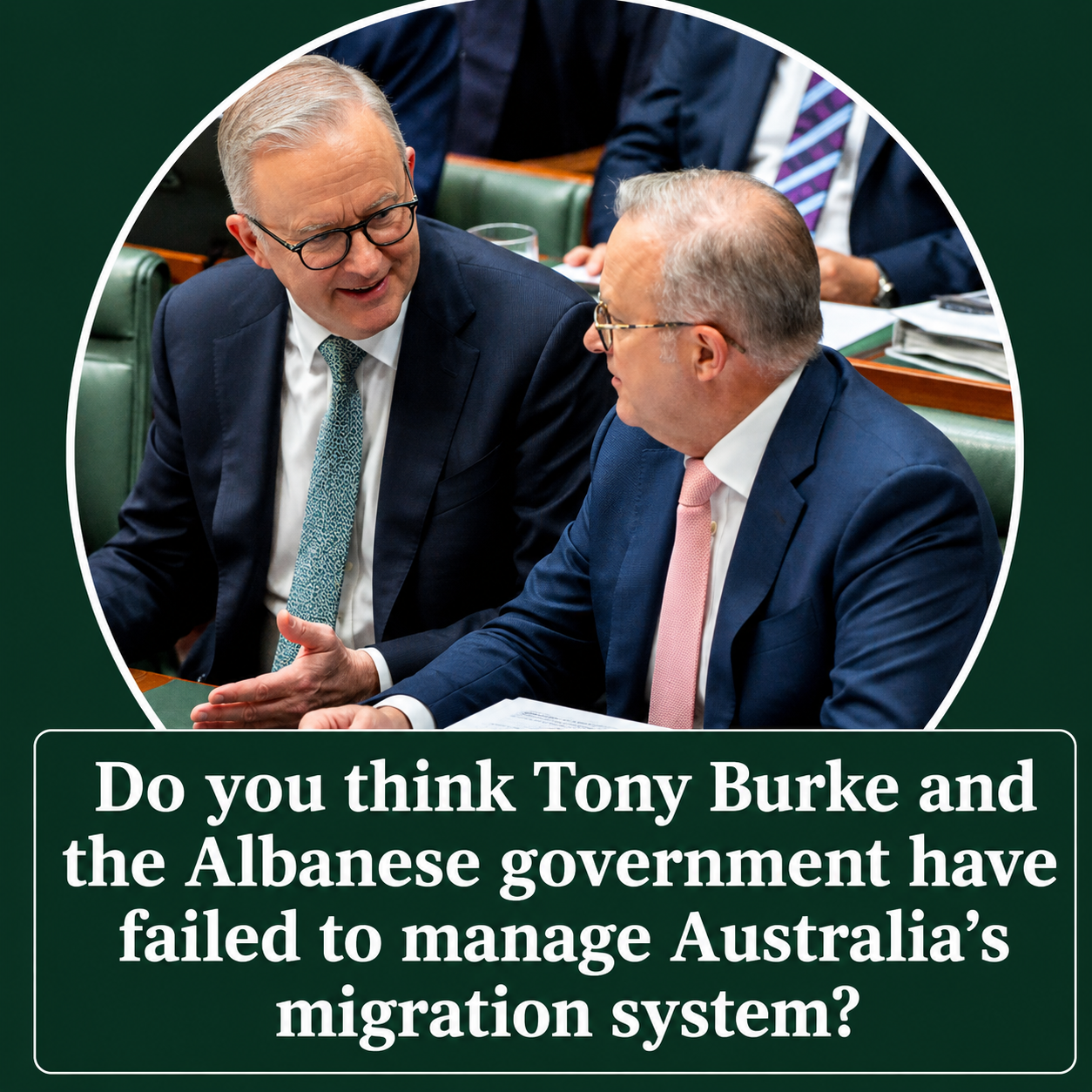
The last-minute postponement immediately sparked political criticism, with the Coalition claiming it exposed deep divisions within the Albanese government over immigration policy at a time when migration has become one of Australia’s most contentious political issues.
Opposition immigration spokesman Jonathon Duniam accused Labor of having “completely lost control” of Australia’s migration system, arguing the delayed announcement reflected uncertainty within Cabinet over how aggressively the government should move to reduce migration levels.
The government has rejected those claims, saying the speech was simply postponed because elements of the policy package had not yet been finalised.
Energy Minister Chris Bowen defended Burke, describing the Home Affairs Minister as making solid progress on a complex reform agenda and insisting the government remained committed to improving Australia’s migration system.
The delay nevertheless fuelled speculation that ministers were still negotiating the scope of a package expected to tighten several visa pathways while attempting to balance economic demands with mounting public concern over population growth.
According to multiple reports, Burke had intended to outline reforms affecting family migration, working holiday visas, asylum seeker work rights and appeal processes, alongside broader measures designed to reduce net overseas migration over coming years.
The postponed speech came only days after the government quietly altered visa processing priorities, giving greater preference to skilled migrants already living in Australia over many applicants waiting offshore.
That administrative change attracted relatively little public attention initially but was viewed by migration experts as an indication that broader reforms were imminent.
Among the reported proposals are tighter rules governing family visa applications, restrictions on backpackers seeking extended stays, and changes affecting asylum seekers’ work rights and avenues for appealing migration decisions.
While the government has not officially confirmed the final package, reports suggest those proposals prompted vigorous discussion inside Cabinet before Burke’s planned announcement was delayed.
The political stakes surrounding migration have risen sharply over the past year.
Housing affordability remains one of Australia’s dominant domestic issues, with record rents, limited housing supply and infrastructure pressures becoming central concerns for voters across both metropolitan and regional communities.
The Coalition argues high migration levels have placed additional strain on an already undersupplied housing market, while also increasing pressure on transport networks, schools, hospitals and other public services.
Those concerns have become a major focus of Opposition attacks against the Albanese government, with immigration increasingly positioned as a defining policy issue ahead of future electoral contests.
One Nation has likewise intensified its campaign for significantly lower migration levels, arguing Australia requires a substantial pause in population growth until housing construction and essential infrastructure can better match demand.
The growing political pressure appears to have influenced Labor’s approach.
Although the government has consistently defended the economic importance of skilled migration, ministers have increasingly emphasised that net overseas migration has already fallen substantially from its post-pandemic peak and is expected to continue declining under existing forecasts.
Recent government projections estimate net overseas migration will continue easing over coming years as temporary migration normalises following the exceptional rebound experienced after international borders reopened.
However, critics argue those projections still leave migration running above levels they consider sustainable given Australia’s current housing supply constraints.
Polling has indicated many Australians believe immigration remains too high, particularly while housing affordability continues to deteriorate.
That shift in public sentiment has increased pressure on both major political parties to demonstrate they have credible plans for managing future migration levels.
Business groups, however, continue urging caution.
Employer organisations argue Australia’s economy remains heavily dependent on skilled migrants across sectors including healthcare, construction, engineering, hospitality, agriculture and information technology.
They warn that excessive reductions in migration could deepen existing workforce shortages, slow economic growth and delay housing construction by limiting access to skilled trades.
Many economists also note that migration plays an important role in supporting labour force participation, consumer demand and long-term population growth.
As a result, policymakers face the difficult challenge of balancing economic needs against increasing public concern over housing availability and infrastructure capacity.
That balancing act appears central to the government’s current deliberations.
Rather than dramatically reducing permanent migration targets, reports suggest Labor’s reforms may focus more heavily on tightening visa settings, reducing opportunities for misuse of temporary visa pathways and encouraging some temporary residents to depart Australia once their visas expire.
The proposed changes would represent another stage in the government’s broader effort to reshape Australia’s migration framework following several reforms introduced since 2023.
Earlier measures increased scrutiny of international student visas, tightened English-language requirements for some applicants and strengthened integrity checks across parts of the migration system.
The latest package appears intended to build upon those initiatives while responding to mounting political pressure from both the Coalition and One Nation.
For the Coalition, Burke’s postponed speech has become an opportunity to question Labor’s ability to manage one of Australia’s most politically sensitive policy areas.
Opposition figures argue the delay demonstrates disagreement within government over how far migration should be reduced and whether tougher reforms risk alienating business groups or progressive supporters.
Government ministers reject that characterisation, insisting the postponement simply reflects the complexity of developing reforms that affect employers, migrants, families and Australia’s broader economy.
Chris Bowen said policy work was continuing and defended Burke’s handling of the portfolio, stressing that careful preparation was preferable to announcing incomplete reforms.
The National Press Club address is expected to be rescheduled once Cabinet finalises the remaining elements of the migration package.
When delivered, it is likely to provide the clearest indication yet of how the Albanese government intends to manage migration levels over the remainder of its term while balancing housing affordability, labour market demands and Australia’s long-term economic needs.
Until then, immigration is likely to remain one of the country’s defining political battlegrounds, with both major parties seeking to convince voters they have the most credible plan to address concerns about population growth without undermining Australia’s economic resilience.