Political commentator Peter van Onselen believes Home Affairs Minister Tony Burke’s decision to postpone a major speech outlining Labor’s next wave of migration reforms represents something far more significant than a scheduling change.
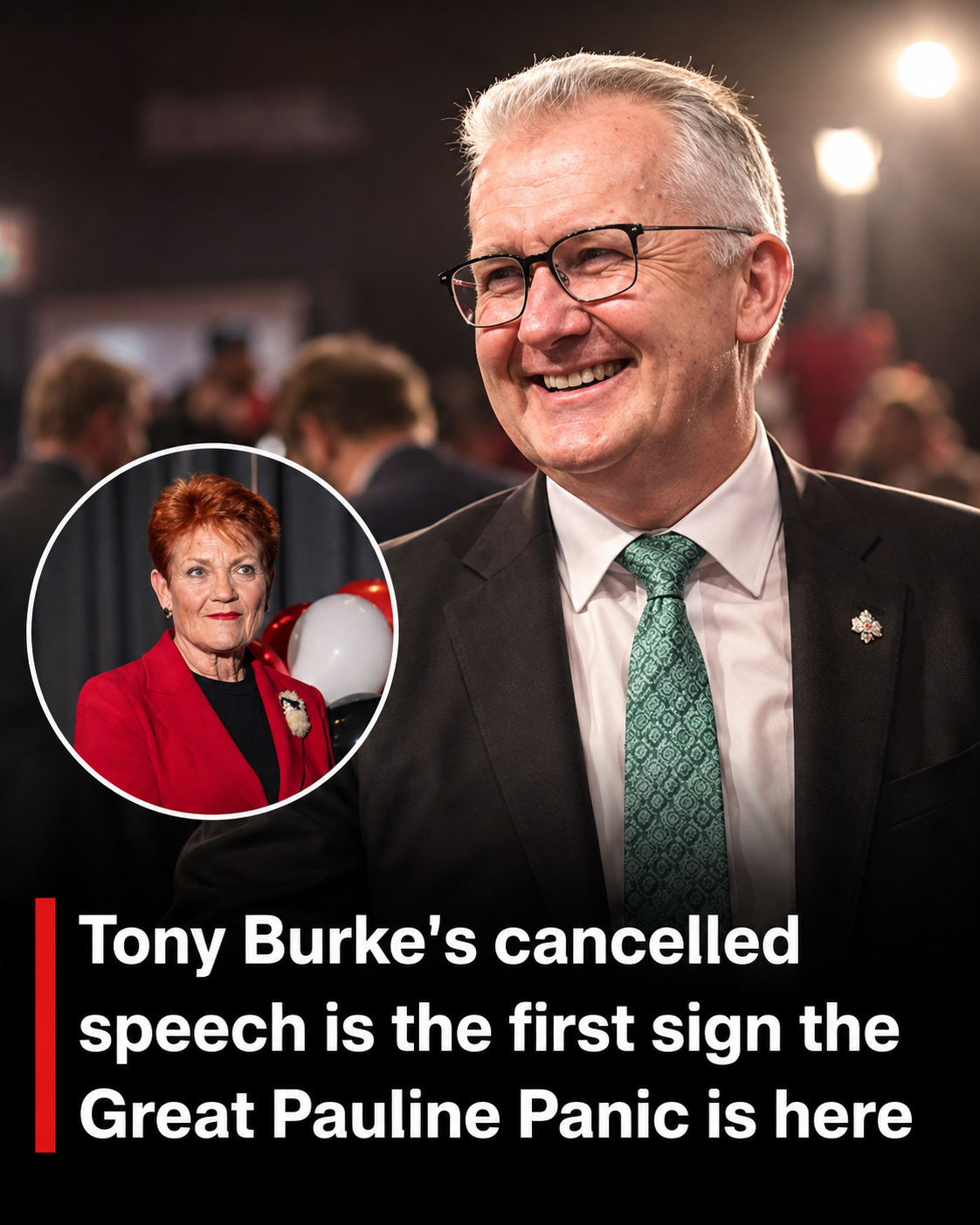
Writing in an opinion column, van Onselen argues the delayed National Press Club address is the first visible sign that the Albanese government has entered what he describes as the “Great Pauline Panic”—a growing concern inside Labor over Pauline Hanson’s resurgence and One Nation’s improving electoral position.
According to van Onselen, the government increasingly recognises that migration has become one of the most politically sensitive issues facing voters and fears One Nation could continue attracting support if Labor fails to demonstrate it is prepared to reduce migration more aggressively.
The opinion piece follows Tony Burke’s decision to postpone a highly anticipated National Press Club speech that had been expected to unveil a significant package of migration reforms.
Reports before the postponement suggested the package would include tighter family visa rules, restrictions affecting asylum seekers and possible changes to Australia’s Working Holiday Maker program as part of a broader effort to reduce net overseas migration.
The government subsequently confirmed that the speech had been delayed because elements of the policy package were still being finalised, rejecting suggestions that the postponement represented a policy reversal.
Burke’s office said ministers wanted to ensure the reforms were fully settled before presenting them publicly and indicated a new date for the address would be announced after that work had been completed.
Van Onselen interprets those events differently.
He argues the government’s caution reflects growing political pressure rather than merely unfinished policy development.
In his assessment, Labor has become increasingly concerned that One Nation’s rising support could threaten its electoral position, particularly on issues such as migration, border security and cost-of-living pressures.
According to the columnist, Pauline Hanson has succeeded in pushing migration further towards the centre of Australia’s political debate, forcing both major parties to respond to issues they might otherwise have preferred to discuss on their own terms.
Migration has become one of the defining policy debates of Labor’s second term.
Following record levels of net overseas migration after Australia’s post-pandemic border reopening, the government has already introduced a series of measures intended to slow population growth.
These include tighter student visa settings, changes to skilled migration pathways, revised processing priorities and efforts to reduce overall net migration while maintaining Australia’s long-term skilled migration program.
The government argues these policies are intended to relieve pressure on housing, infrastructure and public services without undermining Australia’s economic needs.
Ministers have consistently maintained that migration remains essential for addressing labour shortages, supporting economic growth and meeting workforce demand in sectors including healthcare, aged care and construction.
At the same time, they acknowledge migration must remain at sustainable levels to maintain public confidence in the system.
Van Onselen contends that Labor’s recent policy direction demonstrates increasing awareness of shifting public opinion.
He argues the government is now moving closer to positions previously advocated by Pauline Hanson because it recognises that community concern over migration has intensified.
Whether that shift represents political pragmatism or policy evolution remains a matter of interpretation rather than established fact.
Opinion polling has shown renewed support for One Nation over recent months, although results vary across polling organisations and should not be interpreted as election outcomes.
The party has sought to capitalise on public concern surrounding housing affordability, population growth, infrastructure pressures and the cost of living.
Pauline Hanson has repeatedly argued that migration levels should be substantially reduced and has linked population growth to Australia’s housing shortages and broader economic challenges.
Labor rejects the suggestion that its migration policies are driven by political pressure from One Nation.
Instead, ministers argue the government’s approach reflects long-standing commitments to creating a migration system that better aligns with Australia’s housing capacity, labour market needs and economic priorities.
The government also notes that net overseas migration has already fallen significantly from its post-pandemic peak and is forecast to continue declining over coming years under existing policy settings.
The political debate nevertheless illustrates how migration has become one of Australia’s most contested policy areas.
The Coalition has likewise criticised Labor’s migration management, arguing that elevated migration contributed to housing affordability pressures while questioning whether the government’s planned reductions go far enough.
One Nation, meanwhile, continues advocating substantially lower migration levels than either of the major parties.
Van Onselen’s commentary reflects a broader discussion occurring within Australian politics about whether Pauline Hanson has successfully shifted the national conversation.
Supporters of that view argue One Nation has influenced debate by placing sustained emphasis on migration and population growth.
Others contend Labor’s migration reforms are primarily a response to changing economic conditions, housing shortages and administrative challenges rather than electoral competition from minor parties.
Political analysts generally agree that migration is likely to remain a central issue as Parliament returns and parties prepare for future electoral contests.
Questions surrounding housing affordability, labour shortages, infrastructure capacity and economic growth ensure migration policy will continue attracting significant public attention regardless of which party benefits politically.
For van Onselen, however, Burke’s postponed speech represents more than a delayed announcement.
He sees it as symbolic of a government increasingly aware that migration has become one of its greatest political vulnerabilities and that Pauline Hanson’s sustained focus on the issue has altered the national political landscape.
Whether that assessment proves accurate remains a matter of political judgment.
The government continues to insist the reforms are being refined for policy reasons rather than electoral ones, while One Nation argues Labor’s changing approach demonstrates that its own campaign on migration is beginning to influence mainstream politics.






