Sky News Australia commentator Rita Panahi has defended Pauline Hanson’s controversial decision to exclude journalists from the ABC, The Age and The Guardian from One Nation’s Victorian campaign launch, arguing the dispute is about media access rather than freedom of speech.
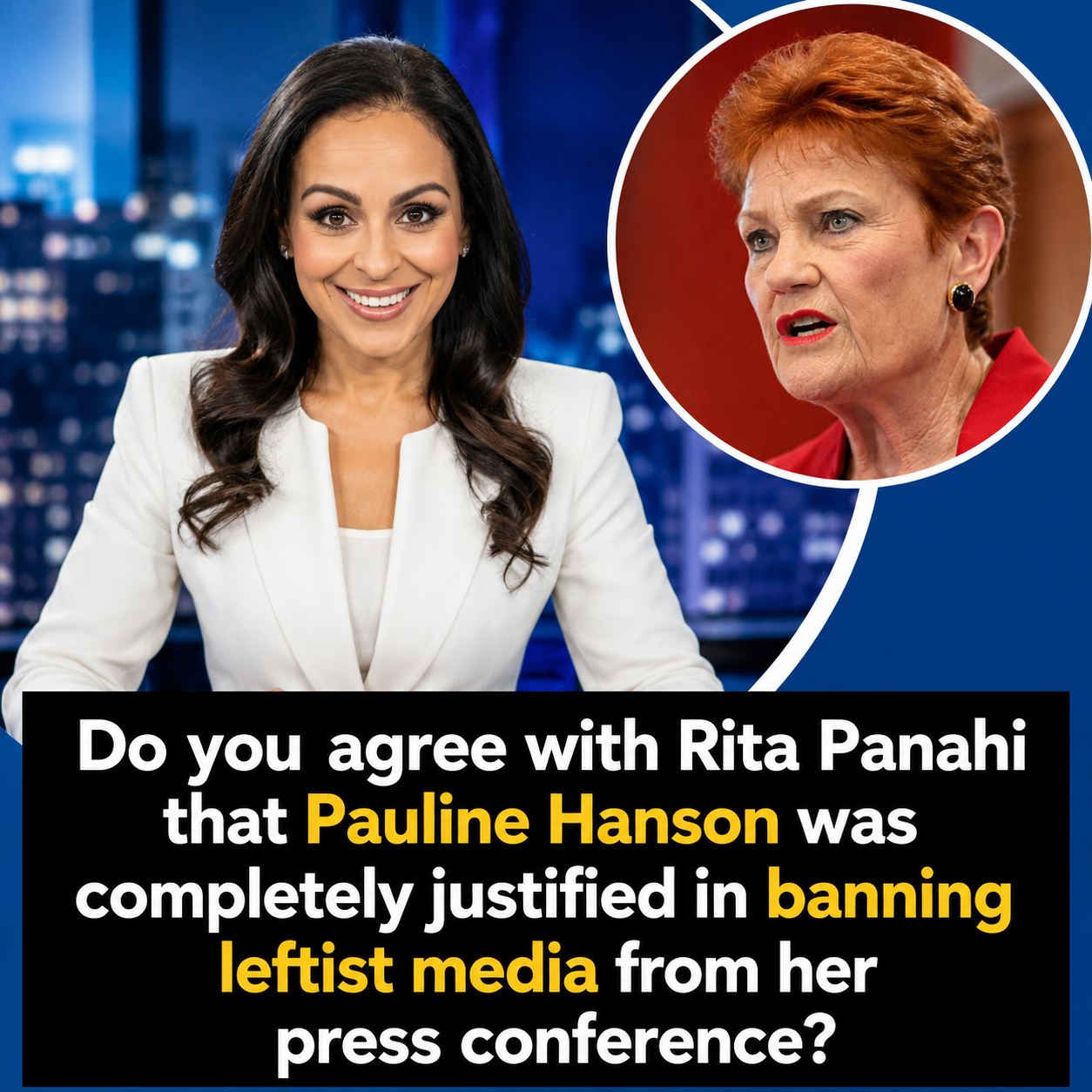
The debate erupted after Hanson barred the three news organisations from attending a Melbourne press conference where she unveiled One Nation’s first group of Victorian election candidates. The move immediately drew criticism from political opponents, media organisations and press freedom advocates, who argued that elected representatives should be willing to answer questions from all accredited journalists.
Panahi, however, took a markedly different view.
In commentary following the event, she argued that Hanson was entitled to decide which media organisations were granted access to a party-run press conference, particularly after years of what Hanson believes has been consistently unfair coverage from those outlets.
According to Panahi, preventing journalists from attending a private political event does not amount to restricting free speech because the affected organisations remain entirely free to report on One Nation, publish criticism of Hanson and express their editorial opinions. The dispute, she argued, concerns access rather than censorship.
Panahi also praised Hanson for refusing to accommodate journalists she considers openly hostile to her party.
She contrasted Hanson’s approach with that of Coalition politicians, arguing many Liberal and National Party figures continue granting extensive access to media organisations that they frequently accuse of political bias, hoping to improve relationships that, in Panahi’s view, are unlikely to change.
Hanson herself has repeatedly defended the exclusion of the ABC, The Age and The Guardian, saying the decision followed years of what she considers inaccurate, misleading and politically motivated reporting.
Speaking during and after the campaign launch, Hanson accused the excluded outlets of routinely placing “spin” on her comments and failing to report One Nation’s positions fairly. She said politicians have every right to expect accurate reporting and insisted the ban was intended to send a message rather than silence criticism.
The One Nation leader has maintained that journalists remain free to scrutinise her policies and campaign, but argued she is under no obligation to provide preferred access to media organisations she believes have repeatedly misrepresented her party.
That position has been strongly rejected by many critics.
Greens senator Sarah Hanson-Young accused Hanson of “running scared of scrutiny” and labelled her a “political coward”, arguing politicians seeking public office should answer questions from all major media organisations regardless of whether coverage is favourable.
Other political figures similarly argued that robust questioning is a fundamental component of democratic accountability and should not depend on whether a politician approves of a publication’s editorial approach.
The controversy has also prompted broader discussion among media commentators about where the line should be drawn between a political party’s right to organise its own events and the public interest in ensuring elected representatives remain subject to independent journalistic scrutiny.
Journalist Peter Greste, writing in an opinion piece, argued that excluding selected media organisations weakens one of journalism’s central democratic functions by limiting opportunities for independent questioning.
Greste contended that if politicians begin choosing which reporters may attend based primarily on whether coverage is favourable, the relationship between governments, political parties and the media risks becoming increasingly partisan, ultimately reducing public confidence in political accountability.
Supporters of Hanson respond that the issue should not be framed as an attack on press freedom.
They argue that no journalist has been prevented from publishing stories about One Nation, attending public campaign events or criticising Hanson’s policies. Instead, they contend that political parties—like other organisations—retain discretion over invitations to privately organised press conferences.
Critics counter that while parties may legally control access to campaign events, deliberately excluding major news organisations creates practical barriers to questioning politicians directly and reduces opportunities for voters to hear answers to difficult questions in real time.
The dispute unfolded during One Nation’s Victorian election campaign launch, where Hanson announced eight candidates and confirmed Warren Pickering would lead the party in Victoria while contesting the lower house seat of Pakenham.
The event also highlighted One Nation’s ambition to significantly expand its presence in the Victorian Parliament by contesting a broad range of lower and upper house seats at the November election.
The media ban has, however, become one of the defining stories of the campaign’s opening week, generating widespread discussion well beyond the party’s policy announcements.
It has also reignited long-running debate about allegations of political bias within sections of Australia’s media landscape—claims regularly made by conservative politicians and commentators but strongly disputed by the organisations concerned.
Neither the ABC, The Guardian nor The Age has accepted Hanson’s characterisation of their reporting. All three organisations continue to report on One Nation and the Victorian election campaign as part of their broader political coverage.
The episode illustrates the increasingly adversarial relationship that has developed between some political parties and sections of the Australian media.
For Hanson and supporters such as Panahi, restricting access is presented as a legitimate response to what they believe is persistent editorial bias. For opponents, the decision represents an erosion of transparency that risks weakening democratic scrutiny.
With Victoria’s election campaign only beginning, the disagreement is likely to remain part of the wider political conversation as One Nation seeks to convert rising support in opinion polls into parliamentary representation while continuing to challenge the role of Australia’s established media organisations.






