Nationals leader Matt Canavan has reignited debate over the Coalition’s relationship with Pauline Hanson’s One Nation, declaring he is prepared to work with any political party capable of helping remove Anthony Albanese’s Labor government from office.
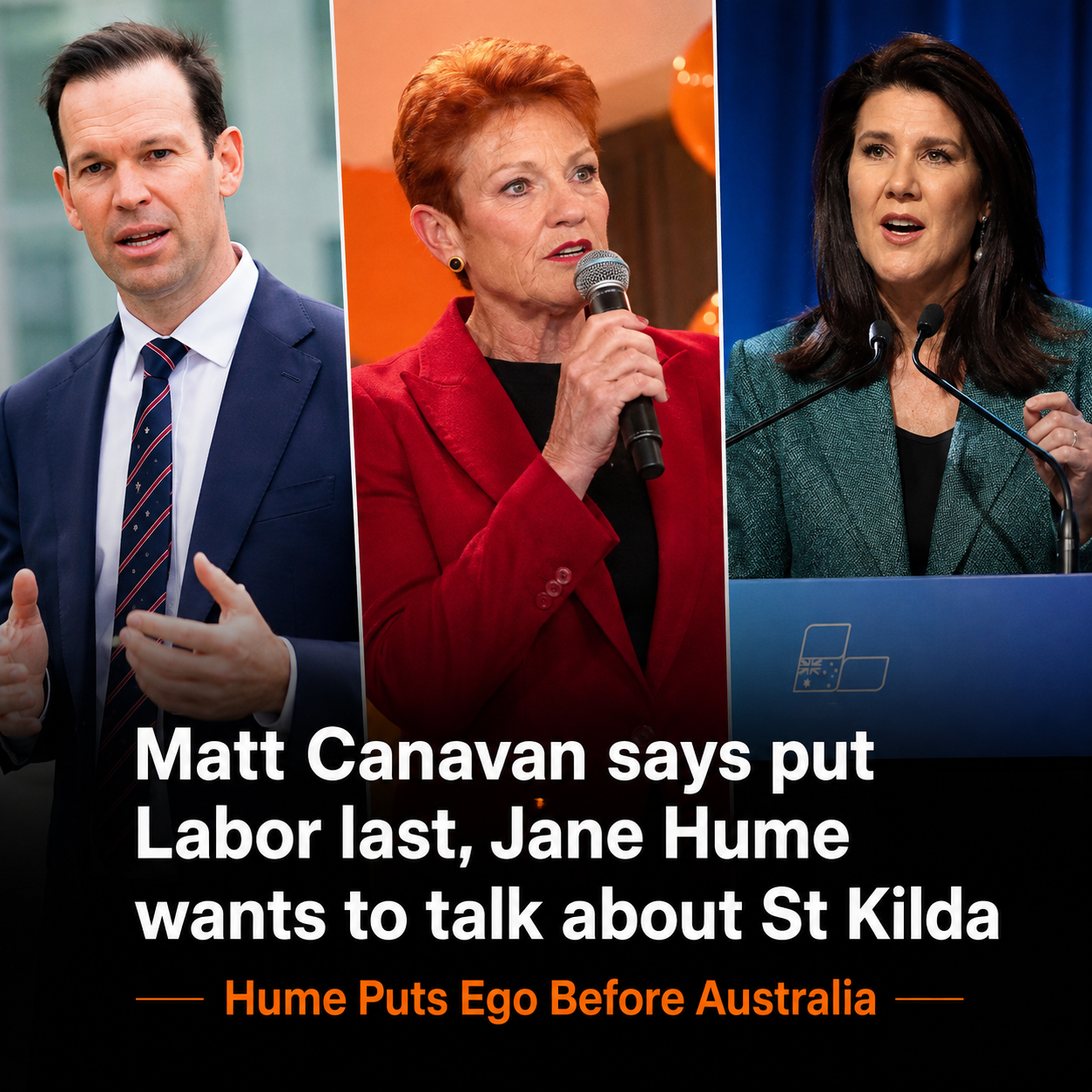
Appearing on Sunrise, Canavan said defeating Labor remained his overriding priority and confirmed he was open to discussing electoral preference arrangements with One Nation ahead of future elections.
“I’m willing to co-operate with anyone to get rid of this terrible government,” Canavan said, adding that Coalition supporters should place Labor last on their ballot papers. He also stressed that any preference arrangement would need to be reciprocal, describing it as “a two-way street”.
His comments represent one of the clearest indications from a senior Coalition figure that discussions with One Nation over electoral preferences should remain on the table, even as the Liberal Party continues to reject the prospect of any formal governing alliance with Pauline Hanson’s party.
Australia’s preferential voting system means voters rank candidates in order of preference rather than selecting only one candidate. When no candidate wins an outright majority of first-preference votes, preferences are redistributed until a winner is determined. Because of this system, agreements between parties on how they recommend preferences can influence the outcome in closely contested electorates, even where parties never form a governing coalition.
Canavan’s remarks come as One Nation continues to record stronger polling than in recent years. Recent national polling has placed Pauline Hanson’s party either first or second on the primary vote in some surveys, while the Coalition has trailed behind in others, prompting renewed discussion about whether closer cooperation could improve the conservative vote against Labor.
However, Canavan was careful to distinguish between preference negotiations and a formal political coalition.
He acknowledged that One Nation would continue contesting Coalition-held seats and said there remained little realistic prospect of the two parties governing together. Instead, he framed his comments around practical electoral cooperation where both parties believed it would be mutually beneficial.
“It’s got to be a two-way street,” he said, signalling that any agreement would require reciprocal support rather than a one-sided arrangement.
The comments contrast sharply with the position repeatedly adopted by senior Liberal figures.
Opposition Leader Angus Taylor has ruled out any formal coalition agreement with One Nation, while Acting Opposition Leader Jane Hume has similarly rejected suggestions that the parties could govern together.
Asked about One Nation during the same news cycle, Hume responded with a football analogy rather than directly discussing preference negotiations.
“But for me you can’t change football teams. I barrack for St Kilda,” she said, comparing support for political parties to loyalty between AFL clubs. Her remarks were widely interpreted as reinforcing the Liberal Party’s desire to maintain a clear distinction between itself and One Nation despite increasing overlap among conservative voters.
Canavan’s position illustrates the growing strategic debate within the Coalition over how to respond to One Nation’s improved electoral standing.
While some Coalition figures argue that maintaining distance protects the Liberal-National brand, others believe refusing to engage on preferences risks splitting the broader conservative vote and making it easier for Labor candidates to prevail in marginal seats.
The issue has become increasingly significant because Australia’s preferential voting system often rewards cooperation between ideologically aligned parties without requiring them to govern together.
Preference agreements have long been used by Australian political parties at both state and federal elections. Such arrangements do not prevent parties from competing against each other, nor do they require them to share government if elected. Instead, they simply determine how parties recommend voters allocate preferences on so-called “how-to-vote” cards distributed during election campaigns.
Political analysts note that preference recommendations do not automatically determine election outcomes, as voters remain free to number candidates in any order they choose. Nevertheless, preference flows can play an important role in closely contested electorates where final margins are relatively small.
The debate also comes at a time when One Nation is investing heavily in organisational expansion.
Pauline Hanson recently unveiled Warren Pickering as the party’s Victorian leader while launching an expanded campaign for November’s Victorian state election. Former Morrison adviser Chris Taylor has also joined One Nation as chief of staff, with longtime adviser James Ashby moving into a broader national organisational role as the party prepares for future federal contests.
Recent polling has strengthened One Nation’s confidence that it can broaden its support beyond Queensland and establish a larger presence in Victoria and other states.
Although different pollsters have produced varying estimates of the party’s support, several recent surveys have recorded One Nation attracting significantly higher primary votes than in previous election cycles. Those numbers have inevitably fuelled renewed speculation about how the Coalition should respond strategically.
Labor has so far dismissed suggestions that closer cooperation between the Coalition and One Nation would fundamentally alter Australia’s political landscape, arguing that voters will ultimately judge each party on its policies rather than preference arrangements.
Meanwhile, the Greens have continued attacking both conservative parties over immigration, climate policy and social issues, warning that any closer relationship with One Nation would shift the Coalition further to the political right.
For Canavan, however, the central objective remains straightforward.
He argues that removing the Albanese government should take precedence over concerns about which parties cooperate during election campaigns, provided any arrangements remain transparent and mutually beneficial.
Whether that view gains broader support within the Coalition remains uncertain.
Senior Liberal figures continue to emphasise that there will be no formal coalition agreement with One Nation, while Canavan’s comments demonstrate that influential Nationals believe preference discussions should remain part of the political conversation.
As opinion polling continues to fluctuate and preparations begin for Australia’s next federal election, the question of whether conservative parties should cooperate more closely on preferences is likely to remain one of the defining strategic debates inside the Coalition.






