One Nation leader Pauline Hanson remains at the centre of a heated debate over media access after a widely shared online post defended her decision to exclude journalists from the ABC and The Guardian during the launch of the party’s Victorian election campaign.
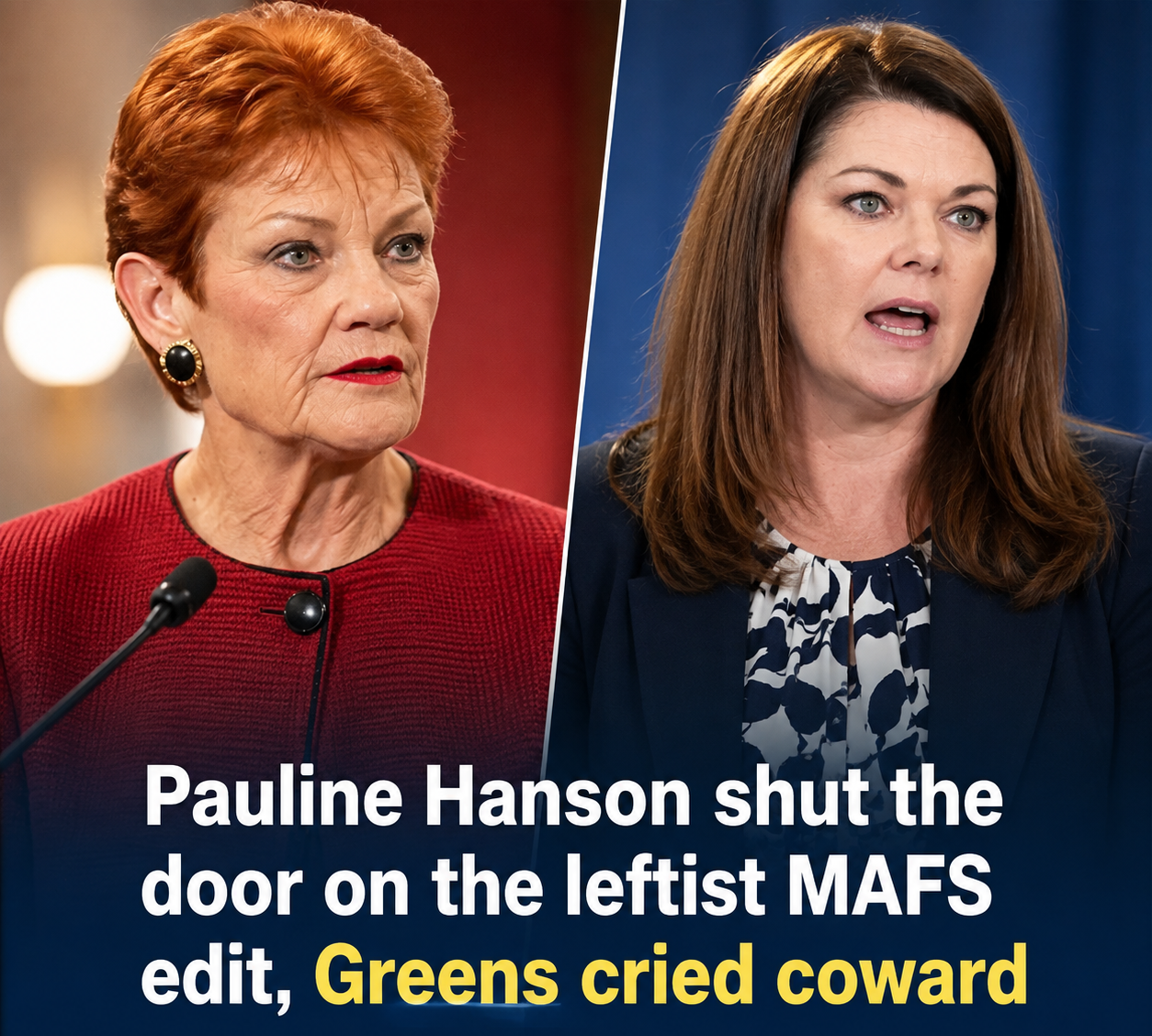
The post, which circulated widely across social media following the Melbourne event, argued that criticism of Hanson had overlooked the fact that the entire 37-minute press conference was livestreamed by Rebel News, allowing viewers to watch every question and answer without edits.
Supporters of Hanson contend that the availability of the full recording enables the public to compare complete remarks with subsequent media reports and decide for themselves whether coverage accurately reflected what was said.
The controversy began after Hanson barred journalists from the ABC, The Guardian and The Age from attending One Nation’s Victorian campaign launch, saying those organisations had repeatedly produced unfair and inaccurate reporting about her party.
The decision drew immediate criticism from politicians, media commentators and press freedom advocates.
Greens senator Sarah Hanson-Young described Hanson as “running scared of scrutiny” and labelled her a “political coward”, arguing that politicians seeking public office should be prepared to answer questions from all accredited media organisations, regardless of whether coverage is favourable.
Federal Employment Minister Amanda Rishworth similarly argued that robust questioning is a normal and necessary part of Australia’s democratic system and that public figures should not selectively avoid difficult interviews.
The viral social media post responded directly to those criticisms.
It claimed that because Rebel News streamed the full event without edits, every report published afterwards could be checked against the original footage. Supporters argued that this transparency reduced concerns that comments had been taken out of context.
The post also contrasted Hanson-Young’s criticism with her successful defamation proceedings against former senator David Leyonhjelm.
In 2019, the Federal Court awarded Hanson-Young $120,000 in damages after finding Leyonhjelm had defamed her through comments made to the media. The judgment was later upheld on appeal, and the High Court declined to disturb the outcome.
The social media commentary argued that Hanson-Young understands the consequences of inaccurate public statements because of her own experience in defamation litigation.
However, the post then went further by asserting that there is effectively no meaningful avenue of redress when news organisations allegedly misrepresent a person’s remarks through selective editing.
It claimed that the Australian Press Council cannot impose fines or order compensation and argued that the Australian Communications and Media Authority (ACMA) has only limited powers in relation to the ABC.
These claims are broadly consistent with the structure of Australia’s media regulatory system, although they simplify a more complex framework.
The Australian Press Council is an independent self-regulatory body that can require publications to publish adjudications or corrections but does not possess the power to award financial compensation. Likewise, ACMA’s role in relation to the ABC differs from its regulation of commercial broadcasters, with oversight operating under a separate legislative framework.
The social media post concluded by arguing that these limitations explain why Hanson chose to stop providing footage and access to outlets she believes have repeatedly misrepresented her comments.
It further claimed that affected media organisations had been given approximately two months’ notice before the exclusion took effect. That assertion has been widely repeated by Hanson and her supporters, although it has not been independently verified in official documents released by One Nation.
Hanson herself has consistently defended the media ban.
She has argued that the ABC, The Guardian and The Age have demonstrated longstanding editorial bias against One Nation and said the exclusion was intended as a response to what she considers persistent unfair reporting rather than an attempt to avoid scrutiny.
The One Nation leader has also pointed to previous disputes with the ABC dating back decades, saying her dissatisfaction with the broadcaster is not new.
Media organisations and press freedom advocates reject that reasoning.
Commentators argue that democratic accountability depends on journalists being able to question political leaders, particularly during election campaigns, and warn that allowing parties to selectively exclude critical outlets risks weakening public confidence in political transparency.
Writing in an opinion piece, journalist Peter Greste argued that while politicians are free to criticise media coverage, preventing journalists from attending press conferences undermines the traditional role of independent scrutiny in Australian democracy.
The dispute has overshadowed parts of One Nation’s Victorian campaign launch, during which Hanson introduced the party’s first group of candidates, including Victorian leader Warren Pickering, and outlined priorities focused on crime, cost-of-living pressures, regional communities and government accountability.
The incident has also sparked a broader public discussion about whether politicians should be entitled to choose which media organisations receive access to campaign events, or whether equal access is essential to maintaining confidence in Australia’s democratic institutions.
Supporters of Hanson argue that political parties are under no legal obligation to invite every media outlet to privately organised events and say voters can judge the accuracy of reporting themselves when full recordings are publicly available.
Critics counter that access restrictions make independent questioning more difficult and may discourage rigorous scrutiny of political leaders during election campaigns.
As Victoria’s election campaign gathers pace, the dispute over media access is likely to remain part of the wider conversation surrounding One Nation’s campaign, alongside debate over the party’s policies and electoral ambitions.






