One Nation leader Pauline Hanson has outlined an ambitious list of priorities she says would dominate the first 100 days of her government if she were elected Prime Minister, promising a dramatic shift away from many of the policies adopted by recent federal governments.
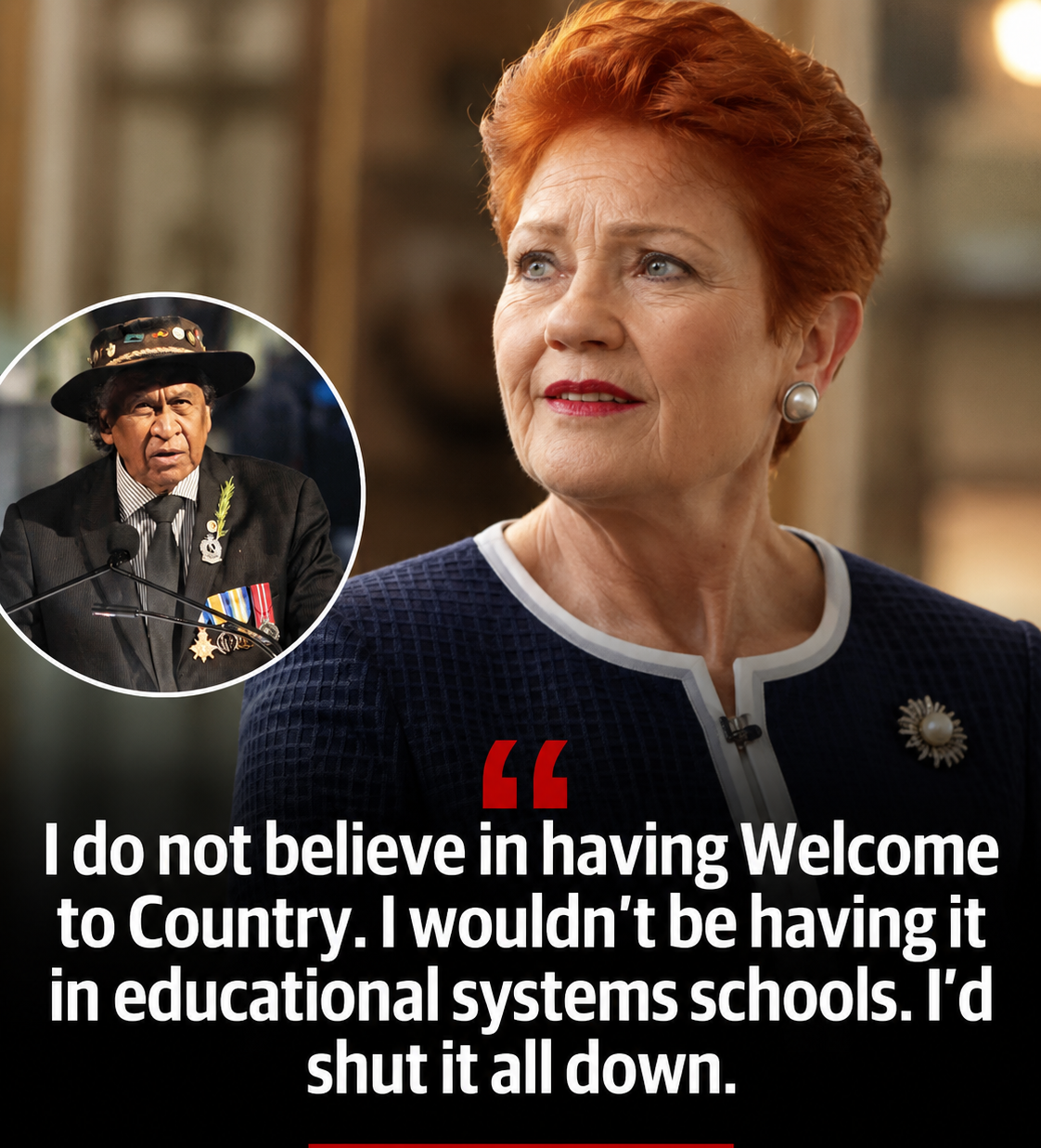
Among the headline proposals are abolishing Welcome to Country ceremonies across government institutions, ending Australia’s commitment to net zero emissions, withdrawing from the Paris Climate Agreement and introducing major changes to immigration, welfare and healthcare.
Speaking during a wide-ranging interview outlining One Nation’s agenda, Hanson argued Australia had become burdened by excessive government spending, ideological policies and bureaucratic programs that she believes have increased living costs without delivering better outcomes.
One of Hanson’s most controversial proposals is the removal of Welcome to Country ceremonies and Acknowledgement of Country practices from government departments, schools and many publicly funded events.
She argued that these ceremonies have evolved from occasional gestures of respect into routine obligations that, in her view, unnecessarily divide Australians rather than unite them.
According to Hanson, government institutions should emphasise a shared Australian identity rather than separate cultural recognition.
She has repeatedly argued that Australia belongs equally to every citizen regardless of ancestry and that no single group’s heritage should be given greater prominence in official settings.
Welcome to Country is a formal cultural protocol performed by Traditional Owners to welcome visitors onto Country, while an Acknowledgement of Country can be delivered by anyone to recognise the continuing connection of Aboriginal and Torres Strait Islander peoples to the land.
Over recent decades both practices have become increasingly common at parliamentary sittings, schools, universities, sporting events and government ceremonies.
Supporters argue they promote respect, reconciliation and recognition of Australia’s First Peoples, while critics—including Hanson—say their growing frequency has reduced their original significance and created unnecessary division.
Climate policy forms another central pillar of One Nation’s proposed agenda.
Hanson says a One Nation government would immediately abandon Australia’s legislated net zero emissions target and withdraw from the Paris Agreement.
She argues current climate policies have contributed to higher electricity prices, increased business costs and reduced Australia’s international competitiveness.
Instead, One Nation proposes expanding domestic coal and gas production while supporting future nuclear energy development as part of a lower-cost energy strategy.
Those proposals would represent one of the most significant reversals of Australian climate policy in decades.
Successive Coalition and Labor governments have both committed Australia to reducing greenhouse gas emissions, although they have differed substantially over the pace and methods of achieving those targets.
Environmental organisations argue abandoning net zero commitments would damage Australia’s international reputation and undermine long-term investment in renewable energy, while supporters of One Nation contend current policies place an excessive financial burden on households and businesses.
Immigration also features prominently in Hanson’s proposed first 100 days.
She has pledged to reduce annual migration to around 130,000 people, arguing Australia’s housing shortage, infrastructure pressures and cost-of-living challenges have been worsened by population growth that exceeds the country’s capacity to build homes and provide essential services.
Hanson says future migration should focus on occupations facing genuine skills shortages, particularly in healthcare, trades and other critical industries.
Another major priority would involve reviewing large areas of federal spending.
One Nation has proposed significant reforms to the National Disability Insurance Scheme (NDIS), arguing stronger oversight is needed to reduce fraud, waste and administrative costs while ensuring support reaches those with genuine needs.
The party has also called for a review of childcare expenditure and other major government programs as part of a broader effort to reduce federal spending.
Among Hanson’s most expensive proposals is extending Commonwealth Seniors Health Cards to all self-funded retirees regardless of income testing.
She argues many retirees who receive little or no Age Pension have contributed taxes throughout their working lives and should receive greater assistance with healthcare costs.
Independent analysts, however, have suggested such a measure could require billions of dollars in additional government expenditure depending on its final design and eligibility rules.
Hanson has also reaffirmed her long-standing opposition to Section 18C of the Racial Discrimination Act.
She says she intends to continue challenging recent Federal Court decisions concerning her dispute with Greens Senator Mehreen Faruqi, arguing the legislation unnecessarily restricts freedom of political communication.
The Federal Court recently dismissed Hanson’s appeal, finding earlier rulings on racial discrimination should stand. Hanson has indicated she intends to seek special leave to appeal to the High Court.
Political observers note that many of One Nation’s proposals would face significant parliamentary obstacles even if the party substantially increased its representation.
Major changes to climate legislation, immigration policy, government expenditure and Indigenous recognition would require support from both houses of Parliament, where One Nation has historically held only a limited number of seats.
Nevertheless, Hanson argues her platform reflects growing public frustration with the major parties and addresses issues she believes have been ignored by successive governments.
The Albanese Government and opposition parties have strongly disagreed with many of Hanson’s proposals.
Labor continues to support Australia’s net zero commitments, maintains that Welcome to Country ceremonies are voluntary expressions of respect and has defended ongoing investment in the NDIS and renewable energy transition.
The Coalition has also committed to retaining Australia’s emissions reduction framework, although it proposes a greater role for nuclear energy and different approaches to energy policy.
As a result, many of Hanson’s proposals remain well outside the policy positions of the two major parties.
Recent polling has nevertheless shown One Nation attracting increased support in several parts of Australia, particularly among voters concerned about the cost of living, immigration and energy prices.
Although Australia’s preferential voting system means primary vote support does not automatically translate into government, Hanson argues the growing popularity of One Nation demonstrates increasing public appetite for policies that differ sharply from those of Labor and the Coalition.
Whether any of these proposals are ultimately implemented will depend on future election outcomes and parliamentary support.
For now, Hanson’s announcement provides the clearest picture yet of the direction a One Nation government would seek to take Australia, placing national identity, reduced government spending, tighter immigration controls and the reversal of several major policy initiatives at the centre of its political agenda.






