For more than two decades, Jacinta Allan represented one of Victoria’s most remarkable political success stories.
Born and raised in Bendigo, she entered Parliament as a 25-year-old newcomer, steadily climbed through the ranks of the Labor Party and ultimately became only the second woman to serve as Premier of Victoria.
Yet only three years after reaching the state’s highest political office, Allan’s premiership came to an abrupt end as internal party unrest, declining public support and mounting controversies forced her resignation.
Her departure has not only reshaped Victorian politics—it has also left deep divisions in the regional community that first launched her career.
Allan’s political journey began in Bendigo, where Labor traditions ran deep within her family.
She joined the Australian Labor Party as a teenager and became one of Victoria’s youngest MPs when she won the seat of Bendigo East at the 1999 state election.
At just 25 years old, she became the youngest woman ever elected to the Victorian Parliament, beginning what would become a 27-year parliamentary career.
Throughout successive Labor governments under Steve Bracks, John Brumby and later Daniel Andrews, Allan built a reputation as a disciplined administrator rather than a headline-seeking politician.
She served across numerous portfolios, including education, regional development, public transport and transport infrastructure.
Her influence grew steadily, particularly after Labor returned to government in 2014, when she became responsible for many of Victoria’s largest infrastructure projects.
The Metro Tunnel, West Gate Tunnel and the Suburban Rail Loop all became closely associated with her ministerial career.
When Daniel Andrews unexpectedly resigned in September 2023, Allan appeared the natural successor.
She was elected Labor leader unopposed and became Victoria’s 49th premier, inheriting both an ambitious infrastructure agenda and a government entering its third consecutive term in office.
Initially, many Labor supporters believed her calm leadership style and regional background would help reconnect the government with voters outside Melbourne.
However, the political environment she inherited proved far more difficult than anticipated.
Victoria faced growing financial pressures following years of record infrastructure spending, while cost-of-living concerns increasingly dominated public debate.
At the same time, controversies surrounding major construction projects, state debt, youth crime, hospital reforms and public sector management steadily eroded confidence in the government.
The most damaging challenge came from integrity issues.
The government’s handling of allegations involving the CFMEU and organised crime in Victoria’s construction sector generated sustained political pressure.
Although Allan repeatedly defended her government’s actions and announced reforms, opposition parties argued Labor had failed to respond quickly enough to serious warnings.
The controversy became one of the defining political issues of her premiership.
Meanwhile, opinion polling showed Labor’s support weakening ahead of the November 2026 state election.
Within the parliamentary caucus, concerns grew that the government risked suffering a heavy electoral defeat unless leadership changed.
Those concerns eventually culminated in Deputy Premier Ben Carroll preparing a leadership challenge after concluding the party required a political reset.
Rather than force Labor into a prolonged internal contest, Allan announced she would step aside.
She said preserving party unity was more important than her own political future and wished Carroll success as Victoria’s new premier.
Within hours, Carroll was unanimously elected Labor leader and sworn in as Victoria’s 50th premier.
For many residents of Bendigo, the moment was deeply emotional.
Allan had represented Bendigo East continuously since 1999 and secured significant government investment for the region throughout her career.
Projects involving transport, sporting facilities, schools and regional development frequently received state funding during her years in government, leading many locals to regard her as one of Bendigo’s most influential political figures.
Yet reactions following her resignation revealed how sharply public opinion had shifted.
Some Bendigo residents expressed disappointment that Allan would not lead Labor into the election, arguing she had devoted most of her adult life to serving the region.
Others, however, welcomed the leadership change, saying Victoria required a fresh direction after years of growing debt, political controversy and declining confidence in government.
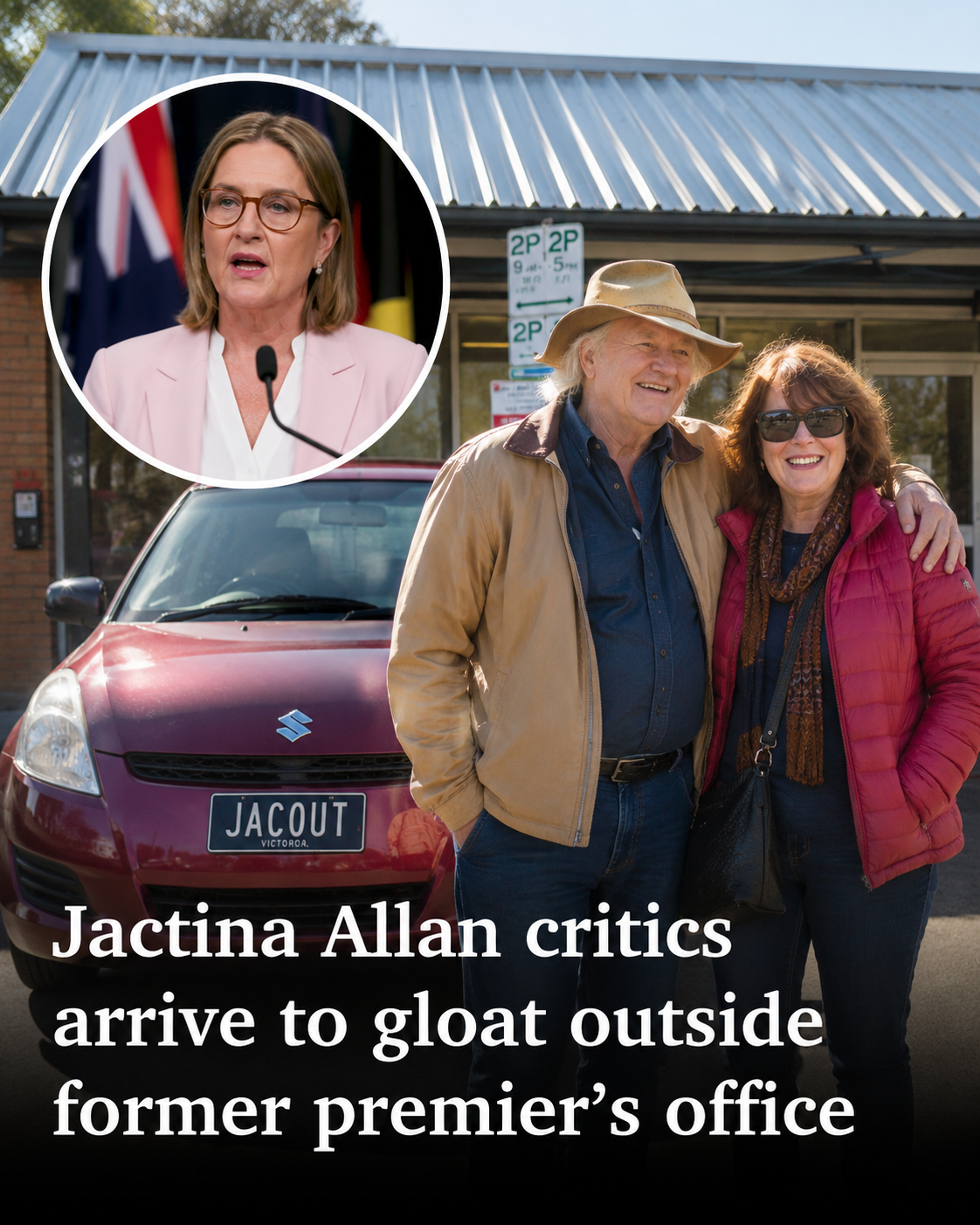
Several locals interviewed outside Allan’s electorate office criticised what they viewed as Labor’s economic management and argued she should leave Parliament altogether.
Others defended her record, pointing to decades of advocacy for regional Victoria and describing her resignation as an unfortunate end to a long career of public service.
The contrasting reactions highlighted the complicated legacy Allan leaves behind in the community where her political journey began.
Supporters argue Allan’s achievements should not be overlooked.
During her premiership she expanded women’s health initiatives, backed planning reforms designed to increase housing supply, progressed major transport projects and continued Victoria’s Treaty process with First Nations peoples.
She also remained closely associated with infrastructure investment that reshaped Melbourne’s transport network over the past decade.
Critics, however, contend those achievements were overshadowed by mounting governance problems.
Cost overruns on major infrastructure projects, declining public confidence, integrity controversies and concerns over state finances increasingly dominated political debate.
By the final months of her premiership, internal dissatisfaction within Labor had become impossible to ignore, ultimately bringing her leadership to an end.
Ben Carroll has since promised to lead differently.
Immediately after becoming premier he announced plans for a Royal Commission into Victoria’s construction sector, expanded powers for the Independent Broad-based Anti-corruption Commission (IBAC) and broader integrity reforms intended to rebuild public trust before the November election.
Whether those reforms succeed will become clear only after Victorians return to the polls.
For Jacinta Allan, however, the political story is already complete.
She leaves office having achieved what few politicians ever do—rising from a regional electorate to become premier of Australia’s second-largest state.
Yet her career also illustrates how rapidly political fortunes can change.
The same leader once celebrated as Bendigo’s local success story ultimately departed office under intense internal pressure, leaving behind a legacy that combines historic achievements with equally significant political controversy.
In Bendigo, where everything began more than a quarter of a century ago, opinions remain divided.
Some will remember Jacinta Allan as the local girl who reached the very top of Victorian politics.
Others will remember a premier whose government ultimately lost the confidence of both voters and many within her own party.
Together, those competing views ensure her place in Victoria’s political history will remain the subject of debate long after the immediate turmoil surrounding her resignation has faded.






