Pauline Hanson’s One Nation has unveiled a renewed pitch to revive Australian manufacturing, arguing that affordable and reliable energy is the essential ingredient for restoring industrial strength, creating high-paying jobs and rebuilding the nation’s economic prosperity.
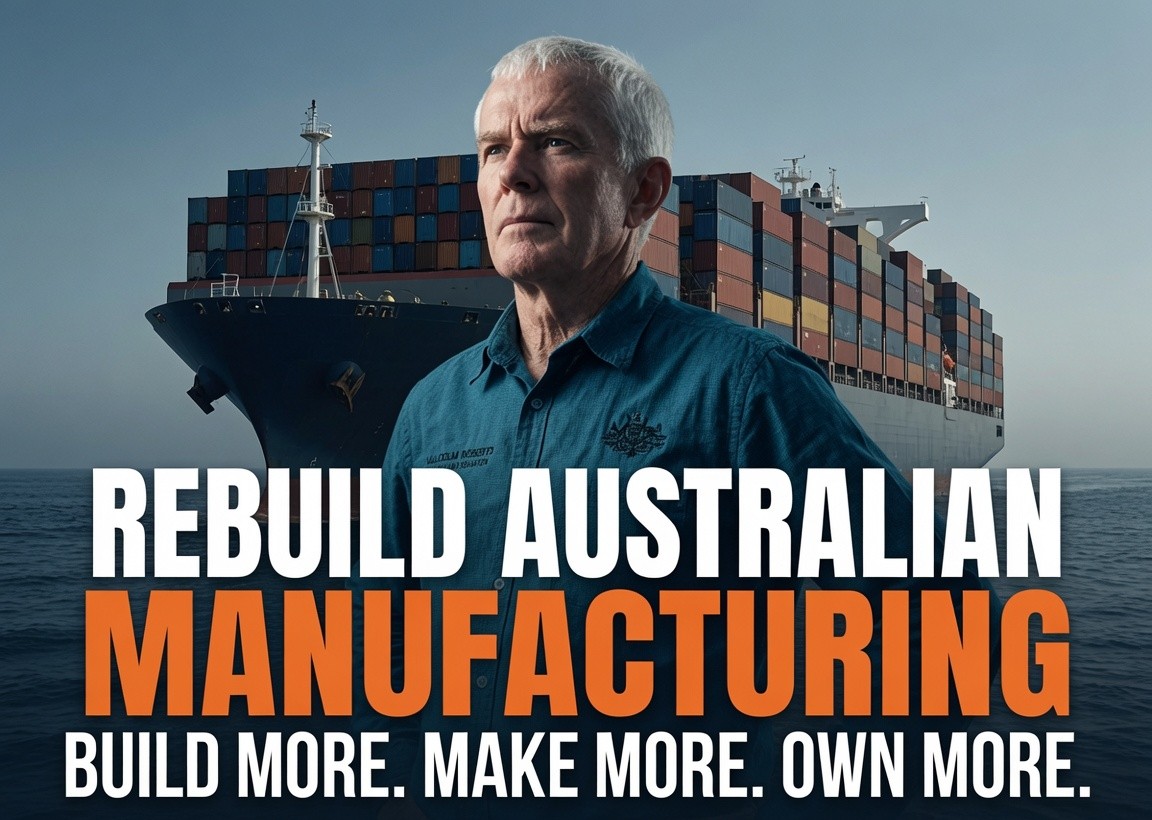
In a policy statement released by the party, One Nation says Australia’s prosperity was once built on a strong manufacturing sector that produced everything from motor vehicles and steel to household appliances, aircraft, machinery, chemicals and textiles.
The party argues that these industries not only generated exports and economic growth but also created stable, well-paid jobs that allowed many Australians to buy a family home on a single income.
“Manufacturing used to be the heart and soul of our economy,” the policy states, claiming Australia became wealthy and internationally influential because it made products domestically rather than relying heavily on imports.
One Nation says reversing the long-term decline in manufacturing would become a priority under a future One Nation government, with energy reform sitting at the centre of that strategy.
The party contends that soaring electricity and gas prices have steadily eroded Australia’s international competitiveness, making it increasingly difficult for energy-intensive industries to remain profitable or justify investing in new domestic production facilities.
According to One Nation, businesses require predictable and affordable electricity prices before they can confidently expand factories, purchase new equipment or hire additional workers. The party says reducing power costs would encourage manufacturers to increase local production instead of shifting investment offshore.
Energy policy has become one of the defining themes of One Nation’s broader economic platform in recent months.
The party has proposed ending Australia’s net zero emissions framework, expanding domestic coal, gas and oil production, streamlining approvals for new energy developments and reshaping electricity market rules with the stated goal of lowering household and industrial power bills by at least 20 per cent.
One Nation argues that manufacturing competitiveness cannot be restored while Australian businesses face significantly higher energy costs than many international competitors.
The party maintains that industries such as steelmaking, aluminium smelting, fertiliser production, chemical manufacturing and heavy engineering require continuous, affordable electricity supplies that cannot tolerate prolonged price volatility.
Alongside its broader electricity reforms, One Nation has also proposed major changes to Australia’s oil and gas sector.
Its policy includes encouraging new exploration, replacing the Petroleum Resource Rent Tax with an alternative royalty model, creating a government-backed investment vehicle to hold equity in new offshore projects and directing part of future production towards domestic industries before exports where appropriate.
The party argues these measures would strengthen Australia’s energy security while ensuring more of the financial benefits from resource development remain within the country.
Manufacturing has long been regarded as a strategic component of Australia’s economy, providing skilled employment, supporting regional communities and contributing to national resilience through domestic production capability.
However, the sector’s share of Australia’s economy has steadily declined over recent decades as globalisation, lower overseas labour costs, technological change and shifting investment patterns reshaped industrial production.
Many major manufacturing operations, including vehicle assembly plants, progressively closed during the past two decades, leaving Australia without mass domestic car manufacturing after the final local assembly lines shut in 2017.
Supporters of industrial policy argue that rebuilding advanced manufacturing could improve economic resilience, diversify exports and reduce reliance on overseas supply chains that were exposed during the COVID-19 pandemic.
Successive governments have also recognised manufacturing as strategically important, although they have adopted different approaches.
The Albanese Government has pursued its Future Made in Australia agenda, focusing heavily on clean energy manufacturing, critical minerals processing, battery supply chains and renewable energy technologies. Ministers argue these investments are designed to position Australia within emerging global low-emissions industries while strengthening domestic production capacity.
One Nation, by contrast, argues Australia’s industrial revival should begin with reducing the cost of conventional energy rather than accelerating the renewable energy transition.
The party says reliable coal, gas and oil production remain essential for heavy industry, mining and advanced manufacturing because these sectors require consistent electricity supplies around the clock.
The debate reflects broader divisions within Australian politics over how best to improve productivity and economic growth.
Supporters of One Nation’s approach argue lower energy prices would immediately benefit manufacturers, reduce operating costs and encourage greater domestic investment.
Critics, however, contend that long-term competitiveness increasingly depends on participation in rapidly expanding clean energy industries, advanced technologies and low-emissions manufacturing that are attracting significant international investment.
Manufacturing policy is also closely linked to broader concerns surrounding Australia’s cost of living, employment and national security.
Energy-intensive industries employ tens of thousands of Australians directly while supporting many additional jobs through local supply chains, transport, engineering services and regional communities.
Business groups have repeatedly identified electricity affordability as one of the major challenges affecting industrial competitiveness, although opinions differ sharply on the most effective policy response.
With energy expected to remain a central political issue ahead of future federal elections, One Nation is positioning its manufacturing agenda as an alternative economic strategy centred on lower power prices, expanded resource development and domestic industrial growth.
Whether voters ultimately embrace that vision will depend not only on the party’s broader electoral performance but also on continuing national debate over Australia’s energy mix, economic competitiveness and the future direction of Australian manufacturing.






