A fresh debate over Australia’s national identity has erupted after one of the country’s most influential manufacturing unions urged the Labor Party to support removing the Union Jack from the Australian flag and eliminate colonial monuments from public spaces.
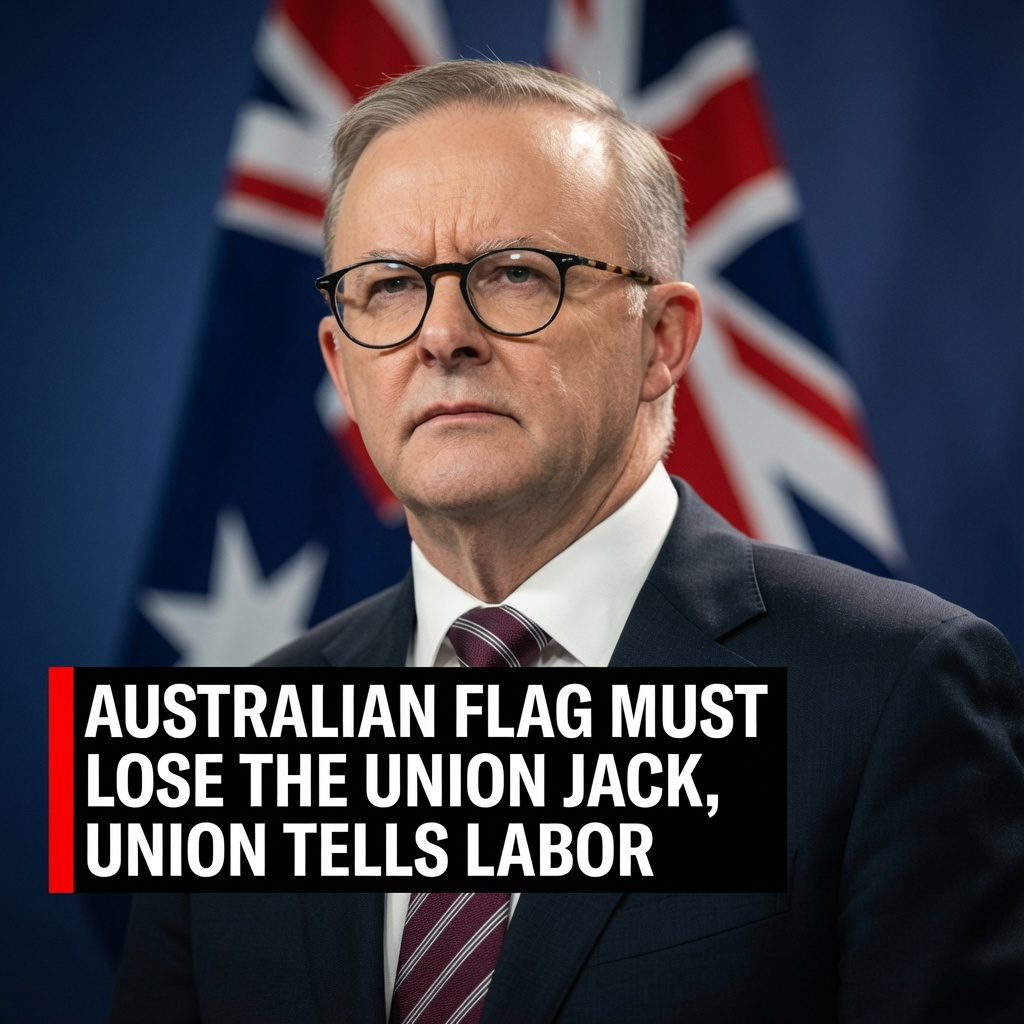
The proposal comes from the Australian Manufacturing Workers’ Union (AMWU), which included the recommendation in its Union Blueprint for Action ahead of the Australian Labor Party’s National Conference in Adelaide.
The document argues that Australia should no longer celebrate symbols linked to British colonial rule, describing the Union Jack as a reminder of oppression experienced by First Nations peoples.
“We need to strip away the constant reminders of the old ruling class and colonial empire,” the blueprint states, adding that symbols such as the Union Jack and colonial statues should be removed from public life.
The recommendation forms part of a broader package of proposals focused on Indigenous recognition and reconciliation. Alongside the flag proposal, the union also advocates renewed support for an Indigenous Voice to Parliament and argues Australia continues to live with the consequences of its colonial past.
The AMWU says contemporary Australians did not personally commit historical injustices but have inherited institutions created during colonisation and therefore share responsibility for addressing their legacy.
The proposal arrives as hundreds of Labor delegates prepare to gather in Adelaide for the party’s National Conference, where policy directions covering economic, environmental and social issues will be debated.
Although union submissions do not automatically become Labor policy, affiliated unions traditionally play an influential role in shaping discussions inside the party.
The AMWU has longstanding links with the Labor movement, with a number of current Labor ministers and parliamentarians holding membership within the union.
A familiar debate over Australia’s national flag
Calls to redesign Australia’s flag are not new.
Since Federation in 1901, Australia’s national flag has incorporated the Union Jack in the upper-left corner, reflecting the nation’s constitutional origins within the British Empire.
Supporters of changing the flag argue modern Australia has developed its own identity and should adopt a national symbol that better reflects an independent multicultural nation and recognises Indigenous history.
Critics argue the existing flag represents Australia’s democratic institutions, legal traditions, military history and constitutional development, while acknowledging the country’s British heritage.
Previous campaigns to replace or redesign the flag have periodically emerged but have never attracted sufficient political momentum to produce a national referendum or legislative change.
Colonial statues also targeted
The union’s blueprint extends beyond the national flag.
It also calls for the removal of colonial-era statues that it considers symbols of dispossession and injustice towards Aboriginal and Torres Strait Islander peoples.
The recommendation reflects broader international debates that have unfolded over the past decade, particularly following movements questioning monuments associated with colonialism and slavery.
Australia has witnessed similar controversies in several cities, where local councils have debated whether historical monuments should remain, be relocated or receive additional historical interpretation.
Supporters of retaining such monuments argue they preserve history rather than celebrate it, while advocates for removal contend public monuments inherently honour the people they depict.
Part of a wider progressive policy platform
The AMWU’s submission contains numerous policy proposals beyond questions of national symbolism.
According to reports, the union is also advocating stronger wealth redistribution measures, increased taxation on high-income earners, inheritance taxes, expanded public services and higher taxes on gas exports to fund greater social spending.
The blueprint frames these proposals within a broader vision aimed at reducing inequality and addressing what it describes as structural disadvantages inherited from Australia’s colonial and economic history.
Labor conference under political scrutiny
This year’s Labor National Conference is expected to attract considerable public attention as the Albanese Government seeks to project stability following its recent electoral success.
Party conferences often feature proposals submitted by affiliated unions, branches and policy committees. However, many recommendations are amended, deferred or rejected before becoming official party policy.
Political observers note that controversial symbolic debates can sometimes overshadow discussions on economic management, housing affordability, energy policy and cost-of-living pressures.
Labor’s draft platform reportedly includes discussion of an anti-racism strategy, continued support for Welcome to Country ceremonies and changes relating to Reserve Bank policy.
Government distances itself
The proposal has already generated questions for senior Labor ministers.
Housing Minister Clare O’Neil was repeatedly asked during a television interview whether she supported removing the Union Jack from the national flag.
After initially declining to engage with the issue several times, O’Neil ultimately stated she did not personally support changing Australia’s flag, instead emphasising that her focus remained on housing and cost-of-living issues.
Her response reflects the political sensitivity surrounding national symbols, particularly as Labor attempts to maintain focus on economic priorities.
Opposition and community reaction
The proposal has also drawn criticism from opposition figures, who argue Australia’s current flag represents the country’s democratic heritage and constitutional development.
Some opponents contend debates over national symbols distract from more immediate concerns facing Australians, including inflation, housing affordability and healthcare.
Others argue changing the flag would erase an important part of Australia’s history rather than encourage greater understanding of it.
Meanwhile, supporters of redesigning the flag maintain Australia should possess a national symbol that stands independently of Britain’s colonial legacy and more accurately reflects the country’s diverse modern identity.
Online discussion has reflected similarly divided views, with some Australians describing a flag change as inevitable over time, while others consider it unnecessary or politically low priority.
Why the issue remains politically significant
Although there is no indication the Albanese Government intends to introduce legislation changing the national flag, the proposal illustrates continuing tensions over Australia’s identity, history and relationship with its colonial past.
Questions surrounding constitutional recognition of Indigenous Australians, the legacy of colonisation and national symbolism have remained politically sensitive since the unsuccessful Indigenous Voice referendum in 2023.
Whether the current proposal gains traction inside Labor remains uncertain, but it has once again placed Australia’s flag at the centre of a broader national conversation about history, reconciliation and the country’s future identity.
For now, the recommendation represents the position of one influential affiliated union rather than official government policy. However, with Labor delegates gathering in Adelaide, it has ensured debates over national identity will once again feature prominently alongside discussions about Australia’s economic and political future.






