Australian broadcaster Michael McLaren has questioned whether one of the country’s most familiar political slogans—”Diversity is our strength”—still reflects the increasingly complex realities facing modern Australia, arguing that simple catchphrases often obscure rather than explain difficult national debates.
Speaking on his radio program, McLaren urged Australians to be cautious of political slogans that reduce complicated issues to a handful of words, warning that such messages can discourage meaningful discussion about immigration, social cohesion and national identity.
“Diversity is our strength” has become one of the most widely repeated phrases in Australian politics over the past two decades, often used by governments, business leaders and community organisations to describe the country’s multicultural success.
McLaren argued, however, that public confidence in the slogan has weakened as Australia has grappled with new social tensions and increasingly polarised public debate.
He pointed to the growing electoral support for Pauline Hanson’s One Nation as evidence that a significant number of Australians believe the conversation about diversity has become overly simplistic.
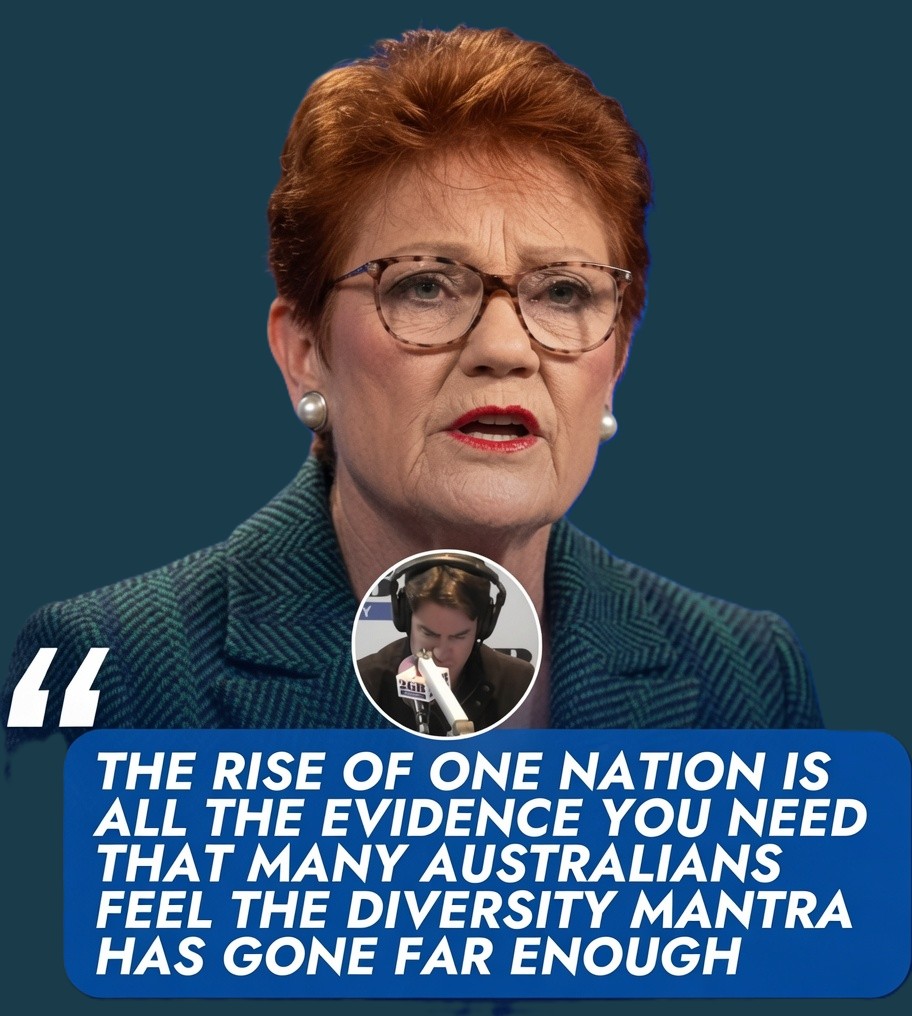
“The rise of One Nation is all the evidence you need that many Australians feel the diversity mantra has gone far enough,” McLaren said.
He also referred to the public reaction following the Hamas attacks on Israel on 7 October 2023 and subsequent demonstrations in Australia, including controversy surrounding protests near the Sydney Opera House.
McLaren argued many Australians were deeply disturbed by scenes in which demonstrators celebrated the attacks or displayed messages that many members of the public regarded as supporting terrorism. He suggested those events prompted some Australians to question whether multiculturalism was being successfully balanced with shared national values.
“They were alarmed that people thought it was acceptable to celebrate the slaughter of innocent people on October 7 by co-opting one of our great national symbols—the Opera House—and cheering it all on. If this is what diversity looks like, so many said, then I want out,” he said.
The comments tap into a broader national conversation that has intensified since the outbreak of the Israel–Hamas conflict, which has sparked protests, counter-protests and heightened concerns about antisemitism, Islamophobia and community cohesion across Australia.
The demonstrations outside the Sydney Opera House in October 2023 became one of the defining moments of that debate. Images and videos from the gathering generated widespread political controversy, prompting investigations into what had occurred and fuelling arguments over free speech, public safety and the limits of political protest.
Since then, governments, police agencies and community leaders have repeatedly called for calm while emphasising that Australians should be able to express political opinions peacefully without inciting hatred or violence.
McLaren’s criticism is directed less at cultural diversity itself than at what he describes as the tendency for political slogans to replace nuanced discussion.
He argued that complex questions about immigration levels, integration, social harmony and national identity cannot be resolved through slogans alone, regardless of whether those slogans are promoted by politicians, advocacy groups or commentators.
Australia is widely regarded as one of the world’s most successful multicultural societies.
Nearly one-third of Australians were born overseas, while almost half the population has at least one parent born in another country. Successive governments from both major political parties have generally supported skilled migration and multiculturalism as important contributors to economic growth, labour force participation and cultural diversity.
At the same time, political leaders have consistently argued that successful multiculturalism depends upon more than immigration alone.
Governments have frequently stressed the importance of English language acquisition, respect for Australian laws, democratic institutions, gender equality and freedom of religion as common civic values capable of uniting people from different backgrounds.
These principles have increasingly featured in debates about social cohesion following international conflicts that have produced tensions within Australian communities.
The issue has also become politically significant following recent federal elections.
One Nation has maintained support in parts of regional and outer suburban Australia by campaigning on lower immigration, stronger border controls and criticism of what it characterises as identity politics.
Although the party remains well behind Labor and the Coalition nationally, its electoral performance continues to influence broader political discussions about migration and multiculturalism.
Supporters of multiculturalism reject suggestions that Australia’s diversity has failed.
They argue Australia’s economic success, international competitiveness and cultural richness have been strengthened by immigration over many decades. They also point to countless examples of communities from different backgrounds living together peacefully, building businesses and contributing to every sector of Australian society.
Many community organisations further argue that isolated incidents involving extremist behaviour should not be used to judge millions of law-abiding Australians from migrant backgrounds.
Others acknowledge that while multiculturalism has delivered enormous benefits, governments must continue investing in integration, community engagement and education to ensure social cohesion keeps pace with population growth.
The debate illustrates how Australia’s political conversation has evolved beyond simply asking whether diversity is desirable.
Instead, increasing attention is being given to how diversity should be managed, what responsibilities accompany migration, and how governments can foster a shared national identity while respecting cultural differences.
Parliamentarians from across the political spectrum have argued that maintaining public confidence requires both strong civic institutions and a clear commitment to common democratic values. Recent parliamentary debate has similarly emphasised that Australia’s multicultural success depends on diversity being accompanied by shared respect for the rule of law, equality and democratic freedoms.
McLaren’s remarks therefore sit within a much broader national discussion rather than a simple argument for or against multiculturalism.
Whether Australians ultimately agree with his conclusions or reject them, his comments highlight a growing willingness to question long-standing political slogans and to ask whether they remain adequate for addressing the complex social, cultural and political challenges confronting modern Australia.






