More than $80,000 in Australian public money has been committed by several federal government agencies to send staff to a leadership conference headlined by former New Zealand Prime Minister Dame Jacinda Ardern, reigniting debate over public sector spending during a period of ongoing cost-of-living pressures.
Procurement records published through the Commonwealth’s AusTender system show that at least five government agencies have purchased tickets for the Women Unlimited Leadership Summit, a professional development event scheduled to take place across six Australian capital cities in August.
The combined expenditure exceeds $80,000, with individual agencies spending between about $10,000 and almost $29,000 on registrations for employees.
The Australian Signals Directorate recorded the largest purchase, spending $28,975 on training places. Other participating agencies include the Australian Taxation Office, the Department of Climate Change, Energy, the Environment and Water, the Department of Defence and the Office of the Inspector-General of Intelligence and Security.
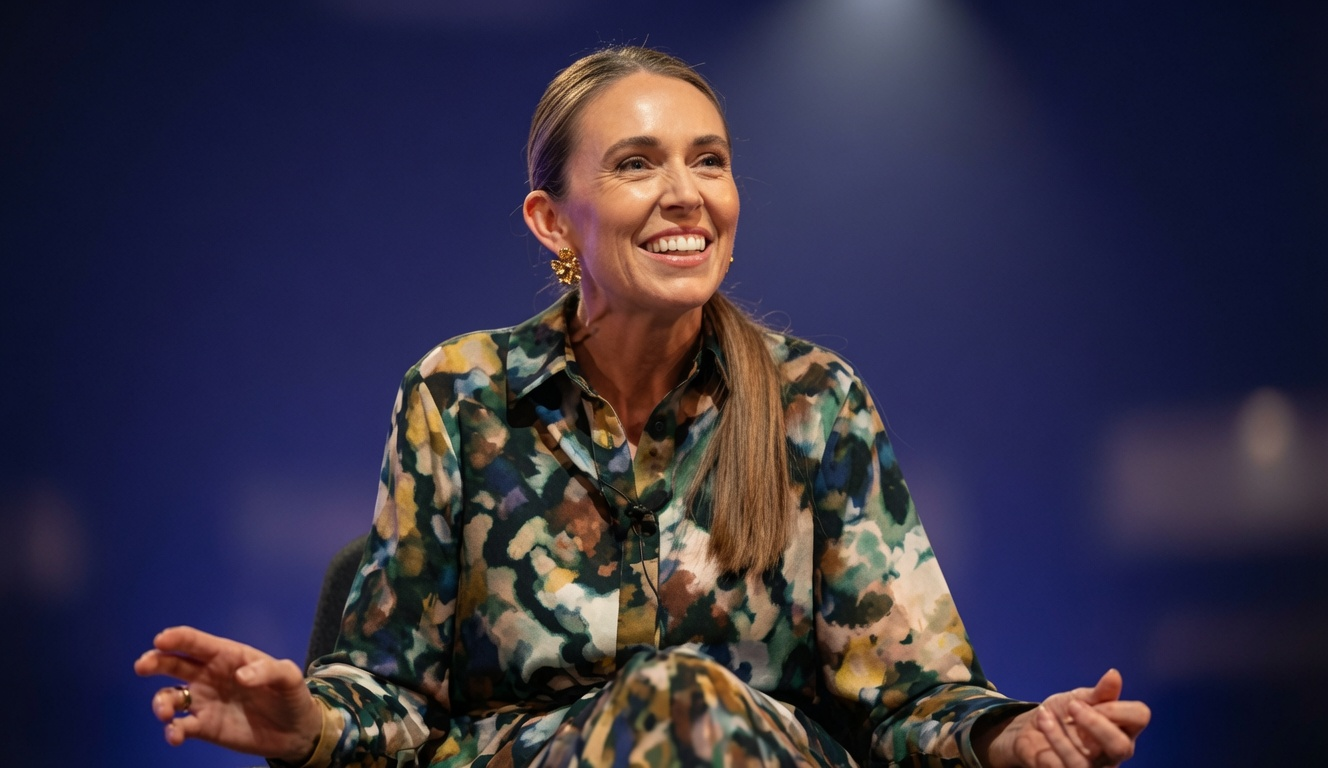
At the centre of the controversy is the appearance of Dame Jacinda Ardern, who will headline the summit with a keynote discussion based on her leadership philosophy and memoir A Different Kind of Power.
According to the summit organisers, Ardern will speak about leading through uncertainty, building trust during periods of crisis and challenging traditional ideas of leadership. Her session is designed around the theme The Courage to Lead Differently.
The event itself is marketed primarily as a leadership development conference for current and emerging leaders across government, business and industry.
Alongside Ardern, the program includes senior Australian public servants, former federal Labor leader Bill Shorten, journalist Annabel Crabb and executives from a range of organisations.
Participants will attend keynote presentations, networking sessions, workshops and follow-up online seminars extending over several months.
Ticket prices have attracted particular attention.
VIP registrations are advertised at up to $4,499 plus GST, although discounted group rates are available for larger organisations and online attendance is offered at a lower cost.
The spending has become politically sensitive because it comes only months after Treasurer Jim Chalmers and Finance Minister Katy Gallagher urged Commonwealth departments to exercise restraint and identify savings as government expenditure reaches historically high levels outside the pandemic period.
Critics argue that expensive conference attendance sends the wrong message while many Australians continue dealing with higher mortgage repayments, elevated living costs and economic uncertainty.
Opinion columnist Caroline Di Russo described the expenditure as an example of unnecessary government spending, questioning whether taxpayers should be funding attendance at a premium leadership event featuring a former overseas political leader.
However, the agencies involved have defended their decisions.
The Australian Signals Directorate said the expenditure formed part of its workforce development strategy, particularly in professional fields where women remain under-represented.
Similarly, the Department of Climate Change’s Inspector-General of Water Compliance said the conference represented an investment in leadership capability based on positive outcomes from previous participants.
The Australian Taxation Office also confirmed that several staff responsible for inclusion and gender equity initiatives would attend the summit as part of their professional development activities.
Asked about the spending, the Albanese Government said attendance at conferences is an operational matter for individual agencies rather than ministers.
A government spokesperson said departments are responsible for determining appropriate staff training while ensuring all procurement decisions comply with Commonwealth value-for-money requirements.
“At all times, agencies must demonstrate value for money in their decision-making,” the spokesperson said.
The debate has also renewed public discussion about Jacinda Ardern’s political legacy.
Ardern served as New Zealand’s Prime Minister from 2017 until early 2023, leading the country through major events including the Christchurch mosque attacks, the COVID-19 pandemic and significant natural disasters.
Internationally, she was widely recognised for her communication style and crisis leadership, while domestically her government faced growing criticism in later years over economic performance, housing affordability and pandemic restrictions before she resigned in 2023.
Since leaving politics, Ardern has built an international career focused on leadership, governance and public policy.
She has held academic appointments, published her memoir and become a regular keynote speaker at international conferences before relocating to Sydney earlier this year.
The Women Unlimited summit reflects a broader trend within both the public and private sectors of investing in executive leadership programs.
Organisers describe the conference as a professional development initiative aimed at improving leadership capability, organisational performance and diversity in senior management.
The event is open not only to women but also to non-binary participants, gender-diverse professionals and male allies involved in leadership or organisational development.
Supporters argue that structured leadership training can improve decision-making, employee retention and organisational culture, particularly in large public institutions managing complex workforces.
Critics counter that expensive conferences featuring celebrity keynote speakers do not always provide measurable benefits commensurate with their cost and question whether equivalent training could be delivered more economically.
The latest disclosures therefore sit within a wider national conversation about public sector efficiency.
Successive Australian governments have promoted workforce capability and leadership development across the Australian Public Service, while simultaneously seeking to demonstrate prudent management of taxpayer funds.
Balancing those two objectives has become increasingly challenging as fiscal pressures intensify.
For the agencies involved, the expenditure represents an investment in staff capability.
For critics, it has become another example of government spending that deserves closer public scrutiny.
Whether the conference ultimately delivers measurable benefits for participating agencies is likely to remain part of the broader debate over how public money should be spent during a period of heightened economic pressure.






