One Nation leader Pauline Hanson has launched one of her strongest attacks yet on Prime Minister Anthony Albanese, declaring the Labor Government is “the worst government Australia has ever had” as she urged voters to abandon the major parties.
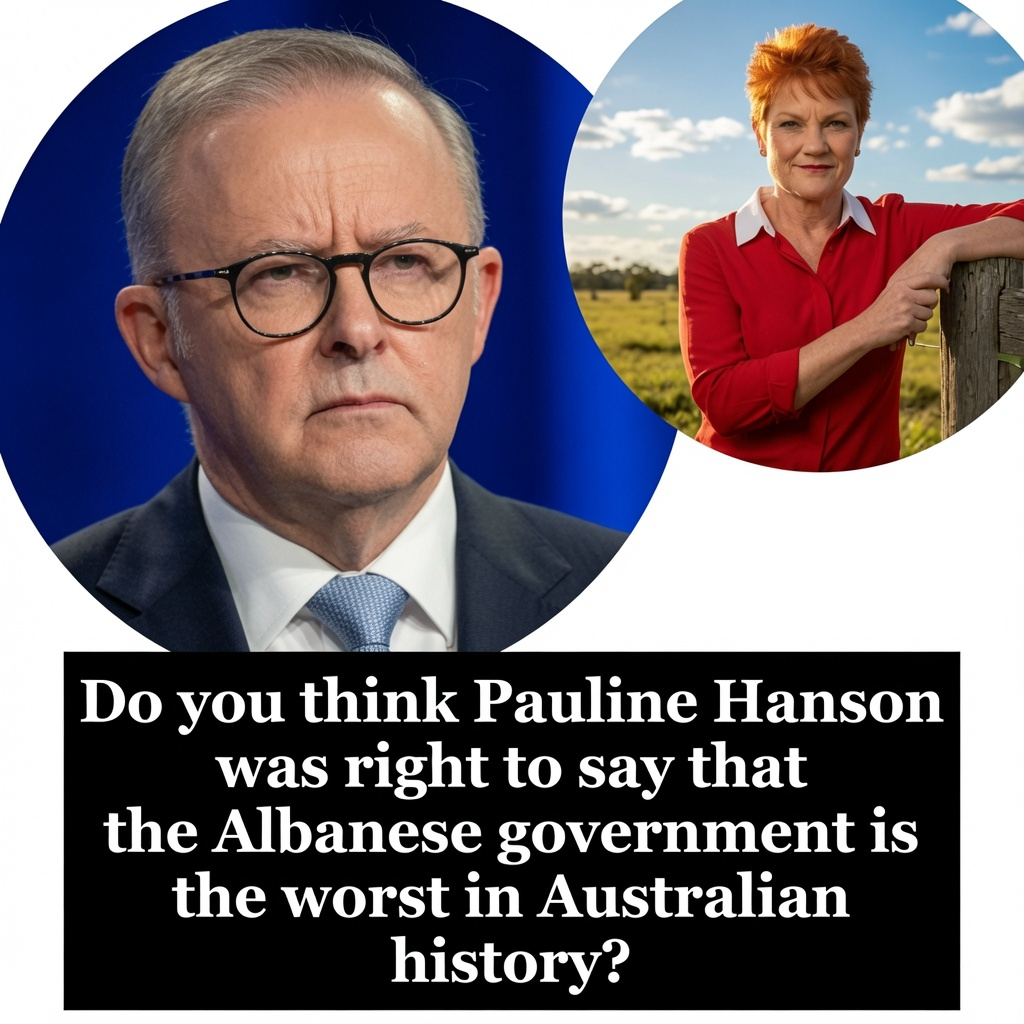
Speaking during the Leadership Matters Breakfast in Perth, Senator Hanson delivered a wide-ranging critique of the Albanese Government’s record, arguing Australians were becoming increasingly frustrated by rising living costs, housing affordability pressures, energy policy and immigration.
“We haven’t had a worse government than what we’ve got now,” Hanson told the audience.
“It is the worst government, the worst prime minister.
“They don’t even know what the hell they’re doing.”
The comments formed part of a broader discussion in which Hanson argued Labor had failed to provide clear leadership on many of the country’s most significant economic and social challenges.
During the event, Hanson said ordinary Australians were struggling with increasing household costs while businesses continued facing higher operating expenses and growing regulatory burdens.
She argued many voters no longer believed either major party was adequately addressing the issues affecting everyday families, positioning One Nation as an alternative for people dissatisfied with Australia’s political establishment.
The speech continued Hanson’s long-running criticism of the Albanese Government’s handling of immigration, energy policy and cost-of-living pressures—issues that have become central themes of One Nation’s national campaign.
In recent weeks, Hanson has repeatedly argued Australia should adopt significantly tougher immigration policies, including stronger enforcement against unlawful migrants and lower migration levels overall.
She has also criticised the government’s renewable energy agenda, claiming it has contributed to higher electricity prices and increased uncertainty for businesses, while calling for greater support for traditional energy industries.
Hanson also used the Perth appearance to argue Western Australia was being held back by federal decision-making, particularly in relation to mining approvals and major resource developments.
She claimed delays affecting new projects were limiting economic growth and employment opportunities in one of Australia’s largest resource-producing states.
Mining policy has become an increasingly prominent issue for One Nation, particularly in Western Australia, where the party has sought to expand support among regional communities and workers connected with the resources sector.
The Leadership Matters Breakfast came at a politically significant time for Hanson.
Recent opinion polling has suggested One Nation has recovered support following a brief decline earlier in the year.
A Newspoll published this week recorded the party’s primary vote at 30 per cent, equal with Labor in that survey, while the Coalition also registered a modest improvement after previous record lows. Polling results vary between surveys, but the figures have intensified discussion about growing voter dissatisfaction with Australia’s traditional political parties.
Political analysts note that One Nation’s improved polling has coincided with renewed public debate over immigration, housing affordability and cost-of-living pressures.
Those issues have long formed the foundation of Hanson’s political platform and have received increased attention following several high-profile appearances and interviews in recent weeks.
Among them were controversial comments made during a visit to the United Kingdom, where Hanson met British activist Tommy Robinson and later defended proposals for tougher immigration enforcement in Australia.
Those remarks attracted criticism from both Labor and Coalition politicians, while Hanson maintained she was advocating stronger border protection rather than targeting lawful migrants.
Labor has consistently rejected Hanson’s assessment of its record.
The Albanese Government argues it has overseen falling inflation, moderating interest rate expectations, lower unemployment than many comparable economies and continued investment in housing, renewable energy and manufacturing.
Ministers have also defended reforms aimed at reducing migration from post-pandemic highs while maintaining Australia’s skilled migration program to address workforce shortages.
Government representatives have repeatedly argued that Australia’s economy has remained resilient despite global inflation, international conflicts and continuing uncertainty in world markets.
They also point to measures including energy bill relief, tax cuts and expanded social assistance as evidence of efforts to ease pressure on households.
The Coalition, meanwhile, has criticised Labor on many of the same issues as Hanson, particularly cost of living, housing and energy policy, although it has generally distanced itself from some of One Nation’s more controversial proposals on immigration and multiculturalism.
That dynamic reflects an increasingly competitive contest for conservative and protest voters, particularly as smaller parties seek to capitalise on dissatisfaction with the major parties.
Political observers say One Nation’s strategy continues to focus on voters who believe successive governments have failed to respond effectively to everyday concerns, particularly outside Australia’s inner metropolitan areas.
Western Australia has become an important part of that strategy.
The party has recently intensified campaigning across the state, including contesting the Secret Harbour by-election and increasing its presence at business and community events.
Hanson has argued that Western Australia’s mining industry, agricultural sector and regional communities deserve stronger representation in Canberra, positioning One Nation as a defender of resource development and regional economic growth.
The Leadership Matters Breakfast also highlighted Hanson’s broader message that Australian politics requires greater participation from people with experience outside Parliament.
Reflecting on her own background in small business before entering politics, she argued many career politicians lacked practical understanding of the challenges facing employers and workers.
She suggested governments would make better policy decisions if more elected representatives had firsthand business experience rather than spending most of their careers within political institutions.
The speech comes as Australia’s political landscape remains increasingly fragmented.
Support for minor parties and independents has grown steadily over recent election cycles, while both Labor and the Coalition have experienced periods of declining primary vote support.
Although opinion polls provide only a snapshot of public sentiment and are not predictors of election outcomes, they have reinforced expectations that competition for votes outside the two major parties will remain a defining feature of Australian politics.
For Hanson, the latest appearance represented another opportunity to reinforce One Nation’s central campaign themes of lower immigration, stronger border security, support for traditional industries, reduced government regulation and greater attention to cost-of-living pressures.
Whether those messages continue translating into electoral gains will become clearer as campaigning intensifies across Australia over the coming months.






