Victorian Premier Jacinta Allan has again rejected calls for a royal commission into alleged corruption and criminal infiltration of the state’s construction industry, insisting her government will pursue immediate enforcement and regulatory action rather than establish another major inquiry.
Facing renewed questions on Monday, Allan maintained that a royal commission would delay rather than accelerate efforts to tackle wrongdoing in the sector.
“I am focused on taking strong action now, and that is the focus of me and my Labor team,” Allan told reporters.
“Anyone calling for a Royal Commission is calling for action delayed, not immediate action.”
She said the government had already taken extensive measures since allegations involving the CFMEU’s construction division erupted publicly in 2024, arguing authorities needed stronger tools and immediate enforcement rather than another lengthy inquiry.
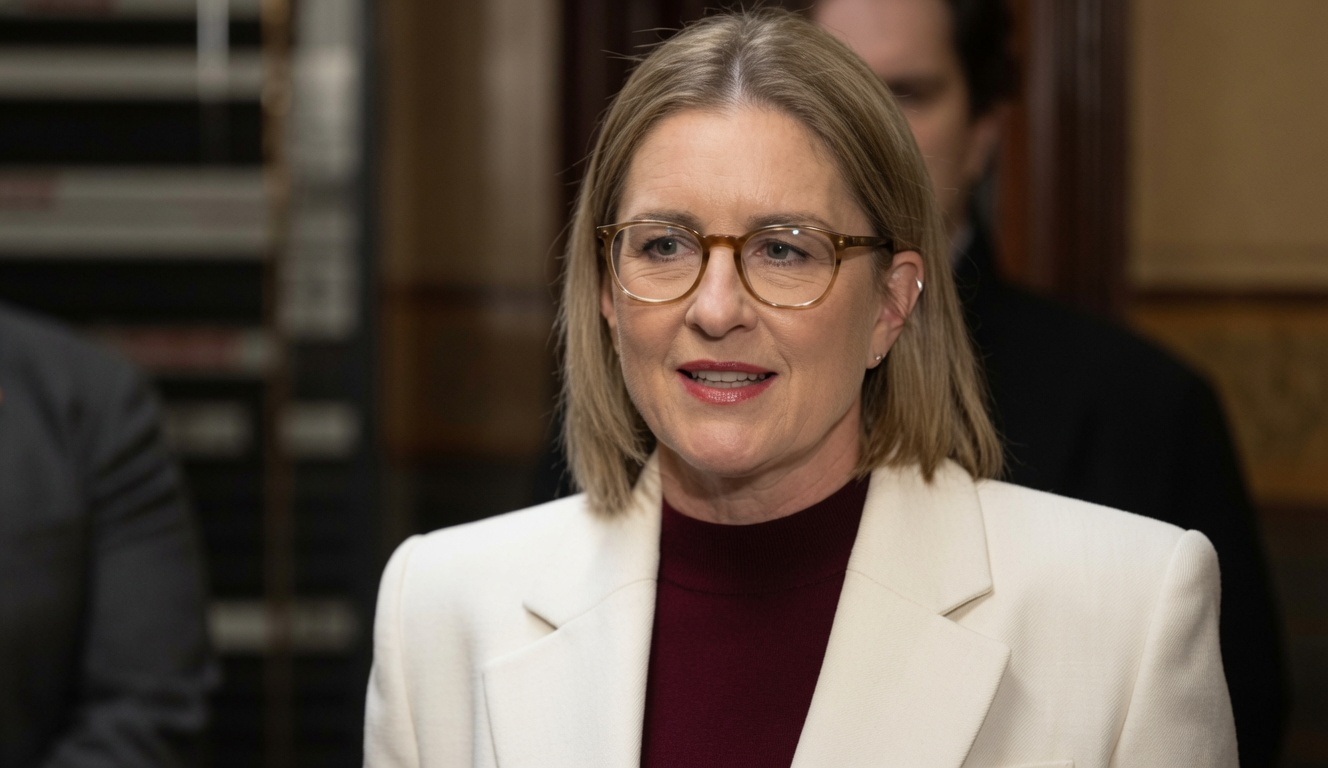
“We need to take immediate action, and we have done so,” she said. “We have taken the strongest action since mid-2024 to weed out these bad actors, to clean up the industry, and change the culture.”
The Premier’s refusal comes amid continuing scrutiny of alleged criminality, intimidation and improper influence within Victoria’s construction sector, including allegations connected to major taxpayer-funded infrastructure projects.
While many of the most serious claims remain allegations and are subject to investigation, Allan herself has acknowledged that criminal elements infiltrated parts of Victoria’s Big Build.
The political dispute has therefore shifted beyond whether serious problems existed in the industry. The central argument is now whether existing police investigations, regulatory reforms and enforcement measures are sufficient to expose what happened — or whether only a royal commission with broad coercive powers can uncover the full extent of the problem.
Pressure for a royal commission keeps growing
Calls for a royal commission have come from well beyond Victoria’s Liberal-National opposition.
Business organisations, integrity figures and other critics of the government’s response have argued that the scale of the allegations warrants a comprehensive independent investigation capable of examining not only criminal conduct, but the relationships between unions, contractors, government agencies and political decision-makers.
Opposition Leader Jess Wilson has made a royal commission a central part of the Coalition’s response to the controversy ahead of Victoria’s November state election.
Critics argue that conventional criminal investigations can prosecute individual offences but may not be designed to answer broader questions about how alleged misconduct became entrenched, who knew about it and whether public procurement and infrastructure systems failed to protect taxpayers.
The Allan government rejects that reasoning.
Its position is that resources should instead be directed towards police, regulators and reforms capable of producing immediate consequences.
Allan has repeatedly pointed to previous inquiries into the building industry when defending her refusal to establish another royal commission, arguing that inquiries alone have failed to deliver the cultural change required on construction sites.
That disagreement goes to the heart of the political fight.
Supporters of a royal commission believe Victoria needs a mechanism capable of examining systemic failures across multiple institutions. The government argues that another inquiry risks spending years revisiting known problems when enforcement agencies should be acting now.
Fresh court case adds to scrutiny
The renewed debate follows a court case involving the owner of a controversial labour hire company associated with construction industry activity.
BK Labour owner Bernard Kearney pleaded guilty to creating a false document in relation to cash withdrawals that authorities had investigated amid suspicions over the possible use of money for improper payments.
Kearney received a $3,000 fine and a non-conviction order.
It is important to distinguish the offence to which he pleaded guilty from broader allegations surrounding the construction industry. A guilty plea relating to a false document does not, by itself, establish every allegation concerning the purpose of the cash or prove wider corruption claims.
Nevertheless, the case has added to debate about whether investigators have sufficient powers and whether witnesses and participants in the industry are willing to cooperate with authorities.
Senior police figures involved in tackling alleged construction-sector corruption have publicly discussed difficulties investigators can face, including fear among potential witnesses and limitations on investigative reach.
Those concerns have strengthened arguments for more powerful investigative mechanisms.
What are the Big Build allegations?
Victoria’s Big Build is not a single construction project but a vast program of public infrastructure encompassing major road, rail and other transport works involving billions of dollars in taxpayer expenditure.
Because of the scale of the program, allegations of organised crime or corrupt conduct within the construction supply chain have potentially significant consequences.
Investigations and media reporting since 2024 have examined allegations involving criminal figures, outlaw motorcycle gang associations, intimidation, labour hire arrangements and misconduct connected with the CFMEU’s construction division.
The union’s construction division was subsequently placed into administration following federal intervention.
More explosive allegations emerged in 2026 through material associated with an investigation led by senior counsel Geoffrey Watson.
Watson alleged that the Victorian construction industry had been deeply compromised by criminal and improper activity during the era of former CFMEU Victorian secretary John Setka.
Some claims have included allegations of organised crime influence, extortion and corruption on major construction projects.
Those allegations have generated intense political debate, but they must be treated carefully. Not every allegation has been tested in court, and estimates of the financial cost to taxpayers remain disputed.
A figure of approximately $15 billion has been cited publicly in connection with alleged excess costs and corruption affecting Victorian infrastructure.
The Allan government has challenged that estimate, and it should not be treated as an established finding that $15 billion was literally stolen or transferred to criminals.
The distinction is crucial because estimates of economic loss can include alleged inefficiency, inflated project costs, restrictive work practices and other indirect effects rather than proven theft of an equivalent amount.
Allan’s history with the infrastructure portfolio raises the stakes
The controversy carries particular political significance for Allan because she held senior infrastructure responsibilities before becoming Premier.
She served for years in portfolios overseeing transport infrastructure during the massive expansion of Victoria’s Big Build under former premier Daniel Andrews.
That history has led opponents to argue that questions about construction industry governance inevitably extend to the government’s oversight of major projects during that period.
Allan has rejected suggestions that her government tolerated criminal conduct and has repeatedly emphasised action taken against wrongdoing.
The government has pointed to police investigations, construction licence cancellations, labour hire reforms and other enforcement measures as evidence it is responding directly.
Victoria Police investigations have resulted in numerous charges connected with alleged criminal conduct in the construction sector, while authorities have moved against licences and businesses linked to suspected wrongdoing.
The government has also pursued stronger regulatory arrangements around labour hire and construction industry oversight.
Allan’s argument is that these measures produce practical results now, whereas a royal commission could take years before delivering recommendations.
Critics say enforcement alone cannot answer every question
Opponents of the government’s approach argue that police and regulators perform a fundamentally different role from a royal commission.
Police generally investigate suspected criminal offences with the aim of gathering admissible evidence and, where appropriate, laying charges.
A royal commission can investigate much broader systemic questions.
It can compel witnesses to appear, require documents to be produced and examine how institutions, policies and relationships allowed misconduct to develop.
For critics, the key unanswered questions are not limited to whether particular individuals committed crimes.
They also want to know whether government departments or project authorities received warnings, how contractors and subcontractors were selected, whether union influence affected commercial decisions, and whether weaknesses in procurement or oversight exposed taxpayers to unnecessary costs.
Those questions have become more significant as further allegations involving individual projects have emerged.
In July, Infrastructure Minister Melissa Horne sought assurances from the Victorian Infrastructure Delivery Authority after allegations were reported concerning a contractor dispute at the Royal Victorian Eye and Ear Hospital redevelopment.
Horne said neither she nor her office had contact with the CFMEU regarding the matter and called for accountability over any wrongdoing.
Allan disputed allegations of improper government interference.
The episode nevertheless demonstrated how construction-sector integrity concerns continue to reach into politically sensitive public projects.
Business groups warn of wider economic damage
The controversy is not solely about criminal law or political accountability.
Business organisations have warned that corruption, intimidation and unlawful conduct in construction can impose significant costs on the broader economy.
If contractors face pressure over who they employ, which subcontractors they use or how work is organised, competition can be distorted.
Those costs can ultimately flow through to taxpayers funding public infrastructure.
Business leaders calling for stronger action have argued that Victoria needs confidence that legitimate companies can compete for work without intimidation or improper interference.
They have also raised concerns about the effect of construction costs on investment and the state’s ability to deliver infrastructure efficiently.
The issue is particularly sensitive in Victoria because the state has undertaken one of Australia’s largest infrastructure pipelines while also carrying substantial public debt.
Any suggestion that taxpayers paid more than necessary because of corruption, coercion or systemic misconduct therefore has significant political consequences.
Why Allan says a royal commission would not solve the problem
The Premier’s opposition is partly based on Australia’s history of inquiries into the building industry.
The Cole Royal Commission into the Building and Construction Industry, established by the Howard government in 2001, conducted extensive hearings and referred numerous matters to authorities.
It ultimately contributed to major changes in federal regulation of the construction sector.
Labor and unions were strongly critical of that inquiry, arguing its terms and approach unfairly targeted organised labour.
Allan has invoked the history of previous investigations to argue that another royal commission would not necessarily change entrenched workplace culture.
Her government instead says the priority should be giving enforcement bodies the tools to identify criminals, trace misconduct and remove bad actors from the industry.
The political weakness in that argument, however, is that every new allegation creates another opportunity for critics to ask whether the government knows the full extent of what occurred.
That means Allan’s refusal is likely to remain under pressure for as long as new claims continue to emerge.
A major issue ahead of Victoria’s election
The controversy is increasingly becoming an election issue rather than simply an industrial relations dispute.
Victorians are due to vote in a state election in November 2026, and the opposition is seeking to frame construction corruption as a question of government integrity and financial management.
For Labor, the challenge is to demonstrate that its reforms are delivering tangible results before voters conclude that a broader investigation is necessary.
For the opposition, the challenge is to show that a royal commission would uncover information that existing police, regulatory and administrative processes cannot — rather than simply becoming an expensive political exercise.
There is also a broader question about what happens after the current administration of the CFMEU construction division eventually ends.
Any lasting solution will need to ensure that unlawful practices cannot simply re-emerge under new leadership or organisational structures.
That requires more than prosecuting individual offenders.
It requires effective procurement rules, transparent contracting, protection for whistleblowers, capable regulators and confidence among workers and businesses that reporting misconduct will not expose them to retaliation.
The unresolved question is how much remains unknown
Allan’s position is now clear: her government believes immediate enforcement and reform are preferable to establishing a royal commission.
Her critics are equally clear that they believe the scale and duration of the alleged misconduct demand an independent inquiry with the power to examine the entire system.
Neither side seriously disputes that Victoria’s construction industry has faced major integrity problems.
The dispute is over how those problems should be investigated and whether existing mechanisms can establish the full truth.
Police can pursue crimes. Regulators can cancel licences and enforce rules. Governments can rewrite laws and strengthen oversight.
But critics of the Premier argue that those processes may still leave unanswered questions about how alleged criminal influence became embedded in parts of an industry responsible for delivering some of Victoria’s most expensive public projects.
With fresh allegations continuing to emerge and a state election approaching, Allan’s refusal to establish a royal commission is unlikely to end the debate.
Instead, every new court case, investigation or allegation will put the same question back before the government: whether the measures already under way are enough to clean up the industry — or whether Victoria still needs a much broader accounting of what happened inside its construction boom.






