A renewed political storm has erupted in Victoria after reports that convicted murderer Alicia Schiller is receiving taxpayer-funded Ozempic treatment and eyelid surgery while serving her prison sentence, reigniting debate over what healthcare prisoners should be entitled to and where governments should draw the line.
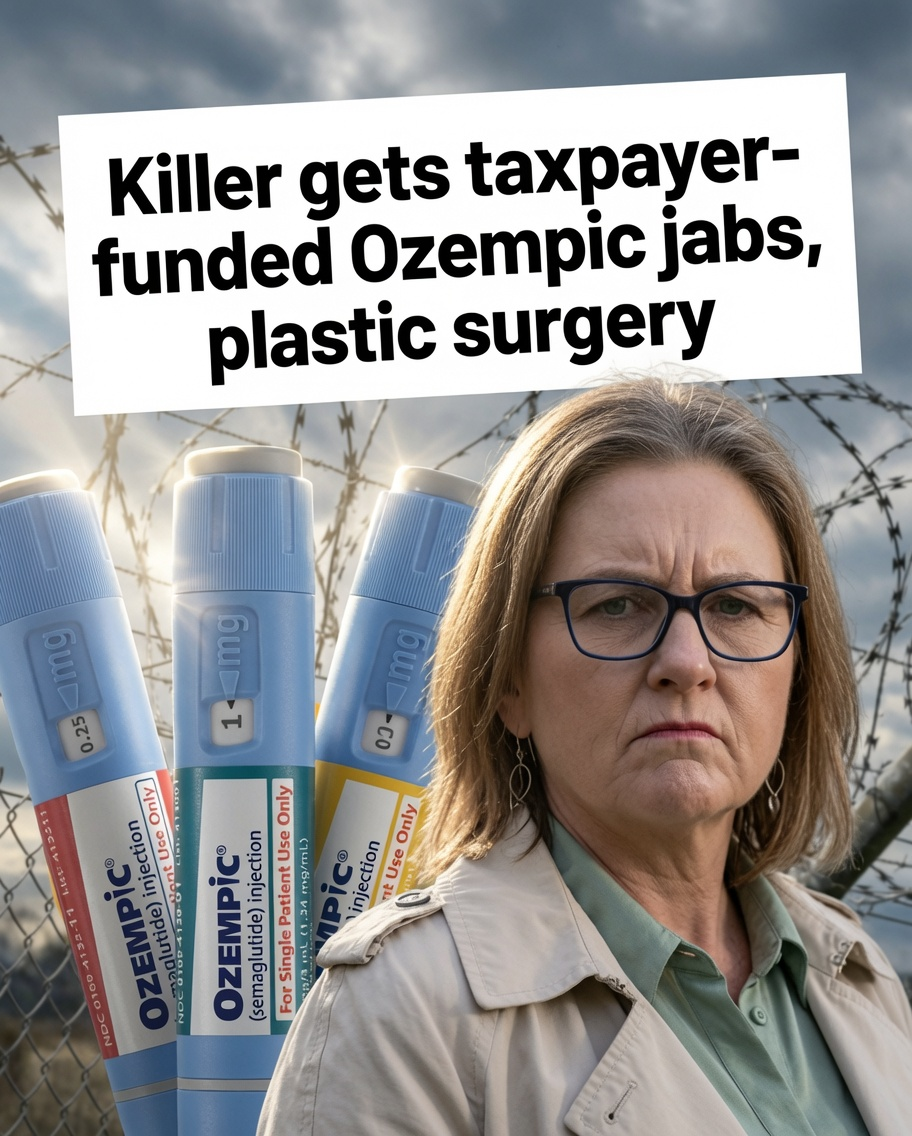
The latest revelations have prompted criticism from opposition politicians and the victim’s family, particularly because Schiller was previously at the centre of a separate controversy over access to IVF treatment while incarcerated.
Schiller is serving a 16-year prison sentence after being convicted over the fatal stabbing of her housemate, Tyrelle Evertsen-Mostert, during a drug-fuelled attack. The case shocked Victoria and has continued to attract public attention whenever questions arise over her treatment while in custody.
According to recent reports, Schiller is now receiving Ozempic injections as part of obesity treatment and has also undergone eyelid surgery while in prison. Both treatments have reportedly been funded through Victoria’s prison healthcare system, triggering renewed scrutiny over taxpayer-funded medical services for inmates.
The issue has become particularly contentious because Ozempic has become one of Australia’s most sought-after medications. While originally developed to treat type 2 diabetes, the drug has become widely known for its effectiveness in weight management. Outside prison, many Australians who do not qualify for Pharmaceutical Benefits Scheme subsidies can face significant out-of-pocket costs for the medication.
The Victorian government has defended the broader principle underpinning prison healthcare, maintaining that treatment decisions are made by qualified clinicians rather than politicians.
Officials have argued that healthcare provided inside correctional facilities must be based on clinical need and that preventative treatment for obesity may reduce long-term complications and healthcare costs. They have also noted that governments have legal obligations to provide appropriate medical care for people in custody.
Nevertheless, critics argue the timing is difficult to justify when many Victorians continue to experience lengthy waiting lists or high costs for specialist medical treatment.
Opposition figures have questioned whether prisoners should receive access to treatments that many law-abiding Australians struggle to afford, particularly when those treatments are not immediately life-saving.
The latest controversy also revives memories of Schiller’s widely publicised IVF application in 2024.
At the time, she received approval to leave prison for fertility treatment after legal proceedings established that prisoners retained rights to access assisted reproductive treatment under Victorian law. The treatment itself was not expected to be paid for by taxpayers, although prisoner transport and supervision would have involved public resources. The proposal generated widespread political debate before Schiller ultimately abandoned the IVF plans following intense public backlash.
The controversy prompted the Victorian Coalition to introduce legislation seeking to prohibit prisoners from accessing assisted reproductive treatment altogether.
That proposal was ultimately rejected, with the Allan Government arguing that broader legislative changes could produce unintended legal consequences and that individual healthcare decisions should continue to be managed within the existing legal framework.
The debate highlights a longstanding tension within Australia’s correctional system.
Under Australian law, imprisonment removes an individual’s liberty but does not eliminate their entitlement to basic healthcare. Governments have a duty of care toward prisoners because inmates cannot independently access medical treatment while incarcerated.
Health experts have frequently argued that prisons must provide healthcare equivalent to community standards where clinically appropriate, although exactly what constitutes “equivalent” remains open to interpretation and political debate.
Weight management has become an increasing issue across correctional systems both in Australia and internationally.
Victorian authorities have previously acknowledged concerns about obesity among prison populations following the death of an inmate whose health deteriorated significantly while in custody. That case contributed to greater attention being paid to obesity management within correctional healthcare, including consideration of newer medications where clinically indicated.
Supporters of providing modern obesity treatment argue that failing to manage serious health conditions inside prison can ultimately create higher costs for taxpayers through emergency interventions, chronic disease and hospital admissions.
Critics, however, maintain that treatments commonly perceived by the public as lifestyle-related or elective inevitably raise questions about fairness, particularly during a cost-of-living crisis.
The reported eyelid surgery has generated similar debate.
While cosmetic procedures are generally not routinely funded within correctional healthcare, medically necessary surgery may be approved if clinicians determine it addresses a genuine health issue, such as impaired vision or another functional condition. Authorities have not publicly disclosed the medical basis for Schiller’s individual treatment, citing patient confidentiality.
That privacy obligation has also limited what ministers can publicly discuss.
During previous parliamentary exchanges over Schiller’s IVF case, Victorian Corrections Minister Enver Erdogan said individual prisoner medical matters could not be debated publicly, while also expressing sympathy for the victim’s family and acknowledging community concern generated by media reports.
The victim’s relatives have repeatedly voiced frustration whenever Schiller’s name returns to public attention.
For them, each new controversy serves as a reminder of the violent crime that claimed Tyrelle Evertsen-Mostert’s life and the continuing trauma experienced by those left behind.
The latest revelations have therefore extended beyond healthcare policy into broader questions surrounding victims’ rights and public confidence in the justice system.
The political debate is also occurring against the backdrop of wider reforms to Victoria’s assisted reproductive treatment framework.
In recent years, the state has continued expanding public fertility services while simultaneously reviewing regulatory oversight of IVF providers following national concerns about safety and quality standards. Those reforms are separate from the prison controversy but illustrate the broader policy environment surrounding reproductive healthcare in Victoria.
As public discussion continues, two competing principles remain at the centre of the debate.
One is the long-established legal obligation for governments to provide appropriate healthcare to people in custody. The other is the community expectation that prisoners should not receive benefits that appear unavailable to many law-abiding citizens.
How governments balance those competing expectations is likely to remain a politically sensitive issue, particularly whenever high-profile offenders become the focus of taxpayer-funded medical treatment.






