Pauline Hanson has rejected claims that she supports reinstating the White Australia policy, but the denial has done little to quell political criticism, with both Labor and the Coalition continuing to condemn remarks they argue are divisive and incompatible with modern Australia’s multicultural identity.
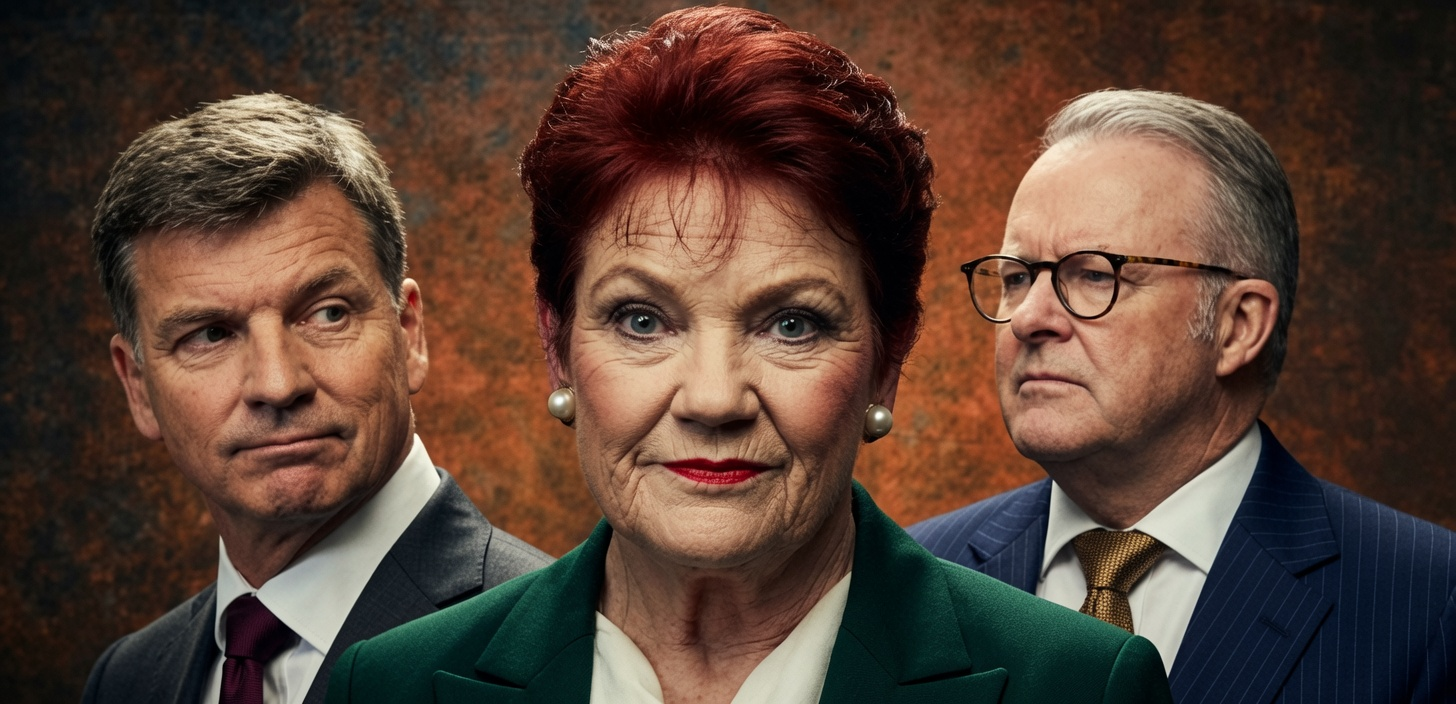
The latest controversy follows Hanson’s visit to the United Kingdom, where appearances with several high-profile anti-immigration figures and comments about immigration policy generated intense scrutiny in Australia. While Hanson insists she has been misrepresented, senior figures from both major parties say her rhetoric risks deepening social divisions.
Hanson rejects claims she supports White Australia policy
Speaking from London, Hanson issued a video statement responding to reports that suggested she had lamented the abolition of the White Australia policy.
She described the allegations as false and insisted she had never advocated restoring the former immigration system.
“They’re false allegations that I wanted to introduce the White Australia policy. Not the case. Never, ever have I advocated that, and I don’t believe in it as well,” Hanson said.
The One Nation leader argued that her long-standing position has always centred on reducing immigration levels, selecting migrants carefully and encouraging newcomers to integrate into Australian society rather than preserving a racially based immigration policy.
She said Australia should welcome people who want to “assimilate and be Australians”, while repeating her opposition to practices such as wearing the burqa, the implementation of sharia law and child marriage.
Labor says the comments are divisive
Despite Hanson’s clarification, Labor MP Andrew Charlton said the broader message remained deeply concerning.
Appearing on Sky News, Charlton argued Australia has benefited enormously from successive waves of migration and warned against rhetoric suggesting that some ethnic or cultural groups are less welcome than others.
“Australia is a multicultural country. Waves of migrants have added a huge amount to our country,” he said.
Charlton added that suggesting certain groups should not be in Australia was “incredibly divisive” and inconsistent with the country’s multicultural values.
Coalition also distances itself from Hanson’s remarks
The criticism was not limited to Labor.
Deputy Liberal leader Jane Hume also rejected any suggestion that Australia should revisit ideas associated with the former White Australia policy.
Hume described Hanson’s comments as “divisive”, “inflammatory” and “totally un-Australian”, while emphasising that Australia’s identity has been built through immigration from around the world.
“We have had a proud history of multiculturalism. We’re a great migrant nation,” Hume said.
She added that although the Coalition believes Australia’s migration program has grown too rapidly in recent years and that entry standards should be strengthened, restoring the White Australia policy “is not part of that”.
How the controversy began
The latest dispute follows a series of interviews Hanson gave while travelling through Britain.
She met with British anti-immigration campaigners, including Tommy Robinson and Restore Britain leader Rupert Lowe, and endorsed aspects of their hardline immigration agenda. During one televised exchange, Hanson said she “loved” the idea of mass deportations for people living illegally in the United Kingdom.
Media reporting also focused on comments Hanson made during a podcast conversation in which she discussed Australia’s immigration history and criticised the direction of multicultural policy.
Several news organisations interpreted those remarks as expressing regret over the abolition of the White Australia policy, prompting Hanson to issue her public denial.
What was the White Australia policy?
The White Australia policy refers to a collection of immigration laws introduced after Federation in 1901 that were designed to severely restrict non-European immigration into Australia.
The policy operated through a range of legislative measures, including the Immigration Restriction Act 1901 and the controversial dictation test, which gave authorities broad powers to exclude unwanted migrants.
Over subsequent decades, Australia gradually dismantled the policy. Major reforms began after World War II, and the remaining discriminatory elements were abolished during the early 1970s, paving the way for the country’s modern multicultural immigration system.
Today, Australia’s migration program is based on non-discriminatory criteria including skills, family reunion, humanitarian obligations and national security considerations rather than race or ethnicity.
One Nation’s long-standing immigration platform
Immigration has remained the defining issue of Hanson’s political career since she first entered federal politics in 1996.
One Nation has consistently advocated for significantly lower migration levels, stronger border controls, tighter visa enforcement and greater expectations that migrants integrate into Australian society.
Hanson has also been a frequent critic of multiculturalism and has repeatedly argued that immigration should better reflect Australia’s capacity to provide housing, infrastructure and public services.
However, Hanson has previously stated that she does not support reinstating the White Australia policy. Similar denials were made publicly in 2018, although her critics argue that some of her rhetoric echoes debates historically associated with that period.
The broader political debate
The latest dispute highlights the increasingly fine line Australian political leaders are attempting to draw between advocating lower migration and avoiding language that could be interpreted as targeting particular ethnic or religious communities.
Both Labor and the Coalition have argued for adjustments to migration settings in response to housing shortages, infrastructure pressures and labour market needs.
At the same time, both major parties continue to emphasise support for multiculturalism as a defining feature of contemporary Australian society.
The disagreement with Hanson therefore centres less on whether immigration levels should change and more on how those arguments are framed publicly.
Political consequences
The controversy comes as One Nation continues to attract significant public attention following Hanson’s overseas tour and a series of high-profile media appearances.
Recent polling suggests the party has regained support after a brief decline, even as debate over Hanson’s comments has intensified. At the same time, Coalition leader Angus Taylor has ruled out governing in partnership with One Nation, seeking to distinguish the Coalition’s migration policies from Hanson’s broader political messaging.
For Labor, the episode has provided another opportunity to reinforce its support for multiculturalism while portraying One Nation as outside Australia’s political mainstream.
For Hanson, the dispute reflects a familiar pattern in Australian politics: strong criticism from opponents alongside continued support from voters who believe her immigration concerns deserve greater attention.
Whether the latest controversy strengthens or weakens One Nation politically is likely to become clearer as debate over migration, integration and Australia’s national identity continues in the months ahead.






