The Victorian Government has unveiled a sweeping package of proposed legislation that would force social media companies to reveal the identities of anonymous users accused of online vilification, while also making it easier for families to sue technology companies over psychological harm suffered by children.
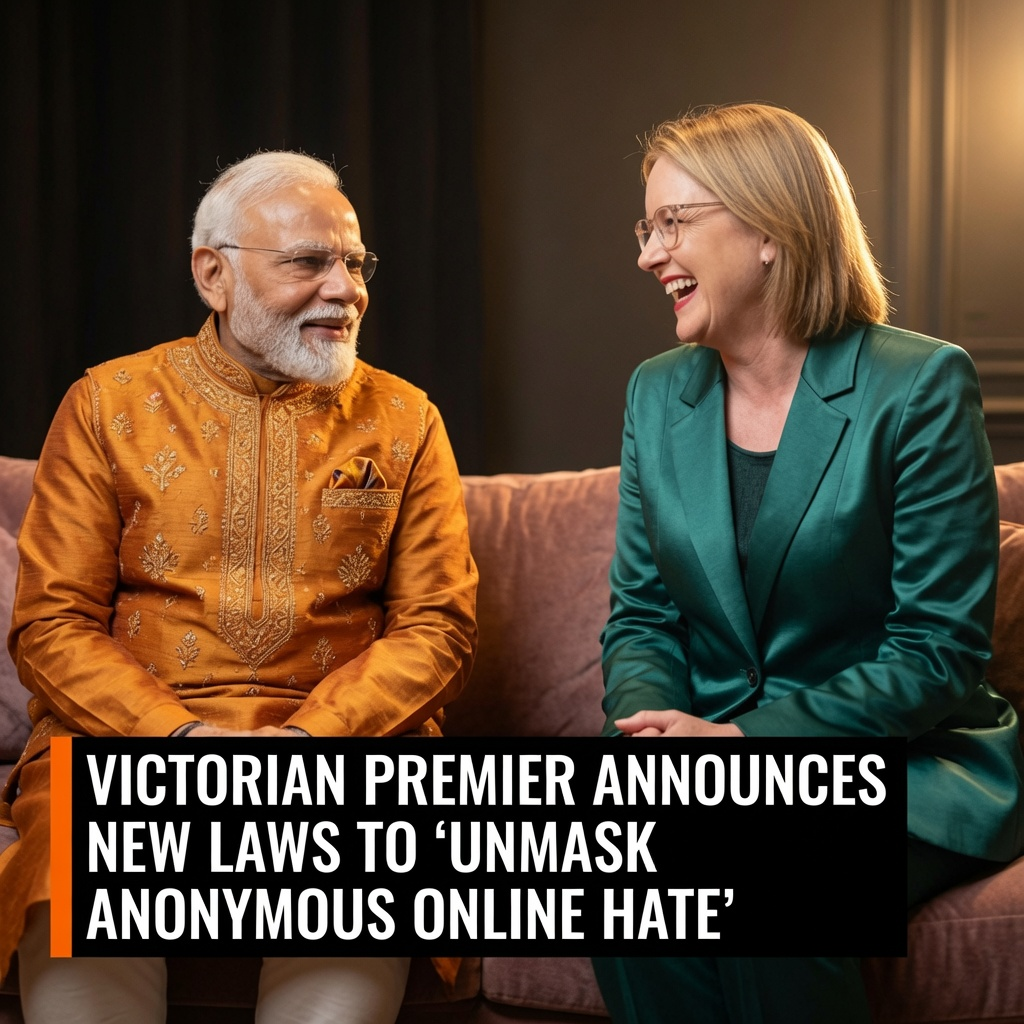
Premier Jacinta Allan announced the reforms on Sunday, describing them as nation-leading measures designed to hold social media and artificial intelligence companies accountable for harmful online behaviour.
“We’re introducing nation-leading laws to keep AI and tech companies accountable, protect our kids and unmask anonymous online hate,” Ms Allan said when outlining the proposed reforms.
The legislation is expected to be introduced before Victoria’s state election and represents one of the most significant attempts by an Australian state government to regulate online platforms and anonymous digital behaviour.
New ‘demasking orders’ for anonymous accounts
At the centre of the proposal are new powers for the Victorian Civil and Administrative Tribunal (VCAT) to issue what the government calls “demasking orders”.
Under the proposed framework, VCAT would be able to compel social media companies to disclose the identity of anonymous users accused of online vilification based on protected attributes including race, religion and sexual orientation. Victims would then be able to identify those allegedly responsible and potentially pursue civil legal action against them.
The Allan Government says the changes are intended to prevent individuals from using anonymous accounts as a shield for abuse while providing victims with greater access to justice.
Attorney-General Sonya Kilkenny said the reforms would allow victims of online hate to discover “who’s really behind the keyboard”, while Mental Health Minister Ingrid Stitt argued the changes recognised the significant psychological impact online abuse can have on Victorians.
Lower legal threshold for lawsuits against Big Tech
The second major reform focuses on the legal responsibility of technology companies.
Current Victorian law requires families seeking damages for psychiatric harm suffered by children to prove a permanent impairment of at least 10 per cent before negligence claims against social media or AI companies can proceed.
The Allan Government plans to remove that threshold entirely for claims involving minors.
According to the government, the change would make it substantially easier for parents to bring legal action where they believe online platforms have contributed to mental health injuries suffered by children.
Premier Allan argued that digital platforms are deliberately designed to maximise engagement and can expose children to significant risks.
“If a platform hurts a child, families should be able to take that company to court,” she said.
The government is also considering whether similar legal reforms should eventually be extended to adult users as consultation on the legislation continues.
Part of a broader push on online safety
The proposed Victorian reforms build on broader efforts across Australia to increase protections for young people online.
Last year the Commonwealth introduced legislation restricting social media access for children under the age of 16, reflecting growing concerns about online addiction, cyberbullying and exposure to harmful content.
The Victorian Government argues its latest proposal complements those federal measures by focusing on platform accountability rather than user access alone.
Government officials also point to legal developments overseas, where courts have increasingly examined whether social media companies should bear responsibility for addictive platform design and alleged failures to protect young users.
Supporters say victims need stronger protections
Supporters of the legislation argue anonymous online abuse has become increasingly difficult to police, particularly when perpetrators use multiple accounts or hide behind false identities.
Public figures, religious communities, sporting organisations and advocacy groups have all raised concerns in recent years about coordinated online harassment campaigns.
The Victorian Government believes allowing VCAT to compel identity disclosure would provide victims with practical legal options that are currently unavailable in many cases.
Officials also argue the reforms may encourage platforms to respond more quickly to complaints involving hate speech and unlawful online conduct.
Critics warn of free speech implications
The announcement immediately generated criticism from free speech advocates and many users on social media platform X.
The Free Speech Union of Australia said it would oppose what it described as expanding government regulation of online speech, arguing anonymous expression can play an important role in protecting whistleblowers, political dissidents and vulnerable individuals.
Other critics questioned whether the proposed laws could be used too broadly, potentially discouraging legitimate criticism of governments or public officials if users feared their identities could be disclosed.
Some online commentators also questioned the government’s focus, arguing Victoria should instead prioritise issues such as crime, public safety and fiscal management.
The criticism illustrates the ongoing tension between improving protections against online abuse and preserving privacy and freedom of expression in digital spaces.
Cyber safety experts divided
Not all experts agree the proposed laws will significantly change how online abuse is investigated.
Cyber safety specialist and former Victoria Police officer Susan McLean told ABC News that technology companies already have mechanisms to provide identifying information to police when required under existing legal processes.
She questioned whether the proposed legislation would substantially improve enforcement, suggesting the government’s announcement reflected an incomplete understanding of how online investigations currently operate.
Others argue that expanding civil remedies rather than relying solely on criminal investigations could still provide meaningful new options for victims seeking accountability.
Balancing accountability and privacy
The Victorian proposal reflects a challenge confronting governments worldwide.
Digital anonymity has become an essential safeguard for journalists, activists, domestic violence survivors and political dissidents. At the same time, anonymous accounts have frequently been used to spread racist abuse, antisemitism, homophobia and coordinated harassment campaigns.
Finding an appropriate balance between protecting legitimate anonymous speech and preventing unlawful abuse has become one of the most complex policy issues facing lawmakers.
Legal experts note that any identity disclosure powers will ultimately depend on carefully drafted safeguards, judicial oversight and clear legal thresholds to ensure only appropriate cases result in personal information being released.
What happens next?
The Victorian Government will now begin consultation with VCAT, the courts and other stakeholders before introducing the legislation to Parliament.
If passed, Victoria would become one of Australia’s first jurisdictions to give a tribunal explicit authority to compel social media companies to identify anonymous users accused of unlawful online vilification.
The package would also significantly strengthen the ability of families to pursue negligence claims against technology and AI companies where children allegedly suffer psychiatric harm linked to platform design or operation.
Whether the legislation ultimately survives parliamentary scrutiny in its current form remains to be seen. However, the proposal has already intensified the national debate over the responsibilities of technology companies, the limits of anonymous online speech and how governments should respond to harmful digital behaviour while protecting fundamental civil liberties.






