Australian film and television has farewelled one of its enduring stars, with veteran actor Terence Donovan dying peacefully in Melbourne at the age of 90 after a career that spanned more than six decades.
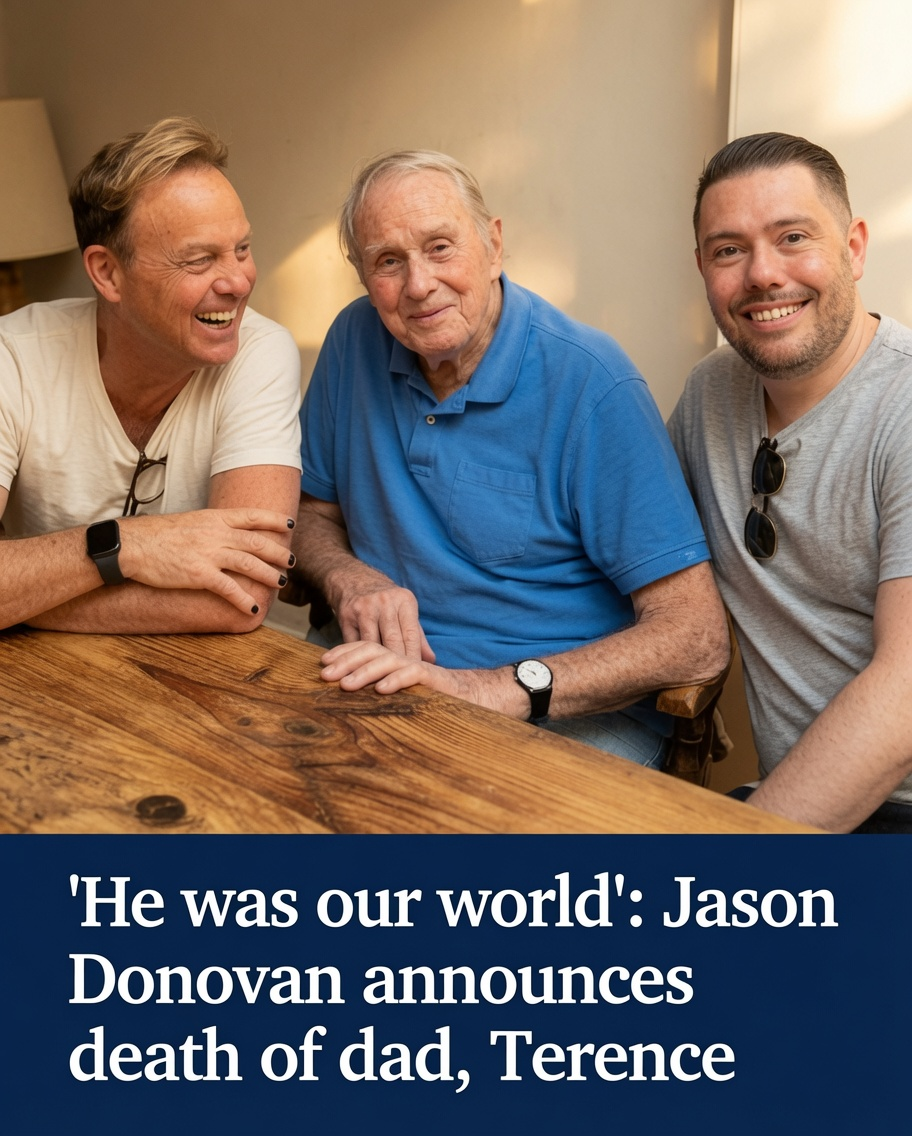
The news was announced by his son, actor and singer Jason Donovan, who shared an emotional family statement celebrating not only his father’s remarkable life but also the close bond they shared.
“It is with great sadness but also a sense of celebration of a long full life that myself and my brother Paul announce our father Terence died peacefully last night here in Melbourne,” Jason wrote.
Describing his father as “larger than life”, Jason said Terence had been “our best friend … our world”, adding that the family found comfort in knowing they were able to be by his side during his final days. He also thanked staff at Melbourne’s Cabrini Hospital for the care they provided during his father’s final illness.
For Australians who grew up watching local television from the 1960s through to the 2020s, Terence Donovan represented a familiar and respected face whose performances helped define generations of home-grown drama.
Born in London in 1935, Donovan migrated to Australia as a teenager with dreams of becoming an entertainer. Before establishing himself as an actor, he worked various jobs while pursuing opportunities in television and on stage.
His earliest screen appearances came during the early years of Australian television, when locally produced drama remained relatively rare. Over time, Donovan built a reputation as a dependable performer capable of portraying authoritative police officers, compassionate fathers and complex everyday Australians.
His breakthrough arrived with the landmark police drama Division 4, where he portrayed Detective Mick Peters. The series became one of Australia’s defining television dramas during the late 1960s and early 1970s, introducing Donovan to audiences nationwide.
He later cemented that popularity in another successful police series, Cop Shop, portraying Detective Sergeant Vic Cameron. His performances made him one of the country’s most recognisable television actors during an era when Australian-produced dramas were steadily gaining both audience support and international attention.
Although many younger viewers remember him primarily from soap operas, Donovan’s résumé extended far beyond serial television.
He appeared in acclaimed Australian films including Breaker Morant, The Man from Snowy River and numerous television mini-series that helped establish Australia’s reputation for quality local storytelling.
Throughout the 1980s and 1990s he became a familiar presence across many of Australia’s biggest television programs, including Prisoner, Sons and Daughters, A Country Practice, The Flying Doctors, Blue Heelers and Home and Away.
Among his most beloved roles was Doug Willis in Neighbours, a character who became one of the long-running soap’s most recognisable father figures.
Donovan first joined the series in the late 1980s before returning several times across later decades. His portrayal resonated with viewers through storylines involving family relationships, illness and ageing, giving emotional depth to one of Australian television’s best-known fictional families.
His work on Neighbours also created a unique professional connection with his son Jason Donovan, who rose to international fame through the same series before launching a successful music career.
The father and son became one of Australian entertainment’s most recognisable family partnerships, sharing not only television history but also a close personal relationship that Jason frequently acknowledged in interviews and social media posts.
Last year, while celebrating Terence’s 90th birthday, Jason reflected on childhood memories including family road trips between Melbourne and Sydney, beach holidays and his father’s unwavering encouragement throughout his own career.
He described Terence as his hero, biggest supporter, toughest critic and lifelong friend—sentiments that made this week’s farewell especially poignant.
Jason’s latest tribute suggested the family viewed Terence’s passing not only with sadness but also gratitude for a life lived fully.
“Knowing that he lived life to the max,” he wrote.
“Knowing that in life it’s either a daring adventure or nothing at all. How lucky are we to have a Dad like you.”
Tributes quickly flowed from colleagues and fellow performers across Australia’s entertainment industry.
Among them was Kylie Minogue, who worked alongside both Terence and Jason during the golden era of Neighbours. She remembered Donovan for his kindness and guidance during her early years on television.
Others praised not only his professionalism but also the generosity he showed younger actors entering the industry, describing him as someone who quietly mentored emerging performers while maintaining a strong commitment to Australian storytelling.
Beyond acting, Donovan also played an important role in shaping Australia’s television industry.
During the late 1960s and early 1970s, Australian-made television dramas accounted for only a tiny proportion of programming. Donovan became one of several prominent actors campaigning for stronger local content requirements.
He participated in the “Make It Australian” movement, publicly advocating for greater investment in Australian stories and opportunities for local actors, writers and production crews.
His activism reflected a belief that Australian audiences deserved to see their own communities, voices and experiences represented on screen rather than relying almost exclusively on imported programming.
Those campaigns contributed to policy discussions that eventually strengthened Australian content quotas, helping create an industry capable of producing internationally recognised drama over subsequent decades.
That legacy remains significant today.
Modern Australian productions continue to enjoy international audiences through broadcast television and streaming platforms, while performers who followed Donovan have benefited from a stronger domestic production sector than existed when he began his career.
Many industry observers regard pioneers such as Donovan as instrumental in establishing Australian television drama as a respected cultural export.
His influence also extended across three generations of one family.
Jason Donovan became one of Australia’s biggest entertainment exports during the late 1980s, enjoying chart success throughout Britain and Europe while remaining closely associated with Neighbours.
The family’s performing tradition continued through Jason’s daughter, Jemma Donovan, who also appeared in Neighbours, making the Donovans one of Australian television’s rare multi-generational acting families.
Despite his extensive career, colleagues frequently described Terence Donovan as approachable and deeply committed to his craft rather than celebrity.
He continued working well into his later years, returning for television appearances decades after first becoming a household name.
His longevity reflected both his versatility and the respect he commanded throughout the industry.
For viewers, Donovan represented a familiar face whose performances accompanied major changes in Australian society—from the expansion of commercial television in the 1960s through the global success of Australian soap operas and the streaming era.
His body of work captured multiple generations of Australian life while helping establish the country’s distinctive television identity.
Although his passing marks the end of an extraordinary career, his performances remain preserved through decades of television and film that continue to introduce new audiences to one of Australia’s most respected character actors.
As tributes continue to emerge, many fans are remembering not only the characters Terence Donovan portrayed but also the lasting contribution he made to Australian entertainment, local storytelling and the generations of performers who followed in his footsteps.
For Jason Donovan and his family, however, the public legacy sits alongside a far more personal one.
In the words of the son who knew him best, Terence Donovan was much more than an accomplished actor—he was simply “our world”.






