A social media post published by Prime Minister Anthony Albanese has become the subject of political debate after it was removed from his official account without any public explanation.
The now-deleted post reportedly featured several well-known Australian personalities and was online only briefly before disappearing. Its removal quickly attracted attention across social media and political commentary programs, prompting speculation about why it had been taken down and whether the decision reflected political, communications or editorial considerations.
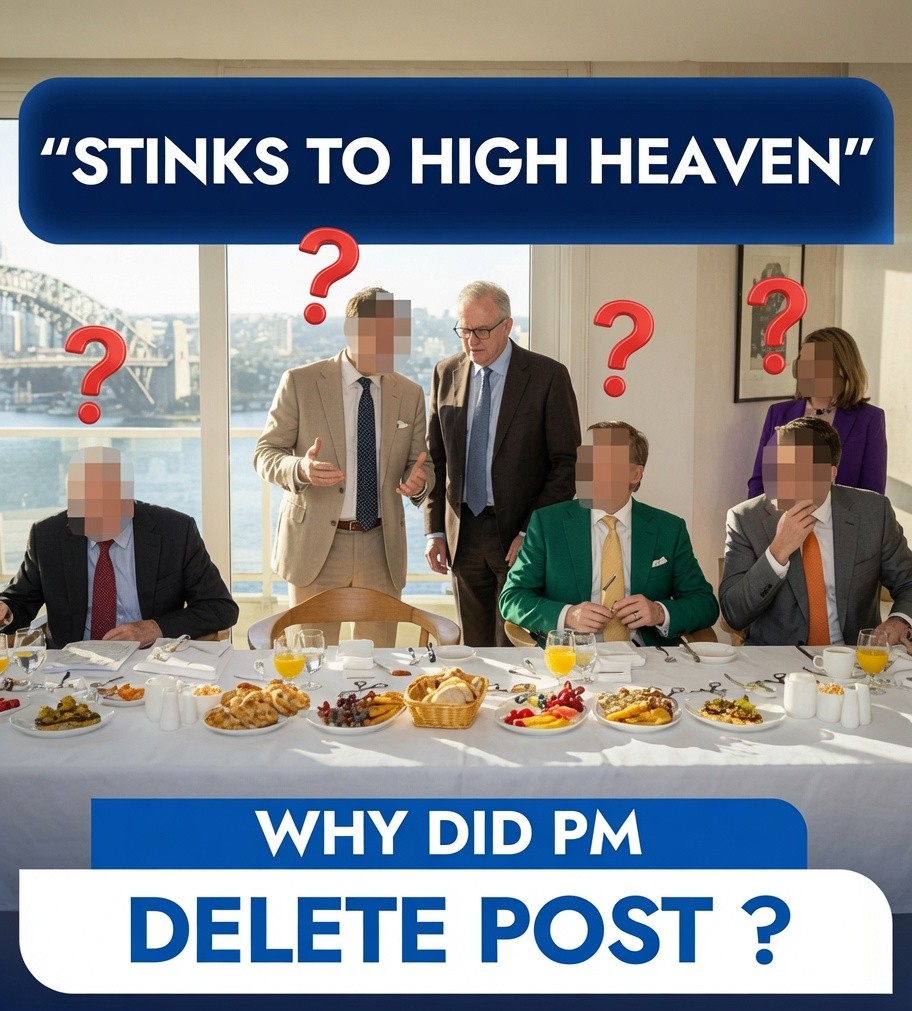
At the time of publication, neither the Prime Minister’s Office nor the Australian Government had publicly explained why the post was deleted. No official statement has confirmed whether the removal resulted from an internal communications decision, factual concerns, copyright issues or another reason.
In the absence of an official explanation, much of the discussion has centred on speculation rather than verified information.
Political commentators from different perspectives have offered varying theories, while social media users have attempted to reconstruct the deleted post through screenshots and archived copies. As is often the case with removed online content, the lack of immediate clarification has fuelled further public interest.
Deleted posts by senior political leaders frequently receive greater attention than the original publication itself.
Communications specialists note that removing online content can sometimes amplify public curiosity, particularly when the material relates to government messaging or politically sensitive issues. Once screenshots begin circulating, questions often shift from the original content to the reasons behind its disappearance.
This phenomenon is not unique to Australia.
Around the world, political leaders and governments have occasionally removed social media posts after publication because of factual corrections, drafting errors, copyright concerns, changing circumstances or internal communications reviews. In many cases, however, the absence of an immediate explanation has encouraged speculation that extends well beyond the original issue.
The Albanese Government has increasingly relied on social media platforms to communicate directly with Australians, using short-form videos, photographs and campaign-style messaging alongside traditional media appearances.
Like many modern political leaders, Mr Albanese maintains an active online presence designed to reach audiences across multiple digital platforms. Supporters argue this approach makes government communication more accessible, while critics contend it can sometimes blur the distinction between official government announcements and political messaging.
The reported deletion has therefore attracted attention not only because of the content itself but also because of broader questions surrounding transparency in political communication.
Some opposition figures and commentators have argued that governments should explain significant changes to official messaging when material is removed from public view. Others caution that social media accounts routinely undergo editing and that posts are frequently deleted for entirely routine administrative reasons.
Without an official explanation, it remains impossible to determine the precise motivation behind the decision.
There is currently no publicly available evidence indicating the post was removed because it breached any law, violated platform rules or was subject to any formal complaint.
Similarly, there has been no confirmation that any individual featured in the post requested its removal.
Political communication experts say deleted posts can arise from numerous ordinary circumstances.
These may include publishing errors, incorrect tagging of individuals, copyright or licensing concerns involving photographs, revisions to campaign messaging, scheduling mistakes or simple decisions that a post no longer reflects the intended communication strategy.
In other situations, governments may remove material if subsequent information requires factual correction or if the post risks creating confusion about official policy.
Social media has fundamentally altered the pace of political communication.
Unlike traditional press releases, digital posts can be published, edited or removed within minutes. While this provides flexibility, it also means every change is closely monitored by journalists, political opponents and members of the public who routinely archive online content.
Digital transparency has therefore become an increasingly important element of contemporary politics.
Once information appears online, screenshots, reposts and archived versions often continue circulating even after the original publication has been deleted. Communications specialists frequently describe this as the “internet never forgets” effect, where removing content rarely eliminates public access to it.
The incident has also highlighted the growing importance of social media in shaping political narratives.
Rather than serving only as promotional platforms, official accounts now function as primary communication channels through which governments announce policies, respond to criticism and engage directly with voters. Decisions to edit or remove content therefore receive significantly more scrutiny than they once did.
Whether the deleted post ultimately proves to have been the result of a simple administrative decision or something more significant may depend on whether the Prime Minister’s Office chooses to provide further clarification.
For now, the removal has become a political story in its own right.
Without additional official information, the reasons behind the deletion remain unknown, illustrating how even routine changes to political social media accounts can rapidly generate widespread public discussion in Australia’s highly connected media environment.






