As Pauline Hanson’s One Nation continues to strengthen its position in Australian politics, renewed attention has turned to one of the party’s longest-serving and most recognisable figures—Queensland Senator Malcolm Roberts.
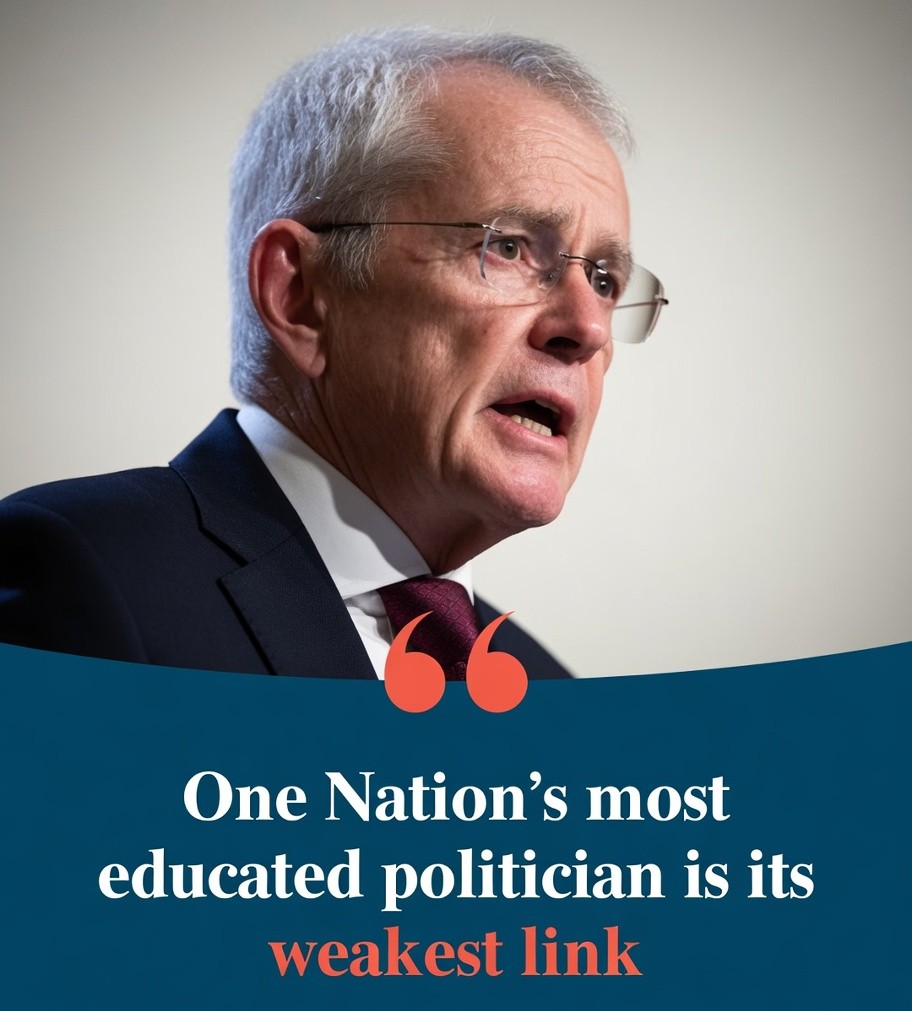
A recent opinion article published by The Australian argues that Roberts may become the party’s greatest political liability despite also being regarded as one of its most academically accomplished parliamentarians. The commentary suggests that as One Nation attracts broader electoral support, Roberts’ history of controversial statements and conspiracy-related claims could become increasingly difficult for the party to manage.
Roberts has served as a One Nation senator for Queensland since 2019, having previously held a Senate seat between 2016 and 2017 before being disqualified during Australia’s parliamentary citizenship crisis and later returning to Parliament after the 2019 federal election.
Before entering politics, Roberts worked as a mining engineer and later completed a Bachelor of Engineering at the University of Queensland and an MBA from the University of Chicago, credentials that distinguish him as one of the party’s most highly educated representatives.
Despite those qualifications, Roberts has frequently attracted controversy over comments on climate change, COVID-19 vaccines, international organisations and a range of conspiracy theories.
Recent media reports have revisited years of public statements in which Roberts questioned accepted scientific conclusions, promoted claims later shown to be unsupported by evidence, or expressed views associated with fringe political movements.
Among the issues drawing renewed attention are previous comments concerning so-called “chemtrails”, praise for American conspiracy broadcaster Alex Jones, questions surrounding the Bondi Junction attack, and claims about COVID-19 vaccines that have been challenged by medical experts and public health authorities.
The renewed focus comes at a politically significant time.
One Nation has recorded stronger polling throughout 2026 and has sought to broaden its appeal by concentrating public messaging on issues such as housing affordability, immigration, energy policy and cost-of-living pressures.
Political observers note that as smaller parties move closer to influencing government or holding the balance of power, public scrutiny of individual candidates and senators inevitably intensifies.
Commentators who are critical of Roberts argue that his past remarks risk distracting attention from One Nation’s broader policy platform.
Rather than focusing debate on the party’s positions regarding migration, energy security or regional development, critics say recurring controversies surrounding Roberts create headlines that opponents can use to question the party’s overall credibility.
The opinion piece published in The Australian makes precisely this argument, describing Roberts as a potential “weakest link” because his personal controversies could undermine One Nation’s attempts to present itself as a more influential force in federal politics.
Others take a different view.
Supporters of Roberts argue that he has consistently challenged mainstream political thinking and raised issues they believe have been ignored by Australia’s major parties.
They contend that criticism from large media organisations reflects disagreement with his political views rather than evidence that he should no longer play a prominent role within One Nation.
Roberts himself has repeatedly rejected accusations that he promotes misinformation, arguing his comments are frequently taken out of context or misrepresented by political opponents and sections of the media.
Pauline Hanson has also continued to publicly support her long-time Senate colleague despite repeated controversy.
Although Hanson has occasionally clarified that some remarks made by Roberts do not necessarily represent official party policy, she has not indicated any intention to remove him from the party’s leadership team or Senate ticket.
The debate surrounding Roberts also reflects broader questions facing parties experiencing rapid political growth.
As electoral support expands beyond a committed core base, parties often face greater pressure to reassure moderate voters while maintaining support among existing members. Individual politicians who previously attracted limited national attention can become far more prominent once a party begins competing more seriously for parliamentary influence.
Political analysts have observed similar challenges in Australia and overseas, where the personal histories and public statements of senior party figures receive much greater scrutiny once opinion polls suggest they could exercise greater influence over government policy.
For One Nation, that challenge has become more pronounced following stronger polling results and increased discussion about the party’s potential role in future minority government scenarios.
Roberts’ background has itself remained unusual within Australian politics.
Before entering Parliament, he spent decades working in engineering and the coal industry, later becoming active in campaigns opposing carbon pricing and questioning mainstream climate science.
Those activities helped establish his public profile long before he entered the Senate and continue to shape both his supporters’ admiration and his critics’ concerns today.
In recent weeks, several previously reported comments have resurfaced as journalists and political opponents revisit Roberts’ public record.
Among the material receiving renewed attention are historical social media posts, podcast appearances and interviews discussing international conspiracies, public health measures and global institutions.
Some Jewish community representatives and political figures have also criticised Roberts over references to authors and material associated with antisemitic conspiracy theories, while Roberts has denied promoting antisemitism or endorsing extremist ideologies.
The increased scrutiny illustrates how political momentum often brings greater examination.
Whether the attention ultimately affects One Nation’s electoral support remains uncertain. For supporters, Roberts remains an outspoken advocate willing to challenge established institutions. For critics, his history of controversial statements raises questions about judgment and credibility.
As Australia moves closer to the next federal election, One Nation’s policy positions on migration, housing, energy and the cost of living are expected to remain central to its campaign.
At the same time, Senator Malcolm Roberts is likely to continue attracting significant media attention—both because of his long record of outspoken views and because the party he represents now occupies a more prominent place in Australia’s increasingly competitive political landscape.






