Melbourne’s housing market is enduring its most widespread downturn in at least a decade, with new figures showing that almost every suburb has recorded declining house values over the past three months as buyers retreat and investor confidence weakens.
According to PropTrack’s latest quarterly home values report, 380 of Melbourne’s 409 suburbs with sufficient sales data experienced falls in median house prices during the June quarter, meaning approximately 93 per cent of the city’s housing market moved backwards over the period.
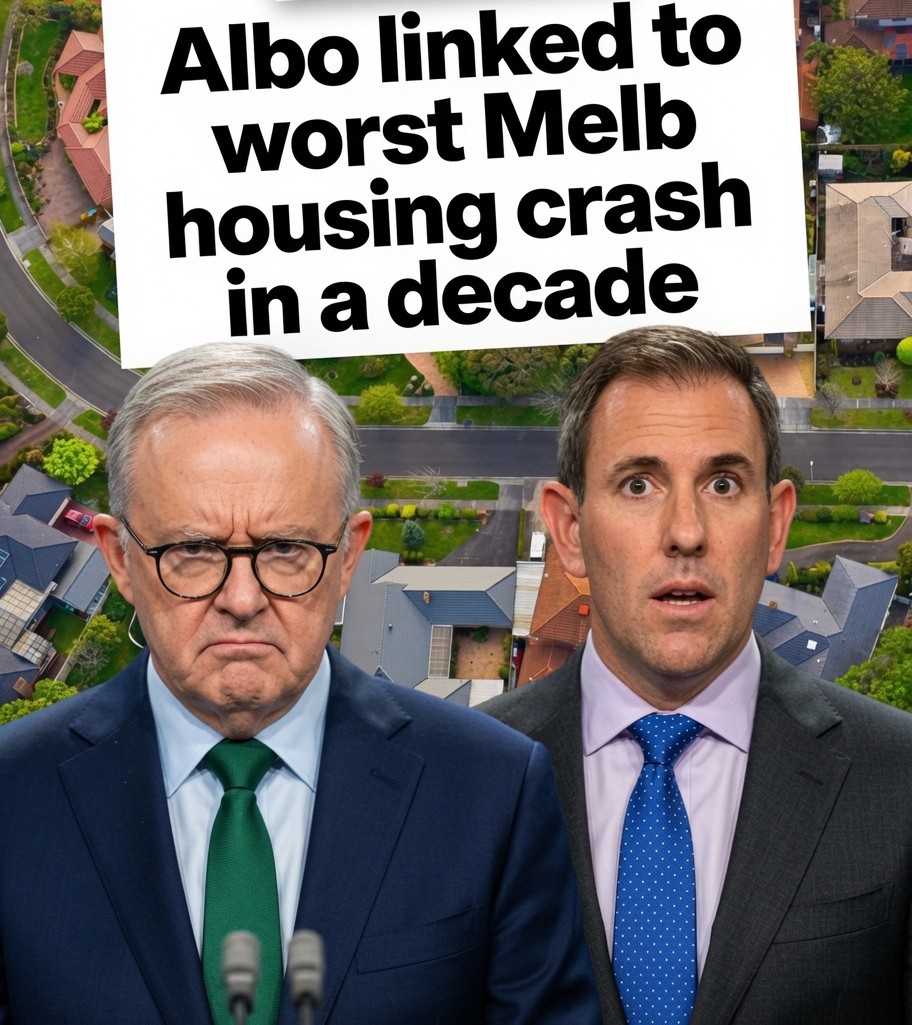
The scale of the decline highlights the breadth of the current market correction, which has spread well beyond Melbourne’s premium suburbs into middle-ring and outer suburban areas that had previously shown greater resilience.
Only 29 suburbs recorded any increase in median house values during the quarter, and fewer than 20 achieved gains exceeding 0.5 per cent. Regional fringe communities including Romsey and Lancefield were among the strongest performers, benefiting from continued demand for relatively affordable housing outside metropolitan Melbourne.
The latest figures have intensified debate over the causes of the downturn.
Property analysts point to a combination of higher interest rates, weaker buyer confidence, slowing investor activity and changes announced in the Federal Government’s 2026 Budget affecting investment property taxation.
Earlier this year the Albanese Government announced major reforms to negative gearing and capital gains tax arrangements. Under the proposed legislation, existing investment properties owned before Budget night will retain current tax treatment, while newly purchased established investment properties will lose access to traditional negative gearing from July 2027. Capital gains tax arrangements will also move to an inflation-indexed model for future investments, although newly built homes remain exempt from many of the changes.
Property market researchers believe these reforms are already influencing investor behaviour despite not taking effect until next year.
Some investors have delayed purchasing decisions while others are reassessing their long-term strategies, contributing to softer demand across parts of Melbourne and Sydney.
However, PropTrack cautions that the direct effect of the tax reforms on prices is expected to be relatively modest rather than dramatic.
Its analysis suggests the Budget measures are likely to place some additional downward pressure on housing values, particularly in markets with higher investor participation, but notes that interest rates, borrowing costs and overall housing supply remain the dominant forces shaping property prices.
PropTrack also expects the impact to unfold gradually because the reforms are grandfathered for existing investments and will not apply until July 2027.
The company argues that while lower investor demand may reduce competition for established homes, it could also improve affordability for first-home buyers by easing price growth. At the same time, exemptions for newly built homes are intended to encourage investment in additional housing supply rather than existing dwellings.
The current downturn is not being driven by tax policy alone.
Three Reserve Bank interest rate increases during 2026 have significantly reduced borrowing capacity, while consumer confidence has weakened amid economic uncertainty. Together, these factors have contributed to slower sales activity, reduced auction competition and fewer active buyers attending inspections.
Ray White recently reported that average attendance at open homes across Australia has fallen to the lowest level since the agency began tracking the data, with Melbourne among the markets experiencing a significant reduction in buyer activity. Lower attendance does not necessarily guarantee further price declines, but it reflects increasingly cautious sentiment among prospective purchasers.
The weakness has been particularly noticeable in Melbourne’s higher-priced suburbs, where larger mortgages make buyers more sensitive to rising borrowing costs.
At the more affordable end of the market, demand has remained comparatively stronger as first-home buyers continue entering the market, supported by lower prices and government assistance programs. Even so, most suburbs have still recorded declines in house values over recent months.
For homeowners, the downturn has translated into reduced equity and longer selling times.
Properties are generally taking longer to secure buyers, while vendors are increasingly adjusting price expectations in response to softer market conditions. Auction clearance rates have also fallen sharply compared with a year ago, indicating buyers now hold greater negotiating power than during the strong post-pandemic housing boom.
For investors, the outlook is more mixed.
Some analysts believe reduced competition could create opportunities to purchase quality properties at lower prices. Others expect uncertainty surrounding future tax arrangements to continue discouraging investment until the legislative framework becomes clearer.
The reforms have also generated broader political debate.
Supporters of the Government’s housing package argue limiting tax concessions for established investment properties should redirect investment towards new housing construction, helping improve long-term supply while making it easier for owner-occupiers to compete in the market.
Critics counter that reducing incentives for investors may further tighten rental supply over time if fewer rental properties enter the market, potentially placing additional pressure on tenants despite lower purchase prices.
PropTrack acknowledges both possibilities.
Its analysis indicates that while lower investor participation could moderately reduce home prices, there is also a risk that rental markets—which are already experiencing historically low vacancy rates—could tighten further if investment activity slows more than expected. The organisation notes that the ultimate outcome will depend on how successfully additional housing supply is delivered over coming years.
Housing supply continues to be viewed by many economists as the market’s most fundamental long-term challenge.
While taxation influences investor decisions, new housing construction, planning approvals, infrastructure investment and population growth are widely regarded as the factors most likely to determine whether affordability improves in a lasting way.
As Melbourne enters the second half of 2026, the city remains at the centre of Australia’s housing slowdown.
Whether prices stabilise will depend on several factors, including future interest rate decisions, buyer confidence, the implementation of the Federal Government’s property tax reforms and the pace at which new housing supply reaches the market.
For now, the latest data point to a market undergoing one of its broadest corrections in recent memory, with the overwhelming majority of Melbourne suburbs experiencing declining home values as buyers and investors adjust to a changing economic and policy environment.






