The Albanese Government has announced a broad package of measures aimed at combating Islamophobia across Australia, accepting 35 of the 54 recommendations put forward by Special Envoy to Combat Islamophobia Aftab Malik.
The response includes new funding for security at Muslim places of worship, expanded community policing initiatives, additional mental health support, education reforms and the establishment of a national taskforce that will examine ways to address anti-Muslim prejudice throughout Australia’s education system, from early childhood through to universities.
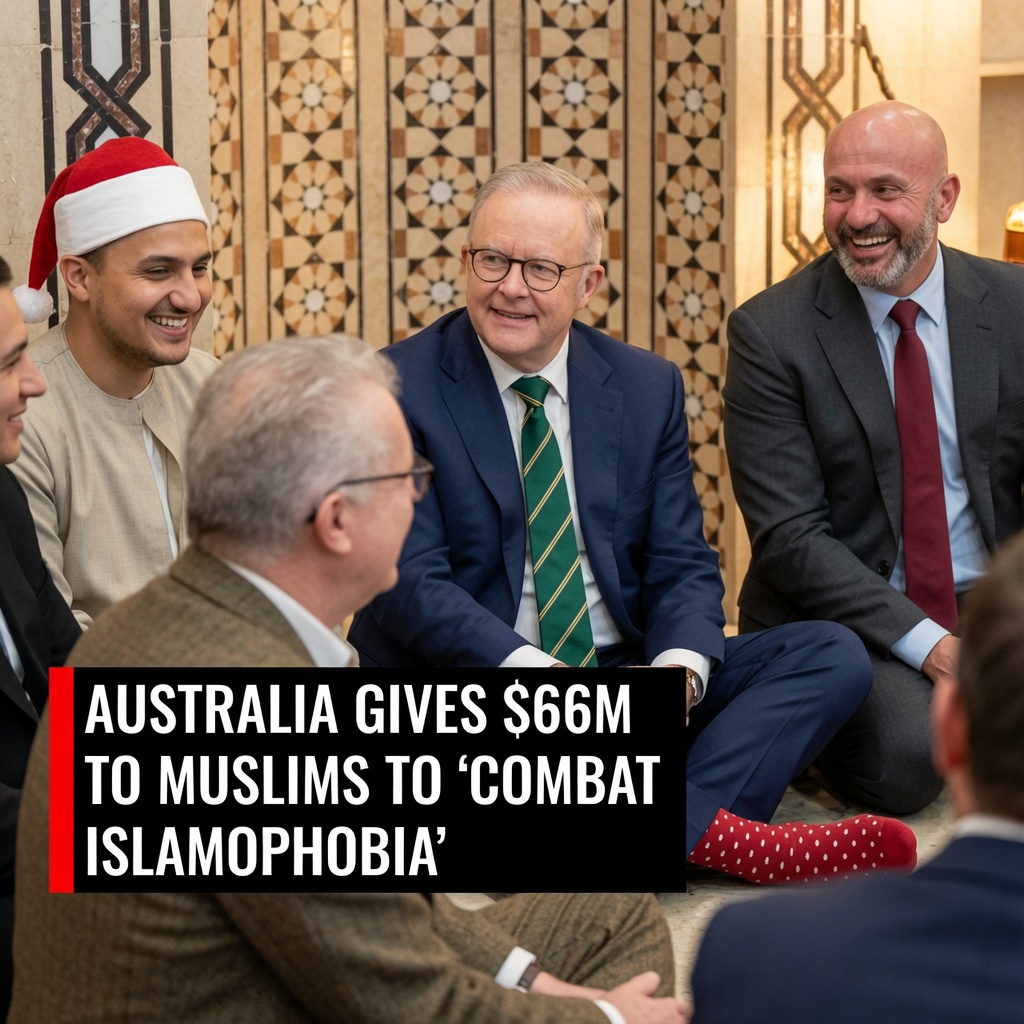
Prime Minister Anthony Albanese announced the government’s response after nearly ten months of consideration following the delivery of Mr Malik’s report.
Speaking as the package was unveiled, Mr Albanese said Australia had no place for hatred directed at people because of their religion or ethnicity.
“There is simply no place in Australia, or anywhere in the world, for Islamophobia and racial hatred,” the Prime Minister said, arguing that recent increases in reported anti-Muslim incidents required a coordinated national response involving governments, educators, law enforcement agencies and community organisations.
Among the largest financial commitments is approximately $41.9 million to improve security at Muslim faith-based locations, including mosques and community facilities considered vulnerable to hate-motivated incidents.
The package also includes around $15 million for a sporting facility intended to support Muslim athletes, additional multicultural grants focused on Muslim women and young people, funding for mental health and wellbeing programs, and further resources for the Office of Multicultural Affairs to coordinate anti-Islamophobia initiatives.
One of the most significant structural changes announced is the creation of an Islamophobia Education Taskforce.
The new body will operate for an initial 12 months and will oversee implementation of education-related recommendations while advising governments on further reforms across Australia’s education sector.
According to the Department of Education, the taskforce will examine initiatives spanning early childhood education, primary and secondary schools, vocational education and universities. It will also support teacher training and contribute to the development of a broader Social Cohesion Framework for Schools.
Education officials have indicated the taskforce will review opportunities to strengthen racial and religious tolerance within the Australian Curriculum while also helping develop nationally consistent approaches to addressing racism and religious discrimination across tertiary institutions.
The government’s response also proposes a Social Cohesion Education Advisory Council to help coordinate education policy across jurisdictions and sectors.
Law enforcement agencies are also set to receive expanded responsibilities.
The Australian Federal Police will establish a dedicated Social Cohesion Team, while existing Community Liaison Teams will be expanded to strengthen engagement with communities affected by hate incidents.
The government has additionally committed to accelerating the implementation of a national hate-crimes database designed to improve data collection and support law enforcement responses to religiously motivated offences.
Training initiatives form another major element of the response.
New guidance and education programs are expected to be developed for parliamentarians, Australian Public Service employees, police officers, justice officials and legal professionals to improve understanding of Islamophobia and appropriate responses to discrimination complaints.
Universities will also be expected to strengthen measures aimed at preventing and responding to Islamophobia on campus, alongside broader anti-racism initiatives.
The federal government said higher education institutions have an important role in maintaining safe learning environments and fostering respectful dialogue among students from diverse backgrounds.
Despite adopting a majority of the recommendations, the government declined to implement several of the report’s more controversial proposals.
Among those rejected was a recommendation to alter aspects of Australia’s counter-terrorism framework that Mr Malik argued disproportionately affected Muslim communities.
Mr Albanese said those recommendations were not accepted following advice from Australia’s national security agencies, indicating the government remained confident in the existing legal definitions used in terrorism legislation.
Other recommendations that were not adopted included proposals relating to broader legal reforms on religious vilification and measures concerning anti-Palestinian and anti-Arab discrimination.
While Muslim organisations welcomed many aspects of the government’s response, several community leaders said additional reforms remained necessary to fully address concerns raised during the consultation process.
The Alliance of Australian Muslims and the Australian National Imams Council described the government’s announcement as an important milestone, saying the acceptance of most recommendations represented significant recognition of issues facing Muslim Australians.
However, the organisations also argued that further work would be required to deliver the remaining reforms proposed in the Special Envoy’s report.
The announcement comes amid continuing national discussion about social cohesion following several high-profile incidents involving religious hatred over recent years.
Successive governments have faced pressure to respond both to rising antisemitism and increasing reports of anti-Muslim discrimination, leading to the appointment of dedicated special envoys and a series of broader initiatives aimed at strengthening community harmony.
The government’s response reflects an approach that combines education, security, community engagement and data collection rather than relying solely on legislative reform.
Supporters argue the package represents an important investment in protecting vulnerable communities while promoting greater understanding across Australian society.
Critics, however, have questioned whether some initiatives could affect debates around free expression, while others believe the government should have gone further by adopting more of the envoy’s recommendations or implementing stronger legal protections against religious discrimination.
For the Albanese Government, the measures form part of a broader strategy focused on strengthening social cohesion at a time when religious tensions have become an increasingly prominent issue in Australian public life.
Whether the initiatives ultimately reduce anti-Muslim prejudice will depend not only on government funding but also on how effectively schools, universities, law enforcement agencies and community organisations implement the reforms over the coming years.






