One Nation leader Pauline Hanson has revealed that her daughter, Lee Hanson, could one day become the party’s leader, describing her as “cluey” and politically capable while insisting that any future leadership role would have to be earned through merit rather than family connections.
The comments were made during a podcast interview with British political activist Tommy Robinson while Hanson was visiting the United Kingdom for a series of political events, including the inaugural Conservative Political Action Conference (CPAC) Great Britain.
Asked about the future of One Nation after her eventual retirement from politics, Hanson identified Lee Hanson as someone with the potential to take over the party but made clear there would be no automatic succession.
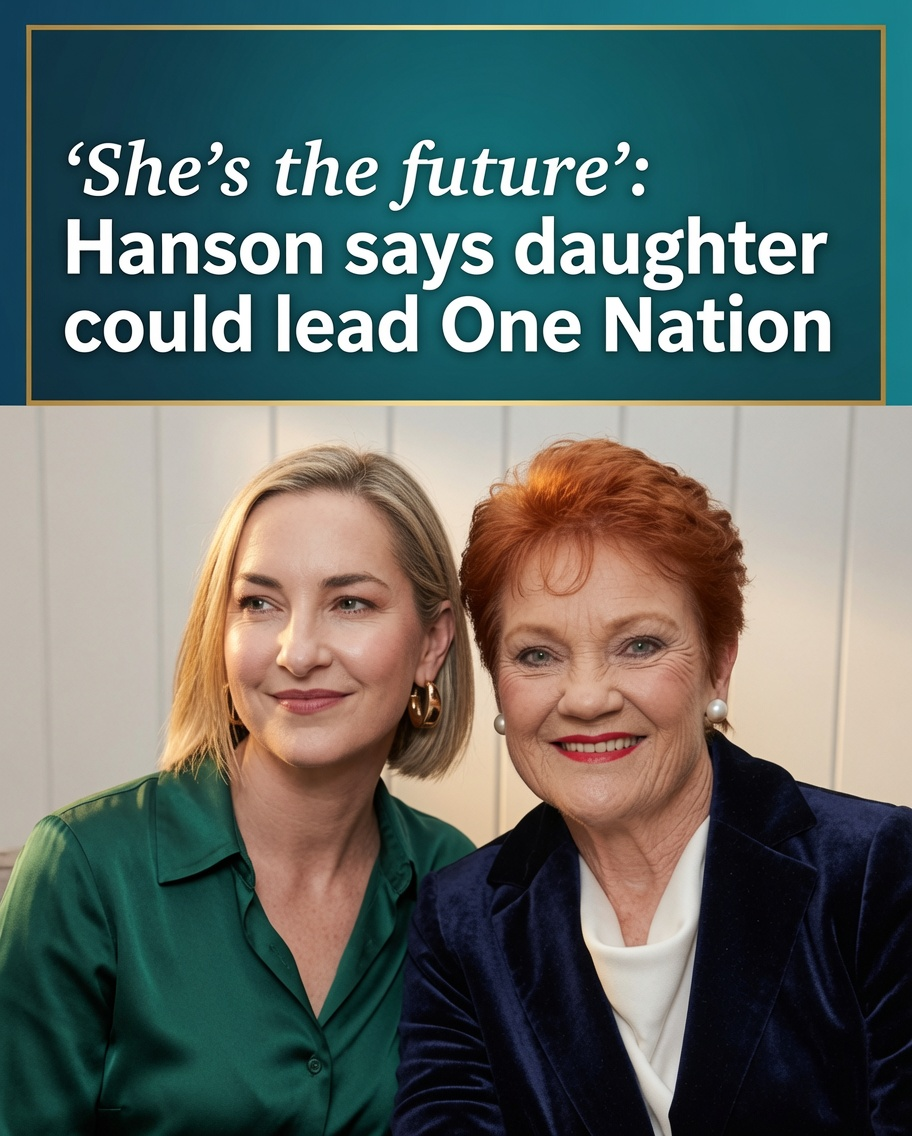
“She’s the future,” Hanson said.
She quickly added that her daughter “has to earn it”, saying leadership of One Nation would ultimately depend on the support of party members and voters rather than family ties.
Hanson described Lee as “cluey”—an Australian expression meaning perceptive and well informed—and said she had developed a strong understanding of politics through years of involvement in the party.
According to Hanson, Lee has demonstrated commitment behind the scenes and understands both the policy priorities and organisational demands required to lead a national political movement.
“She won’t get it because she’s my daughter,” Hanson said, emphasising that merit must remain the deciding factor in any future leadership contest.
Lee Hanson is already active within One Nation.
She currently works as an adviser to One Nation New South Wales Senator Sean Bell and has previously stood as a One Nation candidate in federal elections, giving her experience in campaigning, policy development and parliamentary operations.
The comments have attracted attention because speculation has intensified in recent months over who could eventually succeed Pauline Hanson after almost three decades as the dominant figure within One Nation.
Much of that speculation has centred on former Deputy Prime Minister Barnaby Joyce, who joined One Nation after leaving the Nationals and has become one of the party’s highest-profile parliamentary figures.
Some political commentators have suggested Joyce’s experience in federal politics could make him a natural successor should Hanson eventually retire.
By publicly naming Lee Hanson instead, Pauline Hanson has broadened that discussion while making it clear that no formal succession plan currently exists.
The interview formed part of Hanson’s wider visit to Britain, where she addressed delegates at CPAC Great Britain and met Reform UK leader Nigel Farage.
One Nation has described the trip as an opportunity to exchange ideas with overseas conservative parties on issues including immigration, national sovereignty, housing affordability and the cost of living.
Hanson has argued that Australia and Britain face many of the same policy challenges and that conservative parties benefit from sharing experiences internationally.
However, the overseas visit has also generated significant political controversy.
The podcast with Tommy Robinson prompted criticism after Hanson blamed the abolition of the White Australia Policy for modern immigration challenges and made claims about alleged fraud within the National Disability Insurance Scheme (NDIS).
Those remarks were criticised by senior Labor ministers, Greens politicians and community organisations, while Health Minister Mark Butler said he had seen no evidence supporting suggestions that any particular religion or ethnicity was disproportionately involved in NDIS fraud.
Despite the criticism, Hanson has defended both the interview and her broader overseas trip.
She says the purpose of the visit was to examine how other countries are responding to migration, social cohesion and economic pressures, arguing that Australia should learn from overseas experiences before similar challenges become more severe domestically.
She has also rejected criticism over the cost of the trip, stating that her private travel did not cost Australian taxpayers any money.
For One Nation, the discussion about future leadership comes at a significant moment.
The party has enjoyed a substantial rise in opinion polling during 2026, increasing its parliamentary influence and placing greater pressure on both Labor and the Coalition across several conservative electorates.
As the party expands, questions about long-term leadership and organisational stability have become increasingly relevant.
Unlike Australia’s major political parties, One Nation has historically been closely identified with its founder.
Pauline Hanson established the party in 1997 and has remained its central public figure ever since, making any conversation about succession particularly significant for supporters and political observers alike. Under amendments made to the party’s constitution in 2017, Hanson also retains substantial influence over future leadership arrangements.
Political analysts note that personality-driven parties often face unique succession challenges.
Maintaining electoral support after the departure of a long-serving founder can prove difficult unless a credible new leadership team has already established public recognition and internal support.
Whether Lee Hanson eventually seeks a parliamentary leadership role remains uncertain.
She has not been nominated as deputy leader, nor has One Nation announced any formal transition timetable.
Pauline Hanson herself stressed that any future leadership decision would be determined by the party rather than by family relationship.
For now, she remains firmly at the helm of One Nation.
Nevertheless, by publicly identifying Lee Hanson as someone with the potential to lead, the veteran Queensland senator has provided her clearest indication yet of how she believes the party could evolve beyond its founding generation.






