Prime Minister Anthony Albanese has launched a fresh attack on One Nation senator Malcolm Roberts, declaring that the Queensland politician’s long record of promoting conspiracy theories makes him unfit for Australia’s Parliament.
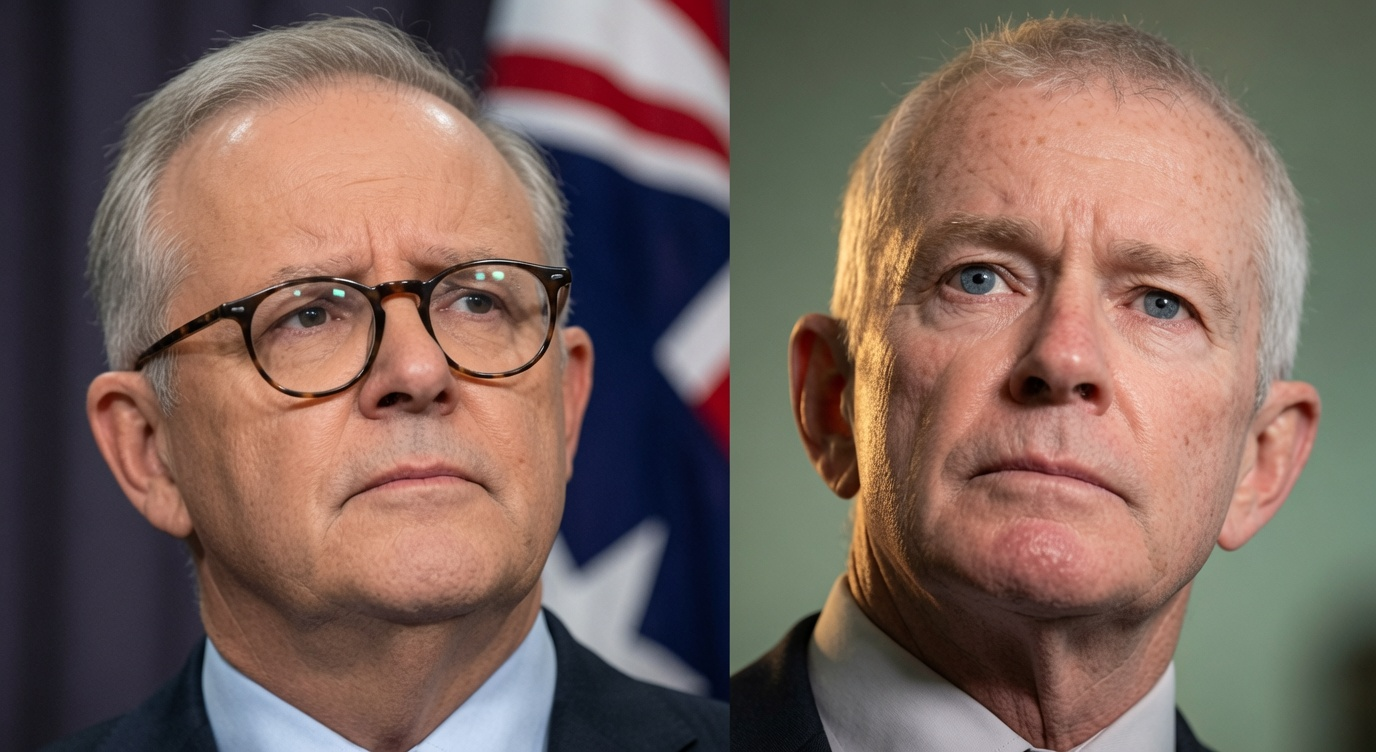
The criticism follows renewed scrutiny of a series of controversial comments made by Senator Roberts over recent years, including praise for American conspiracy broadcaster Alex Jones, questioning accepted accounts of major events, and repeating claims about COVID-19 vaccines that contradict established medical evidence.
Speaking during a media conference on Saturday, Mr Albanese said Roberts had repeatedly promoted dangerous misinformation throughout his political career.
“He has had a history of promoting conspiracy theories, saying things that were simply not true,” the Prime Minister said.
“In many cases, saying things that are dangerous, such as being anti-vaccination.”
Mr Albanese reserved particular criticism for Roberts’ previous description of the United States government as a “terrorist organisation”, noting that the United States remains Australia’s closest strategic ally.
“This is a guy who’s been elected and re-elected and endorsed and re-endorsed multiple times by Pauline Hanson and One Nation,” the Prime Minister said.
“His views are not worthy of being a senator.
“This is the risk that people take when they vote for people who are on the fringes of politics.”
The latest controversy centres on a 2024 interview Roberts conducted with American conspiracy theorist Alex Jones, which resurfaced this week.
During the appearance on Jones’ InfoWars program, Roberts repeatedly thanked the broadcaster for his work and described him as “a beacon of hope around the world”. He also referred to the United States government as a “terrorist organisation” while discussing global politics. The interview has attracted renewed attention after being highlighted by Australian media this week.
Jones remains one of the world’s most controversial media personalities. He became internationally notorious for falsely claiming that the 2012 Sandy Hook school massacre had been staged, resulting in multiple successful defamation lawsuits that ultimately led to judgments exceeding US$1 billion against him.
Roberts has also faced criticism over comments made earlier this year when he declined to immediately dismiss suggestions that the Bondi terror attack could have been a “false flag” operation. Although he later described the proposition as absurd, his refusal to unequivocally reject the conspiracy theory prompted widespread criticism from political opponents and community leaders.
Additional controversy emerged after previous comments linking COVID-19 vaccination to miscarriage rates resurfaced. Medical authorities and multiple large-scale international studies have found no credible evidence supporting claims that approved COVID-19 vaccines increase miscarriage risk, with Australian health authorities continuing to recommend vaccination for eligible people based on extensive safety monitoring.
The Prime Minister used the latest revelations to argue that Roberts’ comments reflected a broader pattern rather than isolated incidents.
“Someone who has had a long history of supporting conspiracies,” Mr Albanese said.
The dispute has also placed renewed pressure on One Nation to explain how closely Roberts’ personal views align with official party policy.
Fellow One Nation MP Barnaby Joyce sought to distance both himself and the party from several of Roberts’ statements during an interview with Sky News.
Joyce made clear he rejected suggestions that the Sandy Hook massacre or the Bondi terrorist attack were staged events and said he did not agree that the United States government could be described as a terrorist organisation.
“I do not believe for one second that Sandy Hook was a false flag, obviously nor was Bondi, and I don’t believe that the United States is a terrorist organisation,” Joyce said.
However, he also defended Roberts’ right to express personal opinions.
“We do in One Nation give people the liberty to state their views and Malcolm’s stating his and he’s entitled to do that.
“But just because one member of One Nation says something, it doesn’t mean it’s policy.”
When pressed specifically about Roberts’ praise for Jones, Joyce declined to directly criticise his parliamentary colleague, saying he was “not going to go into some sort of personal affray”.
Instead, he reiterated that Roberts’ comments should not automatically be interpreted as representing the party’s official position.
The episode has reignited debate about the influence of conspiracy theories in modern politics and the responsibilities carried by elected representatives.
Over recent years, Roberts has frequently attracted headlines through scepticism about climate science, criticism of pandemic restrictions, opposition to vaccine mandates and comments questioning mainstream institutional narratives.
Supporters argue he raises legitimate questions about government accountability and transparency, while critics contend that repeatedly amplifying unsupported claims risks undermining public confidence in democratic institutions and expert advice.
The renewed focus on Roberts also comes as One Nation has experienced increased electoral relevance, making internal party controversies more politically significant than during previous election cycles. Political observers have argued that heightened scrutiny accompanies any party seeking greater influence in Australia’s federal Parliament.
For Labor, the controversy provides another opportunity to draw a distinction between mainstream political parties and crossbench or minor-party figures associated with fringe viewpoints.
Mr Albanese’s comments also underline Labor’s broader argument that voters should carefully consider not only a party’s headline policies but also the public record of individual candidates seeking parliamentary office.
Whether the latest controversy has any lasting electoral impact remains unclear, but it has once again placed Malcolm Roberts’ record under national attention and forced One Nation figures to publicly explain where the party stands on some of his most controversial remarks.






