Prime Minister Anthony Albanese has firmly rejected Pauline Hanson’s latest comments about Islam and calls to revive elements of the former White Australia policy, declaring there is “no place in Australia” for Islamophobia as his government unveiled a long-awaited national response aimed at tackling anti-Muslim hatred.
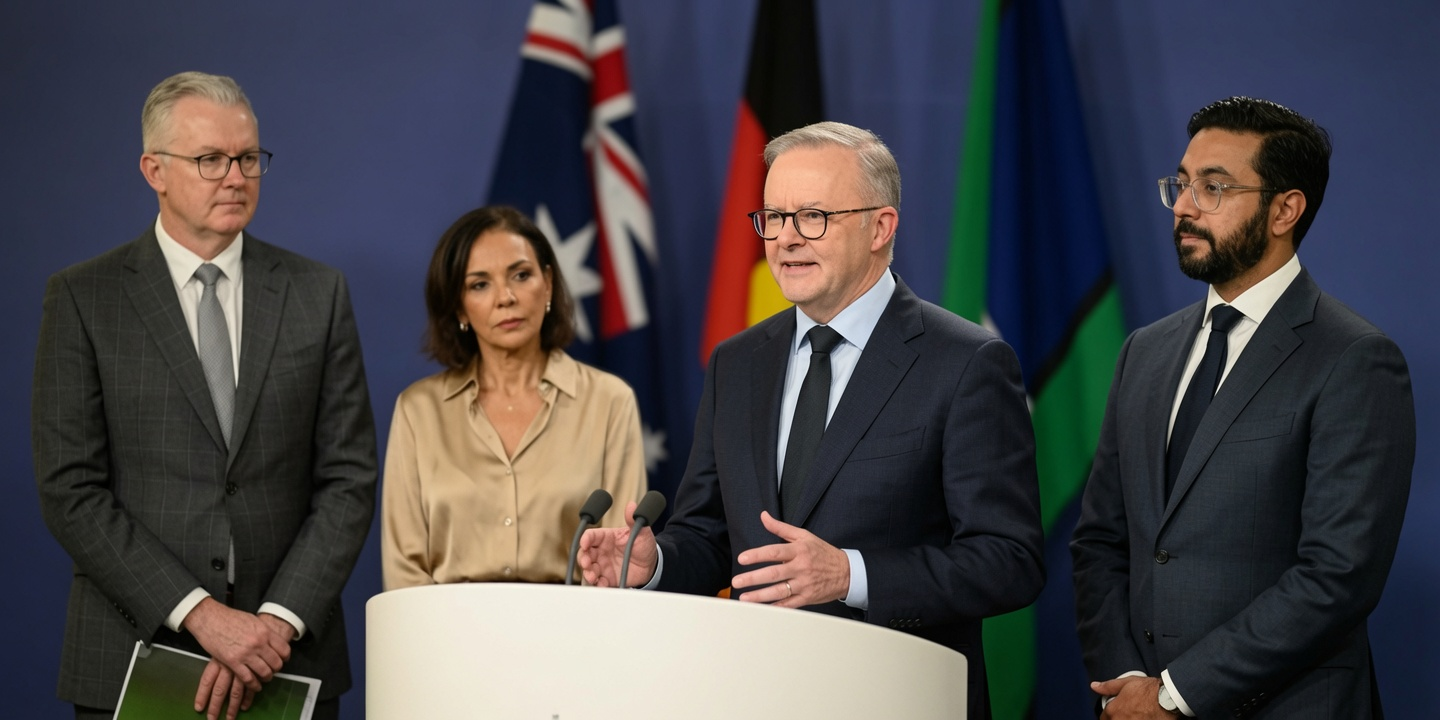
The remarks came as the Albanese Government released its formal response to the landmark report prepared by Special Envoy to Combat Islamophobia Aftab Malik, outlining new initiatives designed to improve the safety, inclusion and wellbeing of Muslim Australians.
Speaking at a press conference on Saturday, Mr Albanese said Australia had experienced an increase in Islamophobic abuse and attacks, warning that political rhetoric targeting religious communities risked undermining the country’s social cohesion.
“Islamophobia has no place in Australia,” the Prime Minister said.
“We have seen a rise in Islamophobic attacks and abuse directed at Muslim Australians.”
His comments followed renewed controversy surrounding One Nation leader Pauline Hanson, who recently argued Australia had made a mistake by abandoning the White Australia policy and made further claims linking Islam with terrorism during podcast appearances that have attracted criticism across the political spectrum.
Mr Albanese said Australia’s transition away from racially based immigration policies represented one of the nation’s most important bipartisan achievements.
“I have seen Senator Hanson’s comments that say that Australia has got it wrong when we moved away from the White Australia policy in 1973,” he said.
“It is important to recognise that the movement away from White Australia wasn’t just the Labor Government of Gough Whitlam, it was actually a bipartisan position that began in the 1960s.
“That was a good thing.”
The Prime Minister argued that modern Australia’s success had been built on migration, diversity and shared democratic values.
“Modern Australia is made up of, with the exception of First Nations people, people who’ve come from all over the world to make Australia their home, to have a better life,” he said.
He added that Australians should be free to practise their religion without fear while sharing a common commitment to the country and its democratic institutions.
Government responds to landmark Islamophobia report
The political debate coincided with the release of the government’s response to the report delivered by Australia’s Special Envoy to Combat Islamophobia, Aftab Malik, approximately 10 months after it was handed to the government.
The response commits to a broad package of initiatives focusing on education, community safety, social cohesion and improved accountability in responding to anti-Muslim hate.
Among the measures announced are:
- establishing an Islamophobia Education Taskforce involving education authorities across Australia;
- reviewing the national curriculum to strengthen education on racial and religious tolerance;
- expanding community liaison teams within the Australian Federal Police;
- additional security funding for Muslim institutions;
- expanded support services, including mental health assistance for Muslim women;
- improvements to hate crime reporting and data collection.
The government accepted many of the envoy’s recommendations while declining others, including proposals to substantially alter Australia’s counter-terrorism framework. Mr Albanese said national security settings would continue to be guided by advice from Australia’s security agencies.
Hanson’s latest comments spark renewed criticism
The latest controversy centres on comments Senator Hanson made during several podcast interviews.
During one appearance with British activist Tommy Robinson, Hanson suggested Australia’s immigration challenges stemmed from abandoning the White Australia policy.
In another interview, she described Islam as being linked to terrorism and claimed some Muslims sought to integrate into Australian society through deception before advancing their own interests.
The comments prompted condemnation from Labor ministers and criticism from members of the Coalition, with several senior political figures arguing the remarks unfairly targeted an entire religious community.
Multicultural Affairs Minister Anne Aly, Australia’s first Muslim woman elected to federal parliament, said the government’s response recognised that Islamophobia was becoming increasingly normalised and required a coordinated national response.
The history behind the White Australia policy
The White Australia policy refers to a series of immigration laws introduced following Federation in 1901 that were designed to severely restrict non-European migration.
Although the policy evolved over time, it remained a defining feature of Australian immigration policy for decades.
Successive Liberal and Labor governments progressively dismantled the system throughout the 1960s before the Whitlam Government formally completed the transition to a non-discriminatory immigration framework in the early 1970s.
Today, the abandonment of the White Australia policy is widely regarded as a pivotal moment in Australia’s development into a multicultural democracy.
Mr Albanese’s comments reflected that historical consensus, emphasising the bipartisan nature of those reforms rather than presenting them as the achievement of a single political party.
Why the issue remains politically significant
The debate arrives amid broader political discussions over immigration levels, social integration, national identity and housing pressures.
While concerns about migration numbers have become an increasingly prominent feature of Australian politics, mainstream parties have generally distinguished those debates from questions of race or religion.
Political leaders across both major parties have repeatedly argued that criticism of immigration policy should not translate into hostility towards particular ethnic or religious communities.
The government’s response to the Islamophobia report attempts to reinforce that distinction by addressing anti-Muslim discrimination while maintaining existing national security laws.
Balancing social cohesion and freedom of speech
The release of the report is also likely to reignite discussion about how Australia balances freedom of expression with efforts to combat religious hatred.
Some recommendations proposed by the Special Envoy—including changes affecting counter-terrorism laws and broader legal protections—were not adopted by the government.
Mr Malik acknowledged that while progress had been made, he would continue advocating for recommendations that remain outstanding.
Supporters of stronger protections argue Muslim Australians have experienced increasing levels of abuse and discrimination in recent years and require better institutional support.
Others have expressed concern that future reforms must continue to preserve open political debate and freedom of speech while addressing genuine hate crimes and religious vilification.
Looking ahead
The government’s response marks the first comprehensive federal framework specifically aimed at combating Islamophobia in Australia.
Whether the new measures succeed will depend largely on cooperation between federal, state and territory governments, educational institutions, police agencies and community organisations.
For the Albanese Government, the announcement also represents an effort to reinforce Australia’s multicultural identity at a time when debates over migration, national identity and religious tolerance remain politically charged.
For Pauline Hanson and One Nation, the controversy is unlikely to end soon, with her recent comments continuing to generate intense political debate about the boundaries between criticism of immigration policy, freedom of expression and rhetoric that many Australians consider divisive.






