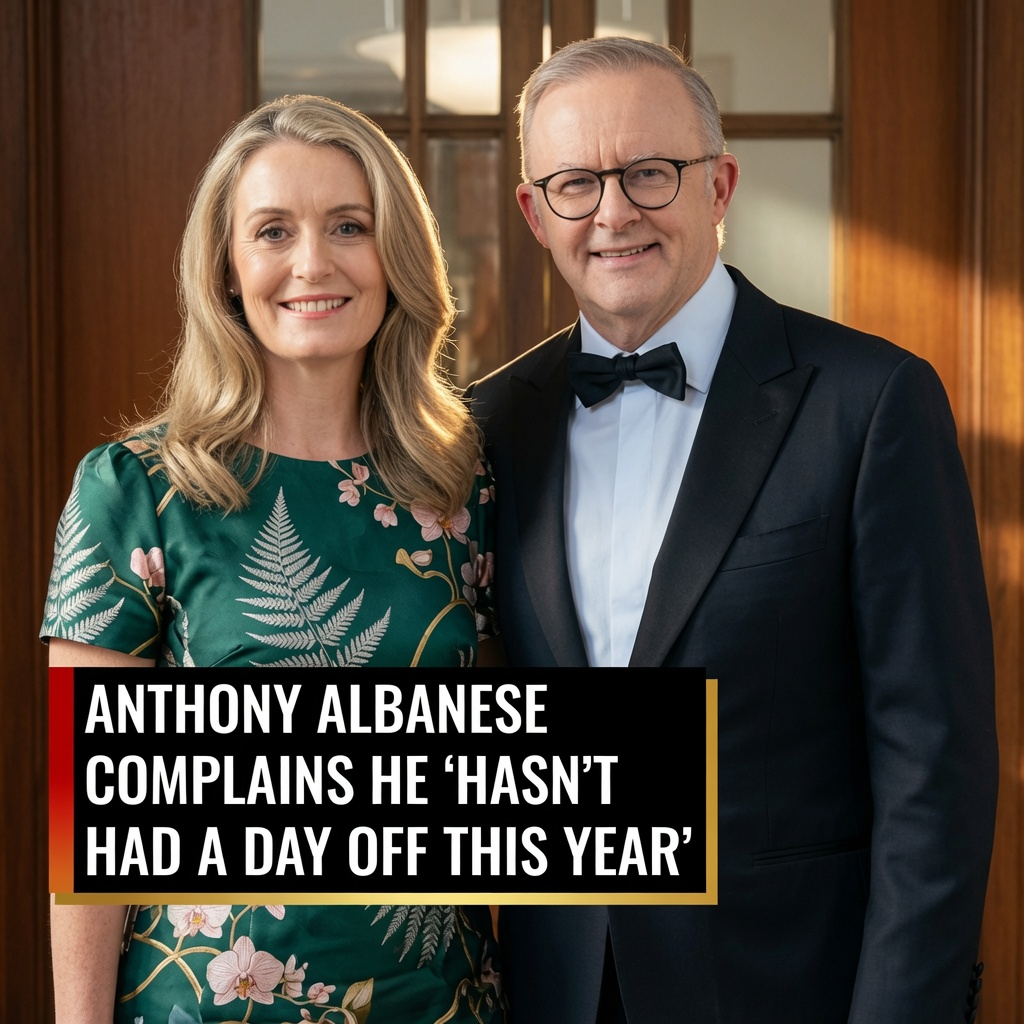
Prime Minister Anthony Albanese has defended his decision to miss this year’s Garma Festival, saying he “hasn’t had a day off all year” after facing criticism for breaking a public commitment to attend Australia’s largest Indigenous cultural gathering every year while serving as prime minister.
The decision marks the first time Albanese will miss the annual festival since becoming Labor leader in 2019 and Prime Minister in 2022. It has attracted particular attention because, during his keynote address at the 2025 Garma Festival, he publicly pledged to return every year for the remainder of his prime ministership.
Asked during an ABC Radio interview whether failing to attend amounted to a broken promise, Albanese defended the decision by pointing to an exceptionally busy schedule throughout 2026.
“I haven’t had a day off all year,” the Prime Minister said.
He added that he had recently been recovering from influenza while continuing to meet official commitments and that his diary had remained full throughout the year.
“I’ve been to Garma. It’s a wonderful festival,” Albanese said. “I informed the people who operate Garma, the wonderful Gumatj people, some time ago that I wouldn’t go because I will be on leave at that time.”
Rather than attending Garma, Albanese said he would spend part of his leave in another remote area of the Northern Territory and planned to attend a different community festival during that visit.
The Garma Festival, organised annually by the Yothu Yindi Foundation together with the Yolŋu people, is regarded as Australia’s largest Indigenous cultural gathering. Held at Gulkula in north-east Arnhem Land, the four-day event brings together Indigenous leaders, governments, business representatives, academics and community organisations to discuss issues affecting Aboriginal and Torres Strait Islander Australians while celebrating Yolŋu culture and traditions.
Over recent years the festival has become one of the country’s most influential Indigenous policy forums.
In 2022, Albanese used his first Garma address as Prime Minister to outline the proposed referendum question for an Aboriginal and Torres Strait Islander Voice to Parliament. He returned in subsequent years even after the Voice referendum was defeated nationally in 2023, shifting his focus towards practical measures aimed at improving outcomes for Indigenous Australians.
Because of that history, his absence this year has been interpreted by critics as carrying symbolic as well as political significance.
Opponents argue that a promise made directly to Indigenous leaders should have been honoured regardless of personal scheduling conflicts.
Some commentators have also questioned whether taking leave during the festival sends an inconsistent message given Albanese’s long-standing public emphasis on Indigenous engagement.
The Prime Minister rejects that interpretation.
He notes that he has attended every Garma Festival since becoming Labor leader and says his commitment to Indigenous Australians should be judged across his broader record rather than by attendance at a single event.
Government ministers have also pointed out that the Commonwealth will still be represented at Garma by several senior cabinet members.
Foreign Minister Penny Wong and Minister for Indigenous Australians Malarndirri McCarthy are expected to attend the festival on behalf of the Albanese Government, ensuring federal representation continues despite the Prime Minister’s absence.
Political analysts say the controversy illustrates how absolute public commitments can create lasting political challenges.
While voters generally accept that unexpected events and scheduling conflicts arise, explicit promises often receive closer scrutiny than broader policy statements.
The debate has therefore focused less on whether a prime minister is entitled to take annual leave and more on whether commitments expressed in unequivocal terms should be honoured whenever reasonably possible.
Supporters of Albanese argue that political leaders are entitled to personal leave after extended periods of work and note that no government can function solely through the presence of one individual.
Critics counter that symbolic events such as Garma carry unique significance because they represent an opportunity for direct engagement with Indigenous communities and national reconciliation.
The issue has also reignited discussion about the importance of Garma itself.
Beyond its cultural program, the festival has become a nationally recognised forum where Indigenous leaders engage directly with federal and state politicians on health, education, economic development, constitutional recognition and Closing the Gap initiatives.
Attendance by senior political leaders is therefore often viewed as a demonstration of respect as well as an opportunity for policy dialogue.
Whether Albanese’s absence has any lasting political consequences remains uncertain.
For now, the Prime Minister maintains that his decision reflects practical scheduling rather than any reduction in his commitment to Indigenous Australians.
His opponents maintain that, regardless of the explanation, the decision represents a promise that will not be fulfilled.
As Garma prepares to welcome thousands of participants later this month, the debate surrounding the Prime Minister’s absence highlights how political accountability is often shaped not only by major policy decisions but also by whether highly visible public commitments are ultimately kept.






