A pioneering cancer treatment developed by Melbourne researchers is preparing to move from the laboratory into human clinical trials after receiving a $17.7 million federal research grant, marking one of Australia’s most promising advances in cancer immunotherapy in recent years.
The breakthrough comes from scientists at the Peter MacCallum Cancer Centre, who have spent years developing an enhanced version of Chimeric Antigen Receptor T-cell therapy, commonly known as CAR T-cell therapy. Their project has now secured a $17.7 million Frontier Health and Medical Research Grant through the Australian Government’s Medical Research Future Fund (MRFF), allowing the treatment to progress into its first human clinical trials.
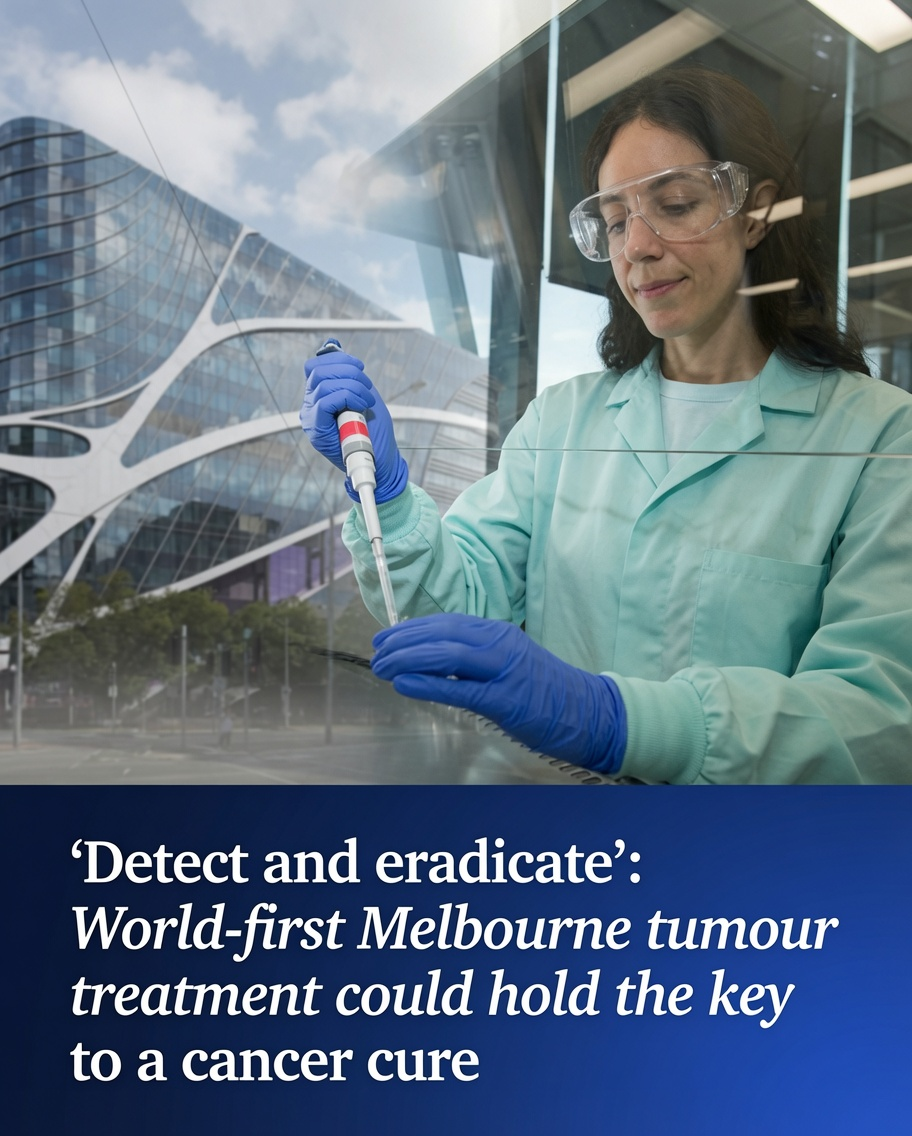
CAR T-cell therapy has already transformed the treatment of several blood cancers by using a patient’s own immune cells to recognise and destroy cancer. Doctors remove T cells from the patient, genetically modify them in the laboratory so they can identify cancer cells more effectively, then infuse them back into the body to attack the disease.
Although the approach has achieved remarkable success against cancers such as leukaemia, lymphoma and multiple myeloma, researchers around the world have struggled to produce the same results against solid tumours including breast, lung, bowel and pancreatic cancers.
The Melbourne team believes it may have found a way to overcome that challenge.
Led by Professors Paul Beavis and Jane Oliaro, researchers have developed what they describe as a precision-guided version of CAR T-cell therapy. Unlike conventional CAR T-cell treatments that focus primarily on engineered immune cells attacking cancer directly, the new technology also activates surrounding immune cells, effectively training the body’s wider immune system to recognise and eliminate tumour cells.
In preclinical laboratory studies, the results were striking.
Professor Beavis said the therapy produced cure rates approaching 100 per cent in some mouse models containing solid tumours while showing none of the significant toxic side effects that often accompany powerful immune-based cancer treatments. Those findings have generated considerable excitement among cancer researchers because toxicity has long been one of the major barriers limiting advanced immunotherapies.
The researchers believe the treatment may also provide a lasting immune response.
“These therapies create an immunological memory, much like when you’ve been vaccinated against a virus,” Professor Beavis explained. “If the cancer returns, the immune system is already primed to detect it and eradicate it.”
That concept could represent a significant shift in cancer treatment.
Rather than simply shrinking existing tumours, scientists hope the immune system would continue recognising cancer cells years later, potentially preventing the disease from returning.
Despite the encouraging laboratory results, researchers have stressed that success in mice does not guarantee similar outcomes in humans.
Animal studies are an essential stage of medical research because they allow scientists to evaluate safety and biological effectiveness before testing new treatments in patients. However, many therapies that appear highly successful in animals ultimately prove less effective during clinical trials involving people.
For that reason, the next phase of research will focus first on patients with multiple myeloma, a blood cancer where conventional CAR T-cell therapy has already demonstrated clinical success. Researchers believe beginning with this disease offers the safest pathway for assessing the enhanced treatment before potentially expanding into trials involving solid tumours such as breast and lung cancer.
The clinical trial will be led by Professor Simon Harrison, while the treatment itself will be manufactured at Peter Mac through Cell Therapies Pty Ltd. Developing the manufacturing process within Australia is expected to strengthen the country’s growing capability in advanced cellular therapies.
Professor Beavis said considerable work remains before the therapy becomes widely available.
Researchers estimate it could take four to five years to complete manufacturing protocols, satisfy regulatory requirements and gather sufficient clinical evidence before larger human studies can begin.
The funding announcement has also been welcomed as an important investment in Australian medical research.
The MRFF grants are specifically designed to bridge the difficult transition between laboratory discoveries and patient treatment, a stage often described by researchers as the “valley of death” because promising discoveries frequently struggle to secure sufficient funding to reach clinical trials.
Professor Ricky Johnstone, Executive Director of Cancer Research at Peter MacCallum Cancer Centre, said the project demonstrated Australia’s ability to translate world-class scientific discoveries into therapies that may ultimately benefit patients.
He said the funding would allow years of fundamental research to progress into a first-in-human clinical trial, representing one of the centre’s most significant translational research achievements.
The announcement also highlights Melbourne’s growing international reputation in cancer research.
Peter MacCallum Cancer Centre is recognised globally for its work in oncology, immunotherapy and precision medicine, collaborating with universities, hospitals and biotechnology companies to develop new treatments for cancers that remain difficult to cure.
Medical experts have nevertheless urged caution when interpreting the latest findings.
While headlines describing “100 per cent cure rates” understandably generate optimism, they apply only to selected preclinical mouse models under controlled laboratory conditions. Human cancers are substantially more complex, and every new treatment must successfully complete multiple phases of clinical testing before regulators determine whether it is both safe and effective.
Even so, the latest development represents an important milestone.
If future clinical trials confirm the therapy can safely reproduce the remarkable immune response seen in laboratory studies, the Melbourne-developed technology could become one of the most significant advances in CAR T-cell therapy and potentially open a new chapter in the treatment of solid tumours that have long resisted existing immunotherapies.
For cancer patients and their families, the announcement offers cautious hope rather than immediate certainty. The coming human trials will determine whether one of Australia’s most promising laboratory breakthroughs can eventually become a life-changing treatment for patients around the world.






