Pauline Hanson has publicly identified her daughter, Lee Hanson, as a potential future leader of One Nation, signalling for the first time that she sees leadership succession remaining within the party rather than necessarily passing to another high-profile political figure.
The comments come after months of speculation about who could eventually replace the long-serving Queensland senator, particularly following reports linking former Nationals leader Barnaby Joyce with a possible leadership role inside One Nation.
Speaking while travelling in Europe, Hanson described her 42-year-old daughter as “the future” of the party, while stressing that any leadership position would have to be earned through experience and the confidence of party members rather than family ties.
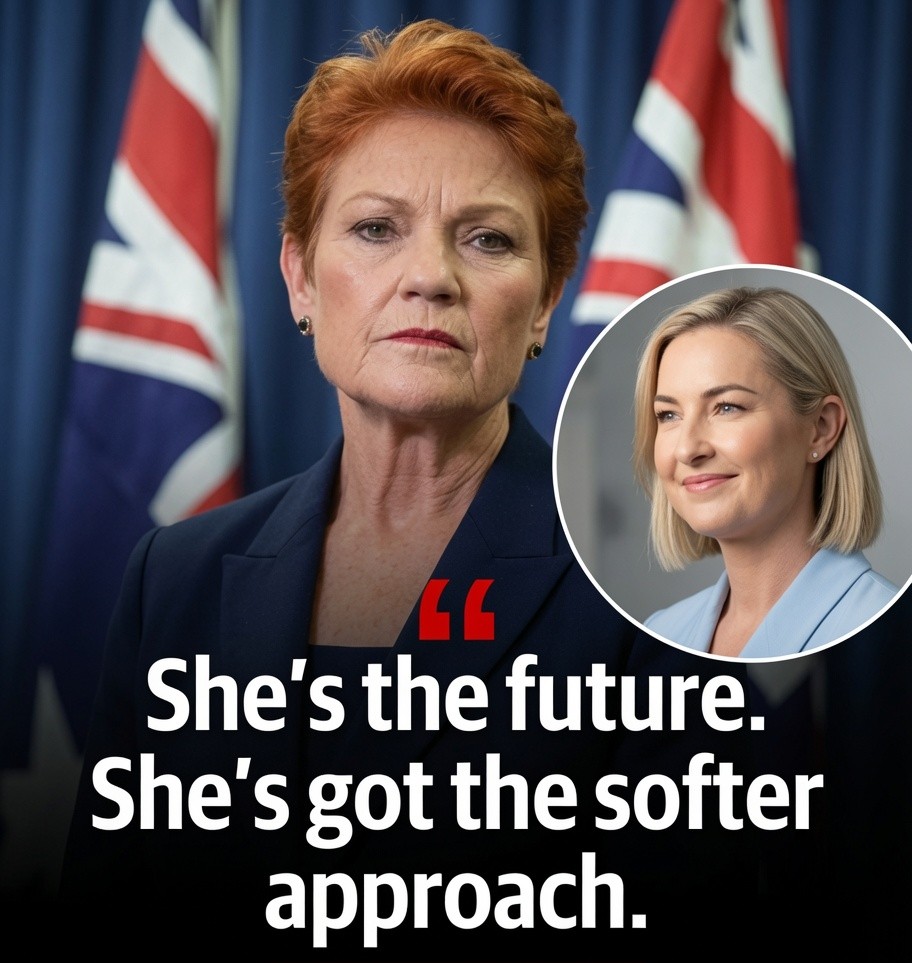
“She’s the future,” Hanson said when discussing Lee’s role within One Nation, before making clear that succession would not be automatic.
“People might accuse me of nepotism, but that’s not how this works,” Hanson indicated, explaining that leadership would ultimately depend on merit and the support of colleagues.
The remarks are significant because they represent Hanson’s clearest public indication yet about who she believes could eventually take over the party she founded nearly three decades ago.
For much of the past year, political observers have speculated that Barnaby Joyce could become One Nation’s next leader after joining the party and returning to federal politics under its banner. His profile as a former Deputy Prime Minister and Nationals leader made him an obvious candidate in discussions about the party’s future direction.
Hanson’s latest comments, however, suggest she sees succession differently.
Rather than looking outside the party for long-term leadership, she highlighted Lee Hanson as someone who has been steadily building experience behind the scenes.
Lee Hanson currently works as a senior adviser to New South Wales One Nation Senator Sean Bell, giving her direct experience in parliamentary operations, policy development and political campaigning. Earlier, she contested a Senate seat for Tasmania at the 2025 federal election, although she was unsuccessful.
Pauline Hanson praised her daughter’s work ethic, describing her as intelligent, committed and deeply familiar with the party’s values after years of involvement in political campaigns.
She nevertheless insisted that family connections alone would never justify promotion.
“It has to be the best person for the job,” Hanson said, adding that party members—not she alone—would ultimately determine who succeeds her.
The succession discussion arrives during an eventful period for One Nation.
The party has recently attracted national attention following Hanson’s speaking tour through Europe, where she discussed immigration, national identity and multiculturalism. Her appearance on a podcast with controversial British activist Tommy Robinson generated criticism from political opponents and renewed scrutiny of the party’s messaging.
Those events also fuelled speculation about Hanson’s long-term future as party leader.
Some commentators suggested Barnaby Joyce, who joined One Nation after leaving the Nationals, could eventually inherit the leadership because of his parliamentary experience and national profile.
However, Joyce has dismissed suggestions of any rivalry with Hanson.
He recently described Hanson as a “great mate” and rejected media speculation that disagreements over her European tour had created tension between them. Joyce also said Hanson’s comments about her daughter becoming a future leader were entirely reasonable.
One Nation Senator Sean Bell has similarly denied reports of internal divisions, describing the party as united despite growing media attention surrounding its leadership plans.
Leadership succession has become an increasingly important issue for One Nation as the party seeks to establish itself beyond its founder.
Since Pauline Hanson established One Nation in 1997, the party’s identity has been closely tied to her personal profile and campaigning style. Few Australian political leaders have remained as synonymous with a single party for as long as Hanson has.
That close association has helped build a loyal voter base but has also prompted recurring questions about how the party would operate after Hanson eventually retires from frontline politics.
Recent polling has shown One Nation continuing to attract significant support among voters concerned about cost-of-living pressures, immigration and energy policy, although the party has also experienced fluctuations in public support during recent controversies.
Political analysts note that identifying potential successors early can help reassure supporters that a party has a long-term future beyond its founding leader.
At the same time, succession discussions often create additional scrutiny, particularly when family members are involved.
Questions about nepotism have frequently arisen in political parties around the world whenever relatives of senior leaders are viewed as possible successors.
Hanson attempted to address those concerns directly by emphasising that Lee Hanson would need to demonstrate her own capability through parliamentary work, campaigning and leadership before any transition could occur.
For Lee Hanson herself, the comments represent public recognition from Australia’s longest-serving minor-party leader that she could eventually play a much larger role within One Nation.
Whether that ultimately results in a formal leadership transition remains uncertain.
For now, Pauline Hanson has made clear that she is not planning to step aside immediately, but she also wants the party to develop the next generation of leadership capable of carrying One Nation beyond its founder.
By identifying her daughter as someone with that potential—while insisting merit must remain the deciding factor—Hanson has added a new dimension to the ongoing conversation about One Nation’s future and who will eventually inherit one of Australia’s most recognisable political brands.






