British volunteers are expected to receive the world’s first experimental vaccine specifically targeting Bundibugyo ebolavirus within weeks, as a rapidly expanding outbreak in central and east Africa pushes the reported death toll beyond 700 and leaves health authorities warning that the true scale of the crisis may be far greater.
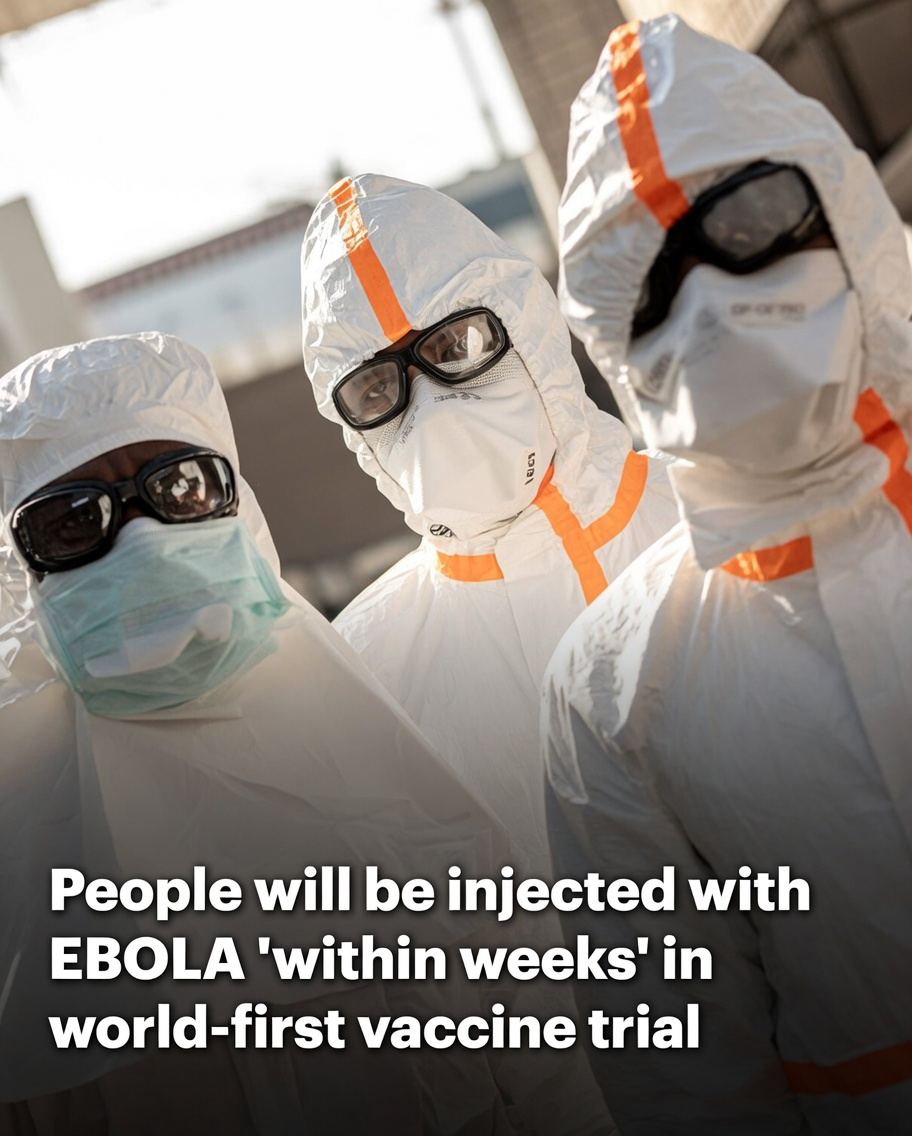
The University of Oxford has launched a Phase I clinical trial involving 50 healthy adults aged between 18 and 55, marking the first time a vaccine designed specifically against the Bundibugyo strain has entered human testing.
Recruitment is already under way in Oxford.
Following screening and regulatory review for trial commencement, the first participants are expected to be vaccinated in the coming weeks before returning for follow-up appointments that will track safety and immune responses.
The speed of the programme is extraordinary.
Oxford researchers announced in late May that they were accelerating work on a Bundibugyo vaccine as the outbreak spread. Less than two months later, the candidate has reached the threshold of a first-in-human study.
But one crucial point has been obscured by some of the more alarming descriptions of the trial.
The British volunteers will not be injected with live Ebola virus.
They are receiving an experimental vaccine known as ChAdOx1 BDBV, which uses a non-replicating adenovirus vector to deliver genetic instructions associated with a Bundibugyo ebolavirus protein.
The aim is to teach the immune system to recognise the viral target and generate antibodies and other immune responses before a person encounters the real disease.
Researchers will initially be looking for two things: whether the vaccine is acceptably safe in healthy adults and whether it produces the type of immune response that could justify moving into larger studies.
It is an early-stage trial.
It is not yet proof that the vaccine prevents Ebola infection or death.
But with the outbreak accelerating through parts of the Democratic Republic of Congo and cases also reported in neighbouring Uganda, scientists are racing against an epidemic that is moving faster than conventional vaccine development timelines.
The outbreak has already overtaken the figures that shocked the world days ago
Early reports on the Oxford trial cited approximately 1,800 confirmed infections and around 645 deaths.
The situation has continued to deteriorate.
By 14 July, the World Health Organization was reporting 1,926 cases and 702 deaths in the Democratic Republic of Congo, according to Reuters.
Separate reporting on a newly launched antiviral trial put the number of confirmed cases in Congo at 1,963 and the death toll at 719.
The difference reflects the rapidly changing nature of the outbreak and the timing of individual surveillance updates.
What is not in dispute is the direction of travel.
The epidemic is expanding rapidly.
The US Centers for Disease Control and Prevention has described the outbreak as spreading substantially faster than previous Ebola outbreaks and said it is now the third-largest Ebola outbreak on record.
It surpassed 1,000 confirmed cases within 40 days of the public health response being activated.
For comparison, the CDC said the 2018 Ebola outbreak in North Kivu took about 235 days to pass 1,000 cases.
More than 100 fatalities were reported during the first week of July alone.
That does not mean the disease is killing exactly 100 people every week at a stable rate.
Epidemics do not move in a straight line.
But it demonstrates the speed at which deaths were being recorded during one particularly severe period of the outbreak.
The latest official numbers may also substantially underestimate reality.
WHO health emergencies chief Chikwe Ihekweazu warned this week that the actual number of Ebola infections could be at least twice the formal tally and potentially four times higher.
Health officials are particularly concerned because many patients are dying in their communities without reaching treatment centres.
In some areas, the chains of transmission are not known.
Associated Press reported that roughly 80 per cent of new cases were emerging from unknown transmission chains, a deeply troubling sign for teams attempting to identify contacts and interrupt the spread of the virus.
Conflict is making a lethal disease even harder to track
The outbreak is centred in eastern Democratic Republic of Congo, a region that has endured years of conflict, displacement and chronic pressure on health infrastructure.
Ituri province remains the main epicentre.
European Centre for Disease Prevention and Control data published in July recorded 1,772 cases and 608 deaths across 26 of Ituri’s 36 health zones.
North Kivu had reported 177 cases and 100 deaths across 11 health zones.
Cases had also been identified in South Kivu, Haut-Uele and Tshopo.
The geographical expansion increases the challenge facing response teams.
Ebola control depends heavily on speed.
A suspected case must be identified.
The patient must be isolated and tested.
People who had close contact with the patient need to be found and monitored.
Health workers require appropriate protective equipment.
Safe and dignified burial procedures are essential because the bodies of people who die from Ebola can remain highly infectious.
Every delay creates opportunities for further transmission.
In conflict-affected areas, each of those basic public health tasks becomes more difficult.
Road access can be limited.
Communities may be displaced.
Health facilities may be under-resourced.
Security conditions can restrict the movement of medical teams.
Community mistrust can also make families reluctant to report illness or engage with outside health workers.
The current response has faced another serious obstacle: money.
WHO said it had received only about 40 per cent of the US$115 million required to fight the outbreak.
The organisation warned that the crisis had reached a critical point and that Congo could not be expected to manage the epidemic alone.
Bundibugyo is not the Ebola strain for which existing vaccines were designed
To understand why the Oxford trial matters, it is necessary to understand that “Ebola” is not a single interchangeable virus.
Several different ebolaviruses can cause severe disease in humans.
The best-known is Zaire ebolavirus, the virus responsible for the devastating 2014–2016 West African epidemic.
That outbreak killed more than 11,000 people and accelerated the development and deployment of vaccines targeting the Zaire species.
Existing licensed Ebola vaccines have transformed the ability of health authorities to respond to Zaire ebolavirus outbreaks.
They are not automatically expected to provide adequate protection against Bundibugyo virus.
The current epidemic is caused by Bundibugyo ebolavirus, or BDBV.
The virus was first identified following an outbreak in western Uganda in 2007.
It can cause severe Ebola disease and has historically been associated with substantial fatality rates.
Until the current crisis, Bundibugyo outbreaks had been comparatively rare.
That rarity is one reason no vaccine specifically targeting the strain had previously reached human clinical trials.
Vaccine development is expensive and complex.
When a pathogen causes only sporadic outbreaks involving relatively small numbers of people, commercial incentives can be limited and conducting large efficacy studies becomes extremely difficult.
The 2026 outbreak has changed the urgency.
In May, global health organisations began rapidly assessing candidate vaccines that might be capable of targeting Bundibugyo virus.
The Coalition for Epidemic Preparedness Innovations, or CEPI, selected three vaccine candidates for accelerated support after consultation with WHO, Africa CDC, Gavi, French research organisations and affected countries.
The portfolio included candidates involving Oxford, IAVI and Moderna.
Each uses a different vaccine technology.
The Oxford candidate is the first to reach Phase I human testing.
The vaccine uses technology related to Oxford’s COVID programme
ChAdOx1 BDBV is based on Oxford’s ChAdOx1 viral vector platform.
The name will be familiar to people who followed the development of the Oxford-AstraZeneca COVID-19 vaccine.
The basic concept involves using a modified adenovirus as a delivery vehicle.
The vector cannot replicate inside the vaccinated person in the normal way.
Instead, it carries genetic instructions that cause cells to produce a selected viral antigen.
The immune system encounters that antigen and, researchers hope, learns to recognise it as a threat.
If the vaccinated person is later exposed to the actual pathogen, their immune system may be better prepared to respond.
The Oxford Bundibugyo candidate is manufactured by the Serum Institute of India.
CEPI has said the Serum Institute has the capacity to manufacture the vaccine at scale if the candidate proves successful and is required for outbreak response.
That manufacturing question is critical.
A scientifically successful vaccine is of limited use during a fast-moving epidemic if doses cannot be produced and delivered quickly enough.
The Serum Institute has already shipped thousands of doses to Britain for the Phase I programme, according to Indian reporting.
But the first 50 volunteers in Oxford represent the beginning of the clinical process, not the end.
What will actually happen to the 50 British volunteers?
The Phase I trial is designed primarily to assess safety and immunogenicity.
Immunogenicity means the ability of a vaccine to provoke an immune response.
Healthy adults aged 18 to 55 are being recruited.
Potential volunteers first undergo screening to determine whether they meet the study’s eligibility requirements.
Those enrolled will receive the experimental vaccine and attend follow-up visits in Oxford.
Researchers will monitor participants for side effects and analyse immune responses generated after vaccination.
Blood testing can help scientists measure antibodies and other indicators of immune activity.
Participants are expected to remain under follow-up for up to a year.
That long monitoring period does not mean researchers must wait 12 months before learning anything useful.
Many common vaccine reactions, such as pain at the injection site, fever, headache or fatigue, typically appear relatively soon after vaccination.
Laboratory analysis can also begin measuring immune responses within weeks.
Longer follow-up provides additional information about safety and the durability of those responses.
Dr Katrina Pollock, the trial’s chief investigator, said early-stage vaccine studies are conducted precisely so researchers can be prepared when a serious outbreak occurs.
Oxford scientists have years of experience working on vaccines for dangerous filoviruses, the virus family that includes Ebola and Marburg.
Research teams associated with the Oxford Vaccine Group and Pandemic Sciences Institute had already been developing candidates against multiple filoviruses before the current Bundibugyo emergency.
That background helps explain how the programme moved so quickly.
Moving quickly does not mean researchers simply skipped safety testing
The speed of vaccine development inevitably raises questions after the global experience of the COVID-19 pandemic.
Oxford’s Bundibugyo candidate moved from an urgent development effort into a first-in-human trial in a matter of weeks.
A traditional vaccine programme can take years.
But the comparison can be misleading if it suggests every scientific step begins from zero each time a new vaccine is designed.
The Oxford researchers are using an established vaccine platform.
They have previous experience with ChAdOx1 technology.
Scientists also had years of research into filoviruses and vaccine design before the current outbreak began.
Preclinical studies were conducted before human testing.
Oxford said the candidate had been evaluated in mice and non-human primates.
Regulatory oversight still applies to the human study.
The trial begins with a small number of healthy adults specifically because Phase I research is designed to examine safety before much larger populations are exposed to a candidate vaccine.
Alex Sampson, a researcher involved in the programme, has stressed that acceleration does not mean safety standards have been abandoned.
What has changed is the amount of time wasted between stages.
Funding, manufacturing preparation, scientific work and regulatory engagement can proceed with far greater urgency when governments and international organisations recognise an emergency.
The COVID-19 pandemic demonstrated that vaccine development timelines can be compressed when resources and existing scientific platforms are mobilised simultaneously.
The same lesson is now being applied to Bundibugyo Ebola.
Scientists ultimately need evidence from the outbreak region
A successful Phase I study in Oxford would answer important questions about safety and immune response.
It would not, by itself, establish how well the vaccine prevents disease during an Ebola outbreak.
For that, researchers need further clinical evidence.
Oxford and its partners are considering expansion of vaccine research into affected African countries, including Uganda.
Uganda had reported 20 confirmed Bundibugyo cases by mid-July, including two deaths.
Fifteen of those cases had travel links to the Democratic Republic of Congo, while five were associated with local transmission events.
Encouragingly, no new confirmed Ugandan case had been reported since 21 June as of the latest European disease surveillance update.
But Uganda shares a border with Congo and remains exposed to the regional outbreak.
Conducting research during an active epidemic presents enormous ethical and logistical challenges.
Scientists must obtain informed consent.
Trials need reliable laboratory capacity and careful data collection.
Researchers must work alongside emergency response teams rather than obstruct them.
And communities need to understand why an experimental vaccine is being studied and what scientists do and do not yet know about it.
The urgency of an outbreak does not eliminate those obligations.
It makes getting them right even more important.
A vaccine is only one part of the race to stop the epidemic
Scientists are also urgently testing potential treatments.
Researchers in Congo have begun a clinical trial of Gilead Sciences’ experimental antiviral obeldesivir as a post-exposure intervention for people who have had high-risk contact with a confirmed Bundibugyo Ebola patient.
The trial aims to enrol about 1,000 participants aged 12 and older who were exposed within the previous five days but have not developed symptoms.
Participants will be followed for 21 days, with a final check at day 42.
The idea is to determine whether early antiviral treatment after exposure can reduce the risk of developing disease.
A separate clinical effort is examining potential treatments for people who are already sick.
These programmes are moving alongside traditional outbreak-control measures.
Case isolation remains essential.
Contact tracing remains essential.
Protecting health workers remains essential.
Community engagement remains essential.
A vaccine will not immediately make those measures unnecessary.
Even if ChAdOx1 BDBV eventually proves highly effective, scientists must determine appropriate dosing, manufacture sufficient supplies and establish how it should be deployed.
One possible strategy during Ebola outbreaks is ring vaccination, in which contacts of a confirmed patient and contacts of those contacts are offered vaccination to create a protective buffer around transmission chains.
That strategy has been used against Zaire ebolavirus.
Whether and how a future Bundibugyo vaccine would be deployed will depend on the evidence generated by clinical research and decisions by health authorities.
The Oxford trial is a race against an outbreak the world may still be underestimating
Fifty volunteers in Britain cannot stop an epidemic involving thousands of suspected infections in Africa.
They are not being deliberately infected with Ebola.
And no scientist can yet promise that the experimental vaccine will work.
But the first human trial represents a critical transition.
Bundibugyo vaccine research is moving from laboratory and animal studies into people.
That step has arrived as the outbreak enters an increasingly dangerous phase.
More than 700 deaths have now been reported in Congo.
The virus has crossed into Uganda.
Transmission chains are being missed.
Health workers have been infected.
Conflict and displacement are obstructing the response.
And WHO says it has received less than half the money required to fight the epidemic.
Most concerning of all, the official numbers may represent only a fraction of the true crisis.
That is why a vaccine developed at extraordinary speed is entering human testing in Oxford.
The 50 British volunteers will be closely watched for safety and immune responses over the coming months.
If the candidate performs well, researchers hope the evidence can support rapid progression towards larger trials and eventual outbreak use.
The scientific process cannot guarantee success.
But with Bundibugyo Ebola spreading faster than health authorities can reliably track it, the world no longer has the luxury of waiting a decade to begin looking for an answer.






