Australia did not fall into a technical recession.
Unemployment remained relatively low. The economy continued to grow. Governments repeatedly pointed to jobs, wages and headline economic resilience as evidence the country had weathered an extraordinary period.
But for millions of Australians, the economic story has felt completely different.
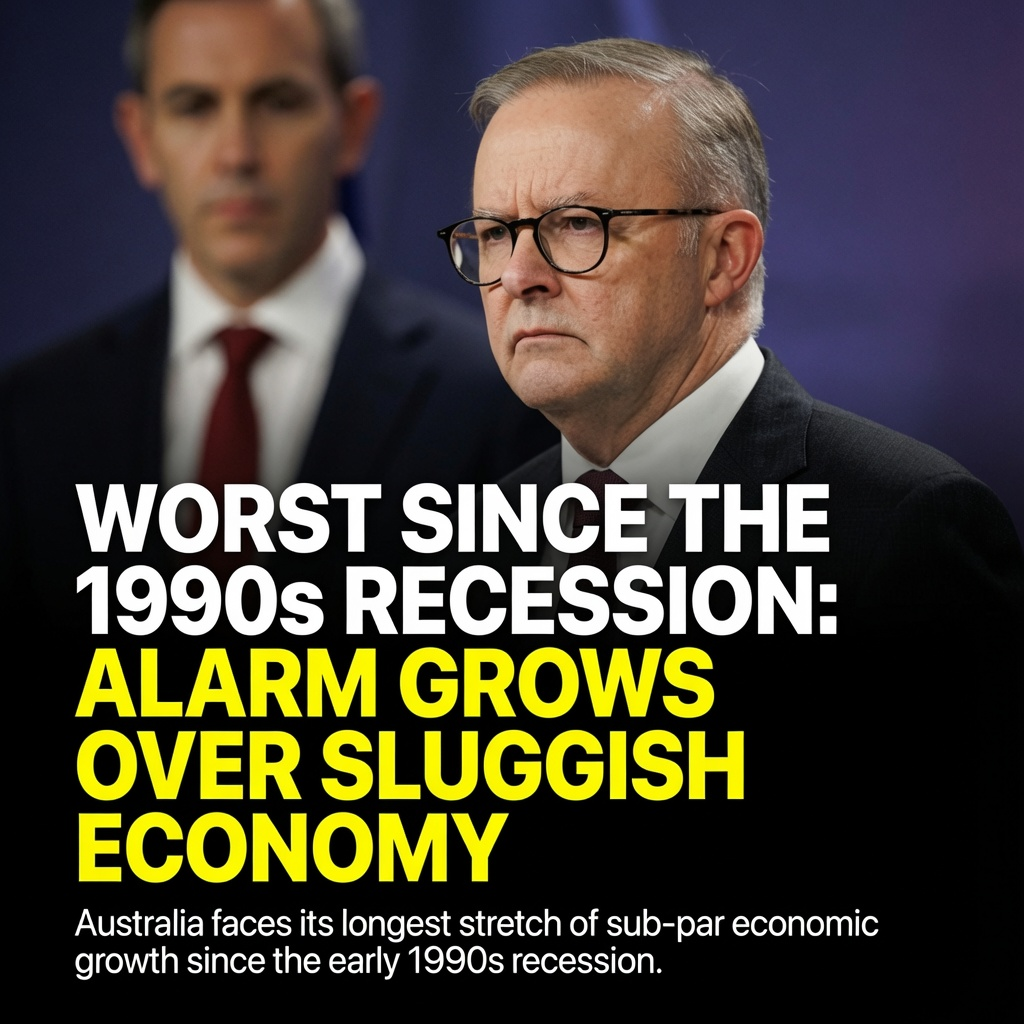
Household purchasing power was crushed by inflation, mortgage costs and a tax system that collected more from workers as nominal wages rose.
New OECD analysis has again highlighted the scale of the damage.
Australian real wages remain 5.1 per cent below their level in early 2021, according to the OECD’s latest employment analysis.
Across the OECD, the average worker experienced an increase in real wages of about 5 per cent over the same broad period.
That is an extraordinary divergence.
While workers across much of the developed world recovered the purchasing power destroyed by the inflation shock, Australians remained significantly behind.
The Coalition has seized on the figures to argue that since Labor came to office, Australia has suffered the biggest fall in living standards in the developed world.
That political claim needs one important qualification.
“Living standards” can be measured in several different ways.
GDP per person is one measure.
Real wages are another.
Real household disposable income per capita is another again.
Depending on the indicator and exact starting date used, international rankings can change.
But the broader economic problem is not seriously in dispute.
Australian households experienced an exceptionally severe fall in real disposable income during the inflation and interest rate shock.
The OECD’s 2026 economic survey of Australia said real disposable household incomes had “declined markedly”.
It identified three major forces behind the fall.
Inflation eroded real wages.
Bracket creep increased the tax burden as nominal incomes rose.
And rising mortgage payments placed enormous pressure on indebted households.
For ordinary Australians, those three forces arrived at almost the same time.
A worker might receive a pay rise.
But groceries, insurance and electricity became more expensive.
The Reserve Bank increased interest rates.
The household mortgage repayment jumped.
And because the worker’s nominal salary had increased, a greater proportion of income could be exposed to higher marginal tax rates.
The number on the payslip went up.
The amount the family could actually buy went down.
That is the living standards crisis Australia has spent years trying to explain with economic statistics that often sound far healthier than household finances feel.
The latest Australian Bureau of Statistics data shows the pressure has not simply disappeared.
In the 12 months to the March quarter of 2026, living costs rose between 2.6 per cent and 5.2 per cent across the different household groups measured by the ABS.
Those increases followed years of accumulated price rises.
This point is frequently lost in the political argument about inflation.
When inflation falls, prices generally do not return to where they were before the inflation surge.
They simply rise more slowly.
A supermarket item that increased from $5 to $7 does not automatically fall back to $5 because annual inflation returns to target.
If it rises from $7 to $7.20 the following year, inflation has slowed.
The household is still paying dramatically more than it did before.
Australians understand this intuitively every time they visit a supermarket, renew an insurance policy or receive an electricity bill.
Politicians, however, often speak about inflation as though bringing the annual rate down reverses the damage already done.
It does not.
Real incomes have to grow strongly enough to restore lost purchasing power.
That recovery has been painfully slow in Australia.
The OECD’s latest figures on wages are particularly damaging because they compare Australia’s experience with other advanced economies that faced the same global shocks.
COVID disrupted supply chains around the world.
Russia’s invasion of Ukraine affected global energy and commodity markets.
Governments and central banks internationally responded to the pandemic with extraordinary fiscal and monetary support.
Inflation was not an Australian-only event.
That is a legitimate defence for the Albanese Government.
Labor did not invent the global inflation shock.
Some of the price pressure was already present when Anthony Albanese became Prime Minister in May 2022.
But the political argument cannot end there.
If Australia performed materially worse than comparable countries in restoring household purchasing power, voters are entitled to ask why.
The OECD average has moved back into positive real wage territory.
Australia remains deeply below its early 2021 position.
That gap is now part of Labor’s economic record.
The government points to wage growth, employment and tax cuts.
Those policies matter.
Real wages have begun recovering as nominal wage growth has outpaced inflation during parts of the recent period.
The stage three tax changes delivered income tax relief.
Cost-of-living measures reduced some household expenses.
And Australia’s labour market remained considerably stronger than many economists feared when interest rates began rising.
These are not meaningless achievements.
A severe unemployment crisis would have made the living standards decline dramatically worse.
But avoiding a worse outcome is not the same as restoring what households lost.
Australian workers can be employed and still feel poorer.
A family can receive a tax cut and still be financially behind if its mortgage, rent, food, insurance and energy costs have increased by much more.
An economy can record positive GDP growth while GDP per person falls.
This is why headline GDP has become an increasingly unsatisfactory measure of Australia’s recent economic experience.
Australia’s rapid population growth allowed the total economy to expand even while economic output per person weakened.
More people create more economic activity.
They buy food.
They rent or purchase housing.
They use transport and services.
Total GDP can therefore rise simply because the population is larger.
That does not necessarily mean the average Australian is becoming more prosperous.
For households, per-capita measures are often far more revealing.
The ABS describes real net national disposable income per capita as a broader measure of prosperity than real GDP because it more closely reflects the income available across the economy to spend and save after inflation.
It is closer to the question Australians actually care about.
After paying the bills, are we better off?
For too many households during the past several years, the answer has been no.
Housing has magnified the pressure.
Australia entered the inflation crisis with some of the most expensive housing in the world relative to household incomes.
That meant the Reserve Bank’s interest rate increases were transmitted brutally through the household sector.
A heavily indebted homeowner does not experience a rate rise as an abstract change in monetary policy.
It arrives as hundreds or sometimes thousands of additional dollars in annual mortgage repayments.
Borrowers who purchased near the property peak were particularly exposed.
Many had taken out large loans when interest rates were at historic lows.
When rates rose, the value of their debt did not fall.
The cost of servicing it surged.
Renters were not protected from the housing crisis.
Australia’s rental market tightened as population growth and housing demand outpaced new supply.
Vacancy rates fell in many markets.
Rents increased.
A household that did not have a mortgage could still face a severe housing cost shock.
This is one reason aggregate household statistics can hide radically different experiences.
An older Australian who owns a home outright and earns interest on savings may have benefited from higher rates.
A younger family with a large mortgage may have been crushed by them.
A renter trying to save a deposit may have experienced rising housing costs while watching property prices remain historically expensive.
The “average” Australian household can therefore be a statistical fiction.
But when broad national measures of real household income also fall sharply, the signal becomes difficult to dismiss.
The OECD has been warning about Australia’s weak household income performance for years.
Its 2026 survey said Australia’s economy was normalising but identified slow productivity growth and strained housing affordability as major long-term challenges.
Productivity is particularly important.
Governments can temporarily support household incomes through subsidies, rebates and tax relief.
Those measures can help families during a crisis.
But sustainable increases in living standards ultimately depend heavily on producing more value for each hour worked.
If productivity stagnates, strong real wage growth becomes much harder to sustain without adding inflationary pressure.
Australia’s productivity problem predates the Albanese Government.
It developed across multiple governments and economic cycles.
That is another necessary qualification to the Coalition’s political attack.
The country did not suddenly develop structural economic weaknesses on the day Labor won the 2022 election.
Housing affordability had deteriorated for years.
Productivity growth had weakened.
Australia’s tax system had become increasingly dependent on personal income tax.
Energy policy had been politically unstable for more than a decade.
Successive governments benefited from population growth and commodity exports while avoiding difficult structural reform.
Labor inherited many of those problems.
But after more than four years in government, inheritance is becoming a weaker political defence.
Governments eventually own the economy they manage.
Albanese and Treasurer Jim Chalmers have had multiple budgets to set spending priorities, reform taxation and address productivity.
Government spending has remained elevated.
The Coalition argues this has added to demand and made the Reserve Bank’s inflation fight more difficult.
Labor rejects the suggestion its spending is responsible for Australia’s inflation problem and points to targeted support designed to reduce measured household costs.
The truth is more complicated than either political slogan.
Government spending can support essential services and vulnerable households.
It can also add to aggregate demand in an economy where inflation remains a problem.
The economic impact depends on the timing, scale and design of the spending.
But the political problem for Labor is much simpler.
Australians judge governments through their own bank accounts.
A Treasury forecast cannot convince a family that its living standards have improved if the family has less money left at the end of the month.
A strong employment number does not eliminate mortgage stress.
A lower inflation rate does not reverse the accumulated increase in grocery prices.
A government rebate can reduce one bill while insurance, rates and rent increase somewhere else.
This is why the Coalition’s living standards attack is potentially powerful.
It connects an international economic statistic with an experience millions of Australians already recognise.
“Labor’s economic mismanagement costs all Australians” is political language.
Not every economic problem confronting Australia was created by Labor.
And economists will continue debating how much responsibility should be assigned to fiscal policy, monetary policy and global shocks.
But the decline in household purchasing power is not invented.
The OECD data is real.
The fall in Australian real wages relative to early 2021 is real.
The pressure from mortgage payments is real.
The accumulated rise in living costs is real.
And Australia’s weak performance relative to many other developed economies demands an explanation.
Labor’s strongest defence is that the recovery has begun.
Inflation has moderated from its peak.
Real wages have shown periods of improvement.
The labour market has remained resilient.
Household incomes have begun recovering from their lowest point.
But recovery creates another question.
How long will it take Australians to get back what they lost?
A worker whose real wage falls 5 per cent does not fully recover after receiving a 2 per cent real increase.
The person is still behind.
The same principle applies to household living standards.
Several years of income damage can require several years of above-trend gains to repair.
Australia is now competing against countries where workers have already regained and exceeded their pre-inflation purchasing power.
That should concern policymakers regardless of party.
Living standards are not an abstract economic scoreboard.
They influence whether young Australians can leave home.
Whether families can afford children.
Whether a worker can buy a house.
Whether households can absorb an unexpected medical or car bill.
Whether people can save for retirement.
And whether Australians believe the next generation will enjoy a better life than the last.
For decades, that final expectation was central to the Australian economic promise.
Work hard.
Build a career.
Buy a home.
Raise a family.
Gradually become more prosperous.
The living standards shock has damaged confidence in that promise.
Labor can argue that global inflation played a major role.
It can point to stronger wages and the beginning of a household income recovery.
It can correctly say Australia’s structural problems did not begin in 2022.
But it cannot simply talk Australians out of the financial experience they have lived through.
The economy avoided recession.
The jobs market survived.
Headline GDP kept growing.
And Australian households still suffered one of the developed world’s most severe hits to real purchasing power.
That is the contradiction at the centre of Labor’s economic record.
For Albanese and Chalmers, the next political test is no longer proving the economy can grow.
It is proving Australians themselves can become richer again.






