The world’s next pandemic is not a question of if, but when — and one of Australia’s most experienced health leaders says no country can confidently claim it is ready.
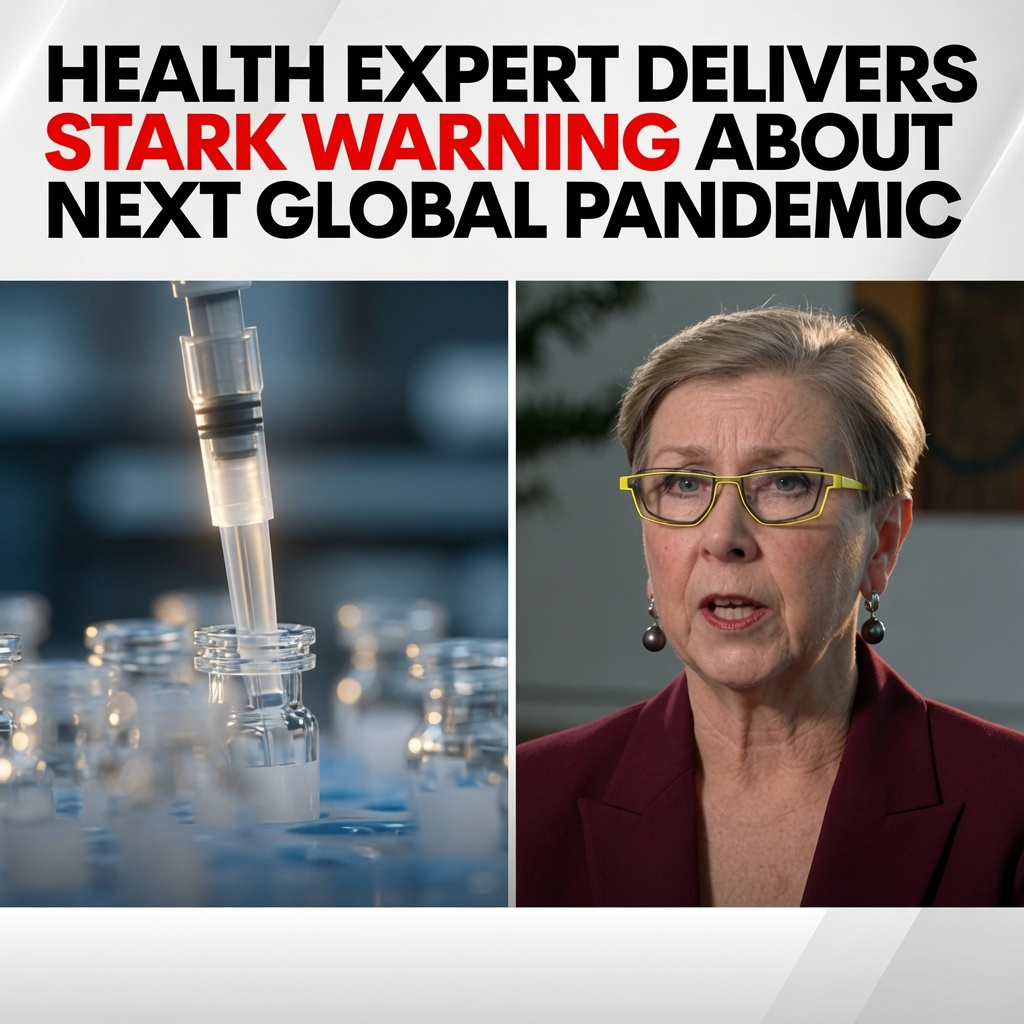
The warning comes as scientists and doctors race to contain a rapidly expanding Ebola outbreak in the Democratic Republic of the Congo, where an unusual strain of the virus has overwhelmed health services and forced researchers to begin urgent experimental treatment trials.
The outbreak is being driven by Bundibugyo virus, a less common species of Ebola for which there is currently no approved vaccine or specific treatment.
By July 10, official figures cited by the World Health Organization had reached 1,792 infections and 625 deaths.
But the official count may tell only part of the story.
WHO officials have warned the true number of infections could be two to four times higher than reported, with large numbers of new patients in heavily affected areas having no known connection to previously identified cases.
That means transmission may be occurring largely undetected through communities.
For Jane Halton, the Australian chair of the Coalition for Epidemic Preparedness Innovations, the crisis in Central Africa is not a distant health story.
It is a warning.
“No country can say confidently that we are prepared,” Halton told 7NEWS.
Her message to Australia is uncomfortable but straightforward.
The time to prepare for the next pandemic is not when hospitals are filling with patients and governments are closing borders. It is years earlier, when the political pressure to spend money on an invisible threat is at its weakest.
“Frontline defences are actually being ready before something like this happens,” Halton said.
“It’s about doing the work beforehand to have vaccines ready, to actually have manufacturing ready, and to be sure that our regulators can move really quickly so we don’t all wait while people go through bureaucratic hoops.”
The Ebola outbreak now spreading through the DRC demonstrates precisely what she means.
The current crisis began in May and is centred largely in Ituri province in the country’s east.
The region already faces extraordinary challenges.
Conflict, population displacement and fragile health infrastructure make disease surveillance and contact tracing extremely difficult.
Medical facilities have been overwhelmed.
Health workers have complained of inadequate protective equipment and delayed payments.
Industrial action has disrupted parts of the response.
Community mistrust has made it harder for authorities to identify and isolate patients.
And people infected with the virus have travelled between regions seeking medical treatment, creating further opportunities for transmission.
About 90 per cent of known cases have been concentrated in Ituri, particularly around Bunia and several surrounding communities.
But cases have also been identified beyond the initial centre of the outbreak.
The WHO has described the epidemic as remaining in an expansion phase.
In some heavily affected areas, up to four out of five newly identified cases have no known epidemiological link to existing patients.
That is a deeply concerning indicator for disease investigators.
When contact tracers can connect most new infections to known cases, authorities have a clearer picture of transmission.
When large numbers of patients appear without known links, it suggests invisible chains of infection are moving through the community.
The Bundibugyo strain creates another complication.
Unlike the better-known Zaire species of Ebola, there are no approved vaccines or treatments specifically available for the virus driving the current outbreak.
Researchers are therefore trying to develop evidence while the emergency is already under way.
Doctors have begun enrolling patients in a rapid clinical trial testing experimental treatments.
The trial is examining remdesivir and MBP134, an experimental antibody therapy, both separately and in combination with standard supportive care.
The treatments have shown promise in animal research, but researchers now need human clinical data to determine whether they can significantly reduce deaths from Bundibugyo virus disease.
The trial was launched only weeks after the scale of the outbreak became clear.
That speed represents genuine progress.
But it also highlights the problem Halton wants governments to understand.
Scientists are once again being forced to race a virus.
Patients are becoming infected today while researchers are still trying to establish which medicine works best.
One senior health official involved in the response said the objective was to determine “which medicine, which molecule, will be the most effective”.
Every day matters.
Ebola is a severe viral disease capable of causing fever, weakness, vomiting, diarrhoea and, in some patients, internal or external bleeding.
It spreads through direct contact with the blood or other bodily fluids of an infected person, as well as contaminated materials.
The disease does not spread in the same way as highly transmissible airborne respiratory viruses.
But outbreaks can become extremely difficult to control when health systems are weak, protective equipment is scarce and infected people remain in the community.
During the early stages of the current outbreak, a large proportion of deaths occurred outside formal treatment centres.
That is dangerous for both patients and communities.
People who receive treatment late have poorer prospects of survival.
Families caring for sick relatives at home may also be exposed to infectious bodily fluids.
Traditional burial practices can create additional transmission risks if people have direct contact with the body of someone who died from Ebola.
The DRC and international health organisations are now training thousands of community health workers to identify suspected cases and direct patients towards treatment.
But the response is attempting to catch up with an outbreak that may already be significantly larger than the official numbers suggest.
For Halton and CEPI, this is exactly why pandemic preparedness cannot begin after an emergency has been declared.
CEPI was created following the devastating West African Ebola epidemic of 2014 to 2016.
That outbreak killed more than 11,000 people and exposed major weaknesses in the global system for developing vaccines against diseases that primarily threatened poorer countries.
The commercial problem was obvious.
Developing a vaccine is expensive.
A pharmaceutical company may spend years and enormous amounts of money on research, clinical trials and manufacturing.
For diseases that appear unpredictably in relatively poor countries, the financial incentive can be weak.
By the time an outbreak begins, it is too late to start a traditional vaccine development program from the beginning.
CEPI was designed to close that gap.
The organisation funds research and vaccine platforms before a disease becomes a global emergency.
Its central ambition is known as the “100 Days Mission”.
The goal is to make safe and effective vaccines available for initial authorisation and manufacturing at scale within 100 days of identifying a new pandemic threat.
COVID-19 demonstrated why speed matters.
The world developed vaccines at unprecedented pace.
But even that extraordinary scientific achievement came after the virus had spread internationally, hospitals had been overwhelmed and governments had imposed severe restrictions on daily life.
Australia closed its international border.
States imposed lockdowns.
Schools moved online.
Businesses were forced to shut their doors.
Families were separated.
Governments spent hundreds of billions of dollars supporting households, employers and health systems.
The economic and social consequences continued long after emergency restrictions ended.
Halton’s argument is that the world should not accept the same timetable next time.
“Every time we respond to one of these situations we get faster,” she said.
“If there’s another pandemic, and we know it’s not a question sadly of if — it’s when — it actually means the response to that pandemic will be much faster than we had last time.”
The objective is not simply to save lives after a virus begins spreading.
It is to prevent the wider destruction of ordinary life.
“We want to be ready. We want to be quick. We want to save lives and mostly we want our lives to continue as we want them, going to work, going to school, having time with family and friends,” Halton said.
That distinction is important.
Pandemic preparedness can sound like a narrow health budget issue.
COVID demonstrated that it is an economic and national security issue as well.
A pathogen capable of spreading internationally can disrupt supply chains, close borders, reduce workforce participation and place enormous pressure on government finances.
The cost of developing vaccines and maintaining manufacturing capacity can appear large before a crisis.
Compared with the economic cost of a pandemic, it can be extraordinarily small.
The United States has now committed another US$50 million to CEPI’s work on medical countermeasures against the Bundibugyo virus.
The funding is intended to help accelerate at least two vaccine candidates towards potential emergency authorisation.
Halton wants Australia to contribute again.
Canberra provided $100 million during CEPI’s previous funding round.
Australia has also benefited directly from CEPI-supported research.
Previous investment has flowed into Australian scientific institutions and vaccine platform development.
The political question is whether the Albanese Government is prepared to commit substantial funding to a threat that may not produce an immediate crisis inside Australia.
This is the recurring problem with pandemic preparedness.
Success can look like wasted money.
If a government spends on vaccines, surveillance and manufacturing capacity and no pandemic occurs, critics can ask why the money was needed.
If governments do not invest and a pandemic arrives, the cost can be measured in deaths and economic devastation.
Preparedness is essentially an insurance policy against an uncertain but potentially catastrophic event.
Halton believes the risk is not only theoretical.
Influenza remains one of the most likely causes of a future pandemic.
Flu viruses continually evolve and circulate among humans and animals.
A new strain capable of efficient human-to-human transmission could create a global emergency.
But Halton has also raised a more disturbing possibility.
The next pandemic threat may not be entirely natural.
Artificial intelligence is rapidly transforming biological research.
Used responsibly, AI can help scientists analyse proteins, identify drug candidates and accelerate medical discoveries.
The same technological progress creates what security experts describe as dual-use risks.
Scientific tools developed for legitimate research can potentially be misused.
“We have to be prepared that the next time one of these outbreaks occurs it might have been AI-designed, engineered and then of course made,” Halton said.
“It’s an uncomfortable truth that people will use the science in that way but we have to be ready.”
The warning does not mean an AI system can simply press a button and manufacture a pandemic virus.
Creating a viable pathogen requires biological expertise, laboratory capability and physical materials.
But health and security experts are increasingly examining whether advanced AI systems could reduce some of the knowledge barriers that previously limited dangerous biological work.
That changes the preparedness calculation.
Governments traditionally planned around naturally emerging diseases.
A virus might jump from animals to humans, evolve and begin spreading.
Health agencies would identify the pathogen, sequence it and begin developing countermeasures.
An engineered biological threat could present different characteristics.
It might be deliberately modified.
Its emergence might initially be mistaken for a natural outbreak.
And the people responsible could potentially select characteristics intended to complicate the response.
The possibility remains the subject of intense scientific and security debate.
But Halton’s argument is that governments cannot wait for certainty before preparing.
The lesson of COVID was not that the next pandemic will look exactly like COVID.
It was that health systems, regulators, manufacturers and governments need the ability to move quickly when confronted by something unexpected.
That requires vaccine platforms capable of being adapted to new pathogens.
It requires manufacturing facilities that can begin production without years of construction.
It requires clinical trial networks that can enrol patients rapidly.
It requires regulators capable of assessing emergency evidence at speed without abandoning safety standards.
And it requires international cooperation because viruses do not respect national borders.
The Ebola outbreak in the DRC demonstrates both how far the world has come and how far it still has to go.
A clinical treatment trial has been launched with remarkable speed.
Experimental drugs have been moved into an outbreak zone.
Researchers are collecting data that could save lives in the current emergency and improve the response to future Bundibugyo outbreaks.
But hundreds of people are already dead.
More than 1,700 confirmed infections have been recorded.
WHO officials fear many more cases have never been identified.
Scientists are still testing which treatment works.
There is still no approved vaccine for the strain.
That is the gap pandemic preparedness is supposed to close.
Australia may be thousands of kilometres from the centre of the current Ebola outbreak.
That distance should not create complacency.
COVID-19 began as reports of an unusual cluster of pneumonia cases on another continent.
Within months, Australia’s borders were closed and ordinary life had been transformed.
The next global emergency may be caused by influenza.
It may be another coronavirus.
It may be a pathogen health authorities already know.
Or, as Halton warns, future scientific capabilities may create threats governments have never confronted before.
No country can predict the exact pathogen.
No government can guarantee another pandemic will not occur.
What countries can decide is whether they spend the years between emergencies preparing or forgetting.
After COVID, Australia promised to learn.
The Ebola crisis now unfolding in the DRC is a reminder that the examination may come sooner than anyone wants.
“No country can say confidently that we are prepared.”
The question for Australia is how much it is willing to invest before those words are tested by the next pandemic.






